
British Steel is one of those names that carries the weight of an entire nation’s industrial history. From the coal towns of Scunthorpe to the halls of Westminster, the fate of this company has been debated, fought over, and urgently legislated for — not once, but multiple times. And right now, in 2026, the ownership question has never been more dramatic or more unresolved.
British Steel Limited is a long steel products business currently owned by Chinese company Jingye Group. But as of today — May 11, 2026 — that is about to change. Prime Minister Sir Keir Starmer has announced powers to fully nationalise British Steel after efforts to secure a commercial deal for its sale failed, with legislation to be brought forward this week to take “full national ownership” of the company for the first time since 1988.
Here is the complete story.
British Steel — Company Highlights
| Full Name | British Steel Limited |
| Founded (current entity) | 2016 |
| Primary Site | Scunthorpe Steelworks, Lincolnshire, England |
| Other Sites | Skinningrove Steelworks, Teesside |
| Current Owner | Jingye Group (China) — under UK government operational control |
| Ownership Status | Nationalisation legislation being introduced — May 2026 |
| Employees | ~2,700 at Scunthorpe site |
| Known For | Long steel products, rails, structural sections, virgin steel production |
Who Owns British Steel Right Now?
The ownership situation is uniquely complicated — and changing in real time.
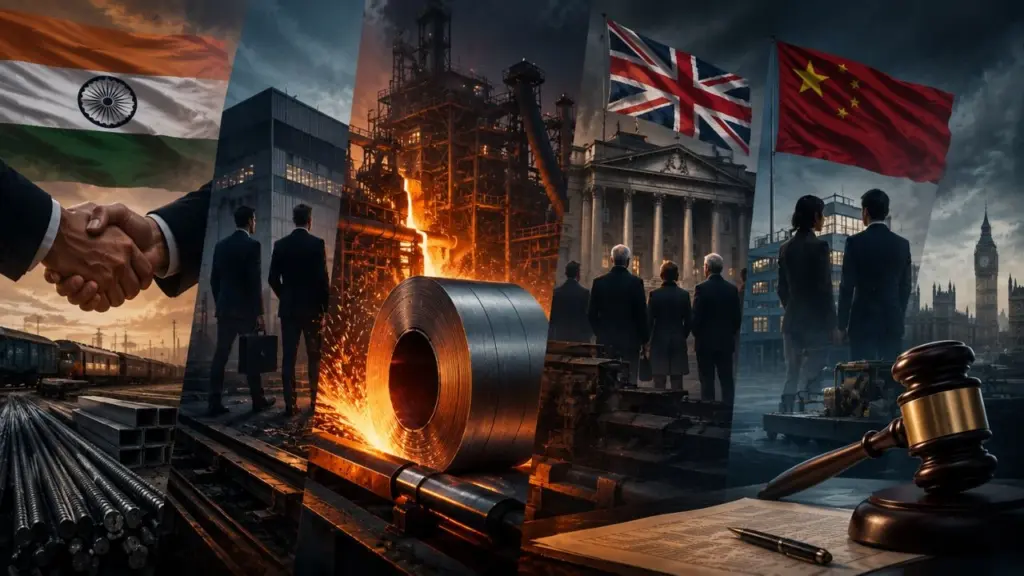
British Steel has been owned by the Chinese company Jingye Group since 2020. The UK government is in discussions with Jingye to find a “pragmatic, realistic solution for the future of the site.” However, those talks have now broken down completely.
Prime Minister Keir Starmer said a commercial sale with Chinese owners Jingye has not been possible, and now a public interest test could be met. A new bill will be formally introduced to Parliament this week.
| Owner | Type | Period | Notes |
|---|---|---|---|
| Tata Steel Europe | Corporate / Indian conglomerate | Pre-2016 | Long products division sold off |
| Greybull Capital | Private equity | 2016–2019 | Bought assets for nominal £1; company later collapsed |
| UK Government (Official Receiver) | State / Insolvency | 2019 | Took control after Greybull collapse |
| Jingye Group | Chinese private company | 2020–present | Current legal owner; operational control taken by UK govt April 2025 |
| UK Government (operations) | State intervention | April 2025–present | Running day-to-day operations under emergency legislation |
| UK Government (full ownership) | Nationalisation — pending | 2026 (imminent) | Legislation being introduced this week |
The Full Ownership History
1. The Tata Steel Era (Pre-2016)
During the 2010s, a combination of reduced demand for steel in Europe after the 2008 financial crisis and high company indebtedness led to Tata Group beginning a sales process for the long products division of Tata Steel Europe. In 2014 the long products division employed approximately 6,500 workers and was operating with 2.8 million tonne per annum capacity.
2. Greybull Capital & The £1 Sale (2016)
The sale was agreed on 11 April 2016 for a nominal £1, with Greybull taking over the assets and liabilities of the division. At takeover, the division employed approximately 5,000 workers, predominantly in the UK. The sale was completed at the end of May 2016, with the resulting business renamed British Steel.
3. Collapse & Government Intervention (2019)
On 22 May 2019, British Steel was placed into an insolvency process, putting 5,000 jobs in the UK at risk and endangering 20,000 in the supply chain. The UK Government’s Official Receiver took control of the company as part of the insolvency process.
4. Jingye Group Acquisition (2020)
British Steel has changed ownership many times since it was privatized in the 1980s, but Jingye’s tenure has been particularly rocky. A glut of Chinese steel in the global market put pressure on the UK steel industry, where overheads, especially energy prices, are far higher than elsewhere.
5. UK Government Emergency Takeover (April 2025)
The government said Jingye was prepared to cancel orders for the raw materials needed to keep its blast furnaces burning — a step that would leave Britain unable to make virgin steel for the first time since the Industrial Revolution. Parliament voted to take emergency control of the plant.
On 12 April 2025, Parliament passed the Steel Industry (Special Measures) Act 2025, giving the Secretary of State powers to issue directions to or take control of steel undertakings in England if they were at risk of closing down.
6. Nationalisation Announced (May 11, 2026)
British Steel could be back in government hands for the first time since being sold off in 1988, thanks to powers that will be included in new legislation. The new powers would be subject to public interest tests, and if used to nationalise British Steel, they would boost national security while giving stability to workers at Scunthorpe and British Steel’s suppliers and customers.
Key Milestones Timeline
| Year | Milestone |
|---|---|
| 1988 | British Steel privatised under Margaret Thatcher’s government |
| 2016 | Tata Steel sells long products division to Greybull Capital for £1; rebranded British Steel |
| 2019 | British Steel collapses into insolvency; Official Receiver takes control |
| 2020 | Jingye Group (China) acquires British Steel |
| April 2025 | UK Parliament passes Steel Industry (Special Measures) Act; government takes operational control from Jingye |
| March 2026 | Government has provided approximately £419 million in working capital to British Steel since emergency legislation passed |
| May 11, 2026 | PM Keir Starmer announces nationalisation legislation to be introduced this week |
Why Is the Government Taking Over?
If Jingye had been allowed to close the Scunthorpe facility, the process of restarting the furnaces would be costly and extremely difficult, meaning the UK would lose its ability to produce steel directly from iron ore. This virgin steel is used in the construction of major projects like railways and new buildings.
If the Scunthorpe steel plant had shuttered, Britain would have been the only G7 country unable to make new steel.
What Is Jingye Group?
Jingye Group is a large Chinese private steel and industrial conglomerate based in Shijiazhuang, Hebei Province, China. It acquired British Steel in 2020 with promises of major investment, but those commitments were never fully delivered. The BBC said the search for a new buyer had “stalled” because Jingye had “demanded hundreds of millions in taxpayer money” for the assets at Scunthorpe.
My Take on British Steel
British Steel’s story is a mirror of modern Britain itself — a great industrial power struggling to decide what it wants to be in the 21st century. The back-and-forth ownership saga, from a nominal £1 sale to a Chinese conglomerate to emergency parliamentary legislation, reflects how badly successive governments underestimated the strategic value of domestic steel production. The decision to nationalise is not just about one factory in Scunthorpe — it is about whether Britain can still make things, and whether it is willing to pay for that capability. The foundation is still there. Whether the political will to rebuild it properly lasts beyond the headlines remains the real question.
Related Ownership Profiles
For another unique vessel with a notable ownership story, see who owns MV Hondius.
Frequently Asked Questions
Q: Who legally owns British Steel right now?
Jingye Group still retains legal ownership, but the UK government stepped in to take over daily operations in April 2025.
Q: Is British Steel being nationalised?
Yes. PM Keir Starmer announced on May 11, 2026, that legislation will be brought forward this week to give the government powers to take full national ownership of British Steel.
Q: When was British Steel last in government hands?
British Steel could be back in government hands for the first time since being sold off in 1988.
Q: How many people work at British Steel?
The steel manufacturer employs more than 2,700 people at its main site in Scunthorpe.
Q: How much has the UK government spent on British Steel?
As of 26 March 2026, the government has provided approximately £419 million in working capital to British Steel since the emergency legislation was passed on 12 April 2025.
Q: Why did Jingye want to close Scunthorpe?
British Steel under Jingye was losing money due to high UK energy prices, a global glut of cheap Chinese steel, and insufficient investment in modernisation.
Q: What is “virgin steel” and why does it matter?
Virgin steel is steel made directly from iron ore in a blast furnace. If Jingye had been allowed to close Scunthorpe, the UK would have lost its ability to produce steel directly from iron ore — used in major infrastructure projects like railways and new buildings.