
Lockheed Martin is America’s largest defense contractor by revenue, and few companies are more directly tied to US foreign policy and national security than this one. Every F-35 fighter jet, every missile defense system, every military satellite has Lockheed Martin’s fingerprints on it somewhere. As someone who has followed the defense sector for years, I find Lockheed’s ownership story interesting precisely because of how ordinary it is — no founder family, no foreign sovereign wealth fund, just mainstream institutional investors who happen to own a company that makes weapons systems critical to US and NATO military capability. When geopolitics heat up, Lockheed Martin’s order book grows.
✈️ Lockheed Martin — Company Highlights
| Full Name | Lockheed Martin Corporation |
| Ticker | NYSE: LMT |
| Founded | 1995 (merger of Lockheed and Martin Marietta) |
| Headquarters | Bethesda, Maryland, USA |
| CEO | Jim Taiclet (since 2020) |
| Revenue (2024) | ~$71 billion |
| Employees | ~122,000 |
| Key Programs | F-35 fighter jet, THAAD, Patriot missiles, Sikorsky helicopters, space systems |
Who Owns Lockheed Martin?
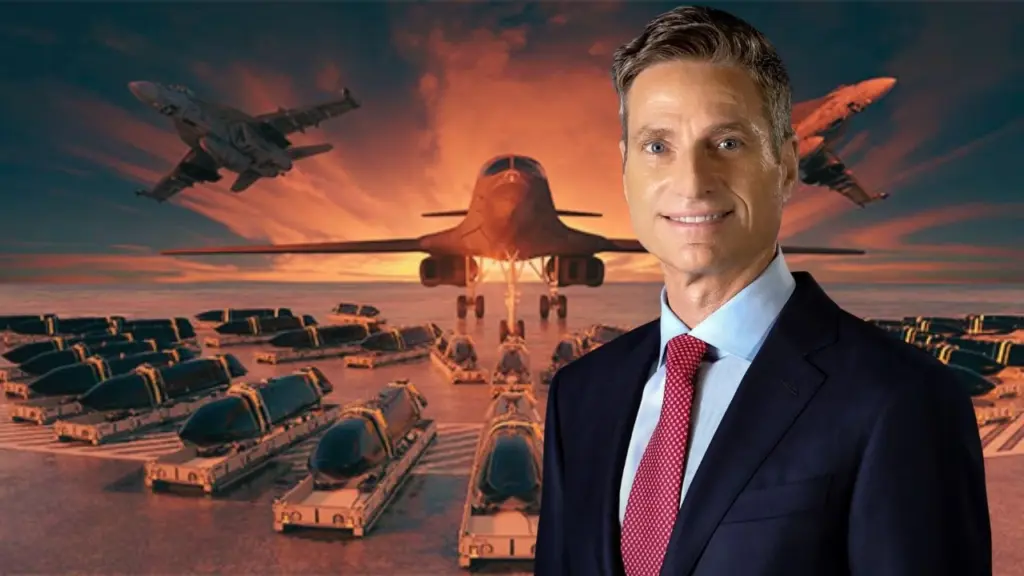
Lockheed Martin is a publicly traded company on the NYSE with no controlling shareholder. The largest holders are institutional index funds — Vanguard Group holds approximately 9%, BlackRock holds around 7%, and State Street is also significant. CEO Jim Taiclet owns a small percentage through equity compensation. What makes Lockheed’s governance unique compared to most large-cap companies is the nature of its primary customer: the US federal government accounts for roughly 70% of revenue. That makes US defense budget decisions effectively the most important “market force” for this company. For those interested in the defense-tech intersection, our post on who owns Palantir is worth reading alongside this one.
| Shareholder | Type | Approx. Stake | Notes |
|---|---|---|---|
| Vanguard Group | Institutional | ~9% | Largest holder; passive index funds |
| BlackRock | Institutional | ~7% | Major passive holder |
| State Street | Institutional | ~4% | Significant institutional position |
| Jim Taiclet (CEO) | Executive | Small % via equity | CEO since 2020 |
| Public shareholders | NYSE | Remaining % | No controlling individual or family shareholder |
Lockheed Martin — Key Milestones
| Year | Milestone |
|---|---|
| 1912/1913 | Original Lockheed company founded by brothers Allan and Malcolm Loughead |
| 1961 | Martin Marietta formed from merger of Glenn L. Martin Company and American-Marietta |
| 1995 | Lockheed and Martin Marietta merge to form Lockheed Martin Corporation |
| 2001 | Wins F-35 Joint Strike Fighter contract — largest defense contract in US history at the time |
| 2015 | Acquires Sikorsky Aircraft from United Technologies for $9 billion |
| 2020 | Jim Taiclet becomes CEO; focuses on 21st Century Security and digital transformation |
| 2022–2024 | Russia-Ukraine war drives NATO defense spending surge; F-35 and missile orders increase sharply |
Leadership at Lockheed Martin
Jim Taiclet became CEO in 2020, succeeding Marillyn Hewson who had led the company for seven years. Taiclet is a West Point graduate and former Air Force officer — bringing genuine military experience to running the world’s largest defense company. He’s been focused on integrating digital technology and AI into Lockheed’s weapons systems and business operations, under a strategy he calls “21st Century Security.” CFO Jesus Malave and the rest of the executive team have backgrounds spanning defense, aerospace, and engineering. The leadership culture at Lockheed is notably different from Silicon Valley companies — longer time horizons, government contracting expertise, and a very different relationship with risk.
My Take on Lockheed Martin
I want to be direct about something: writing about defense companies requires acknowledging that they profit from conflict, and that’s a reality worth sitting with. At the same time, for investors and analysts trying to understand who owns what in America’s industrial landscape, Lockheed Martin is impossible to ignore. The company is a direct beneficiary of an era of rising global defense spending — NATO countries increasing budgets, Indo-Pacific tensions growing, and a general rebuilding of Western military capacity. The F-35 program alone will generate revenue for decades. If you believe US defense spending will remain elevated (or grow), Lockheed Martin is about as close to a guaranteed revenue stream as exists in the corporate world. That’s not an investment recommendation, but it’s the honest business reality.
Related Ownership Profiles
For a roundup of the internet’s most common ownership questions, see our list of Top 10 Most-Searched “Who Owns” Questions of 2026.
Frequently Asked Questions
Q1. Who is the largest shareholder of Lockheed Martin?
Vanguard Group is the largest shareholder, holding approximately 9% of shares through its passive index funds. BlackRock is second with around 7%.
Q2. Is Lockheed Martin owned by the US government?
No, it is a publicly traded company on the NYSE. However, the US federal government is its biggest customer, contributing roughly 70% of annual revenue.
Q3. Who is the CEO of Lockheed Martin?
Jim Taiclet has been CEO since 2020. He is a West Point graduate and former Air Force officer, focused on integrating AI and digital technology into defense systems.
Q4. When was Lockheed Martin founded?
Lockheed Martin was formed in 1995 through the merger of Lockheed Corporation and Martin Marietta. Its origins go back to 1912 when the Loughead brothers started the original company.
Q5. What are Lockheed Martin’s most important products?
The F-35 fighter jet is its flagship program. The company also makes THAAD and Patriot missile systems, Sikorsky helicopters, and military satellites for US and NATO forces.