
Lyft has always been in Uber‘s shadow, and I’m not going to pretend otherwise. But that framing sells Lyft short in some important ways. As the second-largest ride-hailing platform in the United States, Lyft has survived the brutal economics of a business where every dollar of revenue is hard-won, navigated multiple near-death moments, and is now — under CEO David Risher — genuinely trying to find a profitable path forward. Lyft is publicly traded on NASDAQ, and its founding team of Logan Green and John Zimmer are still significant shareholders, even as Risher leads the day-to-day operation with a fresh strategy focused on driver relationships and product quality.
🚗 Lyft — Company Highlights
| Full Name | Lyft, Inc. |
| Ticker | NASDAQ: LYFT |
| Founded | 2012 |
| Headquarters | San Francisco, California, USA |
| CEO | David Risher (since April 2023) |
| Co-Founders | Logan Green and John Zimmer |
| Revenue (2024) | ~$5.8 billion |
| Market | US and Canada only (sold international business) |
Who Owns Lyft?
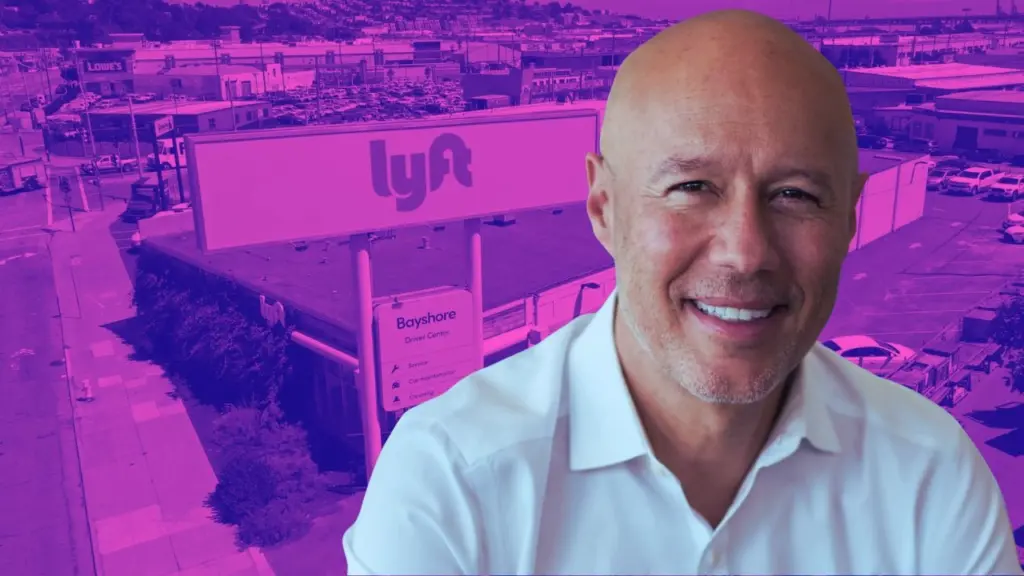
Lyft is publicly traded on NASDAQ. Co-founders Logan Green and John Zimmer retain significant stakes through multi-class share arrangements that gave them outsized voting power — though both have stepped back from daily operations. Vanguard (~9%) and BlackRock (~6%) are the largest holders by share count. Current CEO David Risher joined in April 2023 and has been executing a focused turnaround strategy.
| Shareholder | Type | Approx. Stake | Notes |
|---|---|---|---|
| Logan Green | Co-founder | ~4% | Former CEO; stepped down 2023; Class B voting power |
| John Zimmer | Co-founder / Advisor | ~3% | Former President; stepped back in 2023 |
| Vanguard Group | Institutional | ~9% | Largest institutional holder |
| BlackRock | Institutional | ~6% | Major passive holder |
| David Risher (CEO) | Executive | Small % via equity grants | Appointed April 2023 |
Lyft — Key Milestones
| Year | Milestone |
|---|---|
| 2012 | Logan Green and John Zimmer launch Lyft from Zimride, a college carpooling company |
| 2013–2018 | Rapid growth in US cities; constant competition with Uber for driver and rider market share |
| 2019 | IPO on NASDAQ; first major ride-hailing company to go public (weeks before Uber) |
| 2021 | Sells self-driving unit Level 5 to Toyota for $550 million; refocuses on core rideshare |
| 2023 (Apr) | David Risher appointed CEO; cuts 26% of workforce; new focus on driver experience |
| 2023 | Sells bikes and scooters business to Focus Acquisition Corp; further simplification |
| 2024 | First full year of GAAP profitability; revenue reaches ~$5.8B; market position stabilizes |
Leadership at Lyft
David Risher became CEO of Lyft in April 2023 and made an immediate impression by cutting 26% of the company’s workforce within days of starting. He came from a background as an early Amazon executive and a decade of running Worldreader, a nonprofit bringing books to children in developing countries. His approach at Lyft has been direct: simplify the business, improve driver pay and satisfaction, and get to profitability. The results have been encouraging — Lyft achieved GAAP profitability in 2024, something that seemed genuinely uncertain just a few years ago. Logan Green and John Zimmer, the original founders, have transitioned to advisory or board roles.
My Take on Lyft
Here’s my honest take: Lyft is a better business today than it was two years ago, and David Risher deserves credit for that. The instinct to simplify — sell the bikes, sell the scooters, stop trying to be everything — was correct. Ride-hailing is brutally competitive, and Lyft’s only viable path is being a genuinely good ride-hailing company rather than a mediocre everything company. The risk I see is autonomous vehicles. If Waymo, Tesla, or another company successfully deploys commercial robotaxis at scale in US cities, the entire driver-based ride-hailing model is disrupted. Lyft and Uber both know this, and how they navigate the AV transition will define the next decade for both companies.
Related Ownership Profiles
For a completely different kind of American entertainment brand, see who owns Caesars Entertainment.
Frequently Asked Questions
Is Lyft still privately owned?
No. Lyft has been publicly traded on NASDAQ under the ticker symbol LYFT since its IPO in 2019, making it one of the first major ride-hailing companies to go public in the United States.
Who founded Lyft and are they still involved?
Lyft was founded in 2012 by Logan Green and John Zimmer, originally growing out of a college carpooling service called Zimride. Both founders have stepped back from day-to-day operations as of 2023 and now serve in advisory or board capacities, though they retain meaningful equity stakes in the company.
Who is the current CEO of Lyft?
David Risher has served as Lyft’s CEO since April 2023. He previously held a senior leadership role at Amazon in its early years and spent roughly a decade leading Worldreader, a nonprofit focused on literacy in developing countries.
Does Lyft operate outside the United States?
No. Lyft sold off its international operations and currently serves only the United States and Canada. This intentional narrowing of scope is part of the company’s broader simplification strategy under David Risher.
Has Lyft ever been profitable?
Lyft achieved GAAP profitability for the first time in 2024, a significant milestone given how long ride-hailing economics made consistent profit seem out of reach. The company posted revenue of approximately $5.8 billion that year.
What is the biggest long-term threat to Lyft’s business?
The rise of autonomous vehicles poses the most significant structural risk. If companies like Waymo or Tesla successfully deploy robotaxis at commercial scale in U.S. cities, the driver-dependent model that both Lyft and Uber rely on could face serious disruption. How Lyft positions itself around AV partnerships or technology will be critical to its next decade.
How does Lyft make money?
Lyft earns revenue primarily by taking a commission on each ride completed through its platform. Riders pay a fare, and Lyft retains a percentage while the remainder goes to the driver. The company has also experimented with subscription plans, advertising, and data partnerships as supplementary revenue streams.
What happened to Lyft’s bikes and scooters business?
Lyft sold its bikes and scooters division to Focus Acquisition Corp in 2023 as part of its strategy to strip back to its core ride-hailing business and reduce operational complexity.
How does Lyft compare to Uber in size?
Lyft is the second-largest ride-hailing platform in the United States, significantly smaller than Uber by both revenue and market share. Unlike Uber, Lyft has no international ride-hailing presence and does not operate food delivery or freight services, making it a much more focused — though narrower — business.
Who are Lyft’s biggest institutional shareholders?
The Vanguard Group holds approximately 9% of Lyft shares, making it the largest institutional investor. BlackRock follows with roughly 6%. Both are passive index fund managers, meaning their stakes reflect Lyft’s inclusion in broad market indices rather than active investment conviction.