
If you have ever bought a concert ticket online and winced at a service fee that seemed larger than the ticket itself, you have already had a personal encounter with Ticketmaster. It is the most powerful — and most complained about — ticketing company in the world. And in March 2026, it just survived the biggest legal threat in its entire history, narrowly escaping a government-forced breakup that could have permanently changed how live events work in America.
So who actually owns Ticketmaster? The answer starts with a small software company in Arizona in 1976, runs through a landmark merger in 2010, and ends with a publicly traded entertainment giant controlled by one of the most influential media investors in the world.
What Is Ticketmaster?
Ticketmaster is a ticket sales and distribution company that sells tickets for concerts, sports, arts, theater, and family events. It is headquartered in Beverly Hills, California, and operates as a fully owned subsidiary of Live Nation Entertainment.
Industry estimates suggest Ticketmaster controls roughly 70% to 80% of primary ticketing for major U.S. concert venues, making it the undisputed dominant force in American live event ticketing.
Who Owns Ticketmaster Right Now in 2026?
The direct answer is clear: Ticketmaster is owned by Live Nation Entertainment following the 2010 merger of the two companies. Live Nation Entertainment, Inc. (NYSE: LYV) is the world’s leading live entertainment company, comprised of global market leaders: Ticketmaster, Live Nation Concerts, and Live Nation Media & Sponsorship.
Ticketmaster is 100% owned by Live Nation Entertainment. It has no independent shareholders, no separate stock listing, and no outside investors of its own. If you want to own a piece of Ticketmaster, the only way to do it is to buy shares of Live Nation Entertainment on the New York Stock Exchange.
Ownership and Key Stakeholders Details
| Owner / Shareholder | Type | Stake | Key Detail |
|---|---|---|---|
| Live Nation Entertainment (NYSE: LYV) | Direct Parent Company | 100% ownership of Ticketmaster | Publicly traded; formed by 2010 Live Nation-Ticketmaster merger |
| Liberty Media Corporation | Largest Shareholder of LYV | ~30–31% of Live Nation | Controlled by billionaire John Malone; most influential single shareholder |
| The Vanguard Group | Institutional Investor | Significant LYV stake | One of the top three LYV institutional holders |
| BlackRock, Inc. | Institutional Investor | Significant LYV stake | Major index fund holder across all large-cap U.S. stocks |
| State Street Global Advisors | Institutional Investor | Significant LYV stake | Third major institutional holder of LYV |
| CPPIB (Canada Pension Plan) | Institutional Investor | Significant LYV stake | Major sovereign-style institutional holder |
| Michael Rapino | CEO & President of Live Nation | Low single-digit % (insider) | Has led the company since 2005; orchestrated the 2010 merger |
| Public Shareholders | Retail Investors | Remaining shares | Anyone can buy LYV stock on the NYSE |
The Origin Story: Arizona, 1976
Ticketmaster began in 1976 with Albert Leffler, Peter Gadwa, and Gordon Gunn III. The company originally developed computerized ticketing software and hardware systems for venues and promoters.
The idea was revolutionary for its time. Before Ticketmaster, buying a concert ticket meant standing in a physical line at a box office, often for hours. Ticketmaster built software that allowed venues to sell tickets through a centralized system — meaning fans could walk into a participating record store or call a phone number to buy a seat without ever visiting the venue.
In 1982, Fred Rosen was appointed Ticketmaster’s CEO, at which point the company’s headquarters were relocated to Los Angeles. Under Rosen, Ticketmaster adopted a different approach — signing long-term exclusive contracts with venues and promoters and introducing revenue-sharing arrangements tied to ticket service charges. These agreements allowed venues and promoters to participate in service-fee revenue, creating financial incentives to adopt Ticketmaster’s system.
That model — exclusive contracts, service fees, and revenue sharing with venues — is the same model that fuels controversy about Ticketmaster to this day.
The Road to Live Nation: IAC, Spinoffs, and the Big Merger
Ticketmaster changed hands several times before landing where it is today.
Ticketmaster was under IAC control in the 2000s and was spun out in 2008 with equity distributed to IAC shareholders, leaving no dominant original-founder stake.
Then came the deal that changed everything. In 2009, Live Nation and Ticketmaster reached an agreement to merge. The new company received regulatory approval and was named Live Nation Entertainment. Michael Rapino, then CEO of Live Nation, became the new company’s CEO, while Ticketmaster CEO Irving Azoff was named executive chairman. The merger was completed on January 25, 2010.
The merger was opposed in the U.S. by some regulators, artists, fans, and competing firms, who argued it would reduce competition in the industry and increase ticket costs. The government approved it anyway — and those concerns proved to be well-founded, triggering years of antitrust scrutiny that culminated in a landmark lawsuit in 2024.
Liberty Media: The Real Power Behind the Curtain
Most people have never heard of Liberty Media Corporation — but it is the single most powerful force shaping how Ticketmaster operates.
Liberty Media Corporation is the largest shareholder of Live Nation, controlling about 30–31% of the company’s outstanding shares through its Liberty Live structure, making it the largest and most influential shareholder. This stake gives Liberty Media meaningful influence over board appointments, executive compensation, and major corporate actions.
Liberty Media is controlled by billionaire John Malone — one of the most influential figures in American media history. Live Nation suddenly became a grand prize for monopolists who understood its capacity for dominance. Eventually, its majority shareholder would be the longtime financier John Malone and his firm Liberty Media, which simultaneously bought up the nation’s only satellite radio outlet SiriusXM, online radio company Pandora, and other media assets.
Malone does not run Ticketmaster day-to-day — that is CEO Michael Rapino’s job. But as the dominant force behind the dominant shareholder, Malone’s strategic vision shapes the long-term direction of everything Live Nation — and therefore Ticketmaster — does.
The $280 Million DOJ Settlement: Ticketmaster Survives a Breakup
The most dramatic chapter in Ticketmaster’s recent history played out in a courtroom in March 2026 — and the outcome could have looked very different.
In May 2024, the Justice Department and a coalition of states sued Live Nation over antitrust violations, with the trial commencing on March 2, 2026. However, within a week, President Donald Trump personally intervened to force a settlement between the DOJ and Live Nation.
Live Nation, the parent company of Ticketmaster, has successfully avoided a breakup — a major development in one of the most high-profile antitrust cases in decades. The company and the Justice Department reached a settlement on Monday, March 9, 2026.
As part of the settlement, Ticketmaster has agreed to pay roughly $280 million in civil penalties and will offer a standalone third-party ticketing system for other companies like SeatGeek to use its technology. The settlement also calls for Live Nation to unwind 13 exclusive booking agreements with amphitheaters across the country.
Live Nation CEO Michael Rapino said: “We have never relied on exclusivity to drive our ticketing business, it has simply been the result of having the best products, services and people in the industry. We are happy to take greater steps to empower artists and venues in their ticketing decisions.”
Shares of Live Nation rose 5% on the day the settlement was announced — investors clearly relieved that a forced breakup was off the table.
Who Is Michael Rapino?
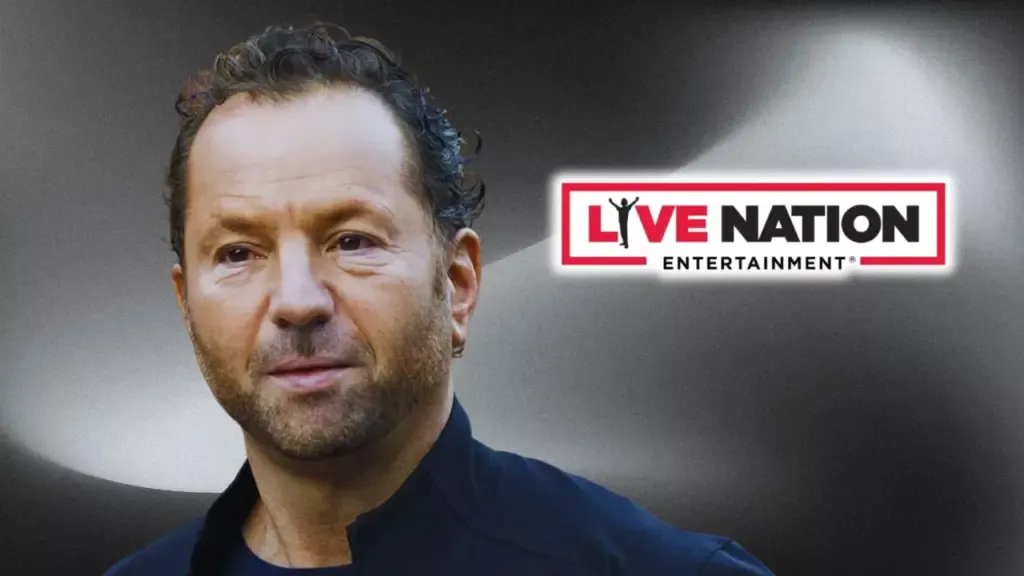
Michael Rapino has led Live Nation Entertainment as Chief Executive Officer and President since 2005. His leadership has helped transform Live Nation into the top live entertainment brand in the world, with operations in 40+ countries and an annual revenue of more than $10 billion. In 2010, he oversaw the merger between Live Nation and Ticketmaster to become Live Nation Entertainment.
Michael Rapino was born in Thunder Bay, Ontario, to a Catholic-Italian family and earned a bachelor of business administration degree from Lakehead University in 1989. Before Live Nation, he spent ten years at Labatt’s Breweries of Canada in various marketing and entertainment roles.
Live Nation’s Continued Global Expansion
Even while fighting the DOJ in court, Live Nation kept expanding. In December 2025, it was announced Live Nation Entertainment was to acquire Royal Arena, a multi-use indoor arena in Copenhagen, Denmark. In January 2026, it was announced that Live Nation had reached an agreement to acquire Paris La Défense Arena from its owner — which, if approved, would add Europe’s largest indoor venue to Live Nation’s portfolio.
Live Nation controls 338 venues globally, promotes concerts for tens of thousands of artists annually, and through Ticketmaster, processes hundreds of millions of ticket transactions every year. It is not just a ticketing company — it is the entire infrastructure of live entertainment.
Frequently Asked Questions (FAQs)
Q1. Who owns Ticketmaster in 2026?
Ticketmaster is 100% owned by Live Nation Entertainment (NYSE: LYV), with Liberty Media as Live Nation’s largest shareholder at ~30–31%.
Q2. When did Live Nation buy Ticketmaster?
Live Nation and Ticketmaster completed their merger on January 25, 2010, creating Live Nation Entertainment.
Q3. Who is the CEO of Ticketmaster’s parent company?
Michael Rapino has served as CEO and President of Live Nation Entertainment since 2005, overseeing both Live Nation and Ticketmaster.
Q4. Is Ticketmaster publicly traded?
No. Ticketmaster itself is not publicly traded — only its parent company Live Nation Entertainment trades on the NYSE under the ticker LYV.
Q5. Who is the biggest shareholder of Live Nation?
Liberty Media Corporation, controlled by billionaire John Malone, holds approximately 30–31% of Live Nation Entertainment — making it the single most powerful shareholder.
Q6. What happened with the Ticketmaster DOJ antitrust case in 2026?
On March 9, 2026, Live Nation settled with the DOJ, agreeing to pay $280 million and unwind 13 exclusive venue agreements — avoiding a forced breakup of Ticketmaster.
Q7. When was Ticketmaster founded?
Ticketmaster was founded in 1976 in Arizona by Albert Leffler, Peter Gadwa, and Gordon Gunn III as a computerized ticketing software company.
Q8. Does Liberty Media own Ticketmaster?
Not directly. Liberty Media owns approximately 30–31% of Live Nation Entertainment, which in turn owns 100% of Ticketmaster.
Ticketmaster is 100% owned by Live Nation Entertainment (NYSE: LYV) — the world’s largest live entertainment company, formed when Live Nation and Ticketmaster merged on January 25, 2010. The biggest single shareholder of Live Nation is Liberty Media Corporation (controlled by billionaire John Malone), which holds approximately 30–31% of the company. Other major shareholders include Vanguard, BlackRock, State Street, and CPPIB. The company is led by CEO Michael Rapino, who has run it since 2005.
On March 9, 2026, Ticketmaster survived its greatest legal threat — a DOJ antitrust trial that could have forced Live Nation to sell it off entirely. Instead, a settlement was reached: Ticketmaster pays $280 million, unwinds 13 exclusive venue agreements, and opens its technology to competitors. Ticketmaster remains inside the Live Nation empire — battered, criticized, but very much intact.