
Meta Platforms, Inc. is one of the most powerful and closely watched companies on earth. The parent company of Facebook, Instagram, and WhatsApp touches more than 3 billion people every single day — making it arguably the largest social media empire in history. But despite being a publicly traded company on NASDAQ, Meta’s ownership structure is anything but ordinary.
Thanks to a dual-class share structure, founder Mark Zuckerberg holds effective voting control over the company regardless of how many shares other investors own. In practice, that means one person sets the direction for a company worth hundreds of billions of dollars.
📘 Meta Platforms — Company Highlights
| Full Name | Meta Platforms, Inc. |
| Ticker | NASDAQ: META |
| Founded | 2004 (as Facebook); renamed Meta 2021 |
| Headquarters | Menlo Park, California, USA |
| CEO | Mark Zuckerberg (founder) |
| Key Platforms | Facebook, Instagram, WhatsApp, Messenger, Threads, Quest VR |
| Revenue (2024) | ~$164 billion |
| Market Cap | ~$1.4 trillion (2025) |
Who Owns Meta?
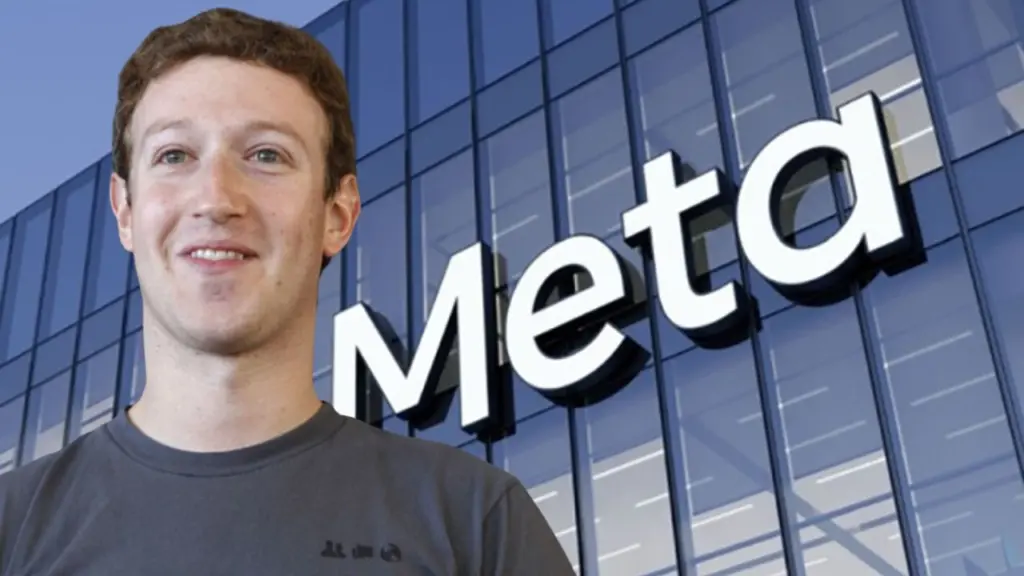
Meta is a publicly traded company, but the question of who “owns” it has a more complicated answer than most public companies. Mark Zuckerberg controls Meta through a dual-class share structure: Class A shares (one vote each) are available to the public, while Class B shares (ten votes each) are held by Zuckerberg and a small group of insiders.
This structure gives Zuckerberg approximately 57–60% of Meta’s total voting power even while owning only around 13% of the total shares outstanding. In practical terms, no shareholder vote can override him. The largest institutional investors — Vanguard, BlackRock, and Fidelity — are among the top shareholders by share count, but they have limited influence over corporate decisions.
| Shareholder | Type | Approx. Stake | Notes |
|---|---|---|---|
| Mark Zuckerberg | Founder / Class B shareholder | ~13% economic / ~57% voting | Dual-class shares give near-total voting control |
| Vanguard Group | Institutional investor | ~7% | Largest Class A holder; limited voting influence |
| BlackRock | Institutional investor | ~6% | Major passive index fund holder |
| Fidelity | Institutional investor | ~4% | Active and index fund exposure |
| Public shareholders | Class A shareholders | Remaining % | Traded on NASDAQ; one vote per share |
Meta — Key Milestones and Acquisitions
| Year | Milestone |
|---|---|
| 2004 | Mark Zuckerberg launches “TheFacebook” at Harvard; incorporated as Facebook, Inc. |
| 2006 | Facebook opens to the public (previously college-only); rapid global growth begins |
| 2012 | Facebook acquires Instagram for ~$1 billion; IPO on NASDAQ raises $16 billion |
| 2014 | Acquires WhatsApp for ~$19 billion and Oculus VR for ~$2 billion |
| 2018 | Cambridge Analytica data scandal triggers congressional hearings and global scrutiny |
| 2021 | Facebook, Inc. rebrands to Meta Platforms, Inc.; pivots strategy toward the metaverse |
| 2022 | “Year of Efficiency” — major layoffs (~11,000 employees); stock falls ~65% from peak |
| 2023 | Launches Threads (Twitter competitor); stock recovers strongly; AI investment accelerates |
| 2024 | Meta AI assistant launched across all platforms; record revenue of ~$164 billion |
Leadership at Meta
Mark Zuckerberg has served as CEO of Meta since he founded the company in 2004. He is one of the rare founders of a company of this scale who has maintained full operational control from day one to the present day. Zuckerberg’s leadership style evolved significantly over the years — from the scrappy hacker culture of early Facebook to the more deliberate, long-horizon bets on AI and augmented reality that define Meta today.
Sheryl Sandberg, who joined as COO in 2008 and helped build Meta’s advertising empire, departed in 2022. Susan Li now serves as CFO. On the product and technical side, Meta runs on deep internal talent across its AI research labs (FAIR), Reality Labs (VR/AR), and its core apps divisions.
My Take on Meta
Meta is a fascinating and somewhat uncomfortable case study in what concentrated ownership looks like in the modern tech era. Mark Zuckerberg built something extraordinary — a company that connects more than three billion people — but the dual-class share structure that keeps him in control is worth understanding before you invest or form an opinion.
On one hand, it’s allowed Meta to make bold long-term bets (like the $30+ billion Reality Labs investment) without being pressured by short-term market demands. On the other hand, it means one person’s judgment call is effectively unchallenged. The 2022 “Year of Efficiency” showed that Zuckerberg can course-correct sharply when needed. Whether the AI and metaverse bets pay off is the big open question — but there’s no doubt this is one of the most closely watched companies in the world for a reason.
Frequently Asked Questions
Q1. What is Meta Platforms and what products does it own?
Meta Platforms, Inc. is the parent company behind some of the world’s most widely used digital platforms — including Facebook, Instagram, WhatsApp, Messenger, Threads, and Quest VR. Originally founded as Facebook in 2004, the company rebranded to Meta in 2021 to reflect its broader vision beyond social media, particularly its push into AI and the metaverse.
Q2. Who actually owns and controls Meta?
While Meta is a publicly traded company on NASDAQ, founder and CEO Mark Zuckerberg holds effective control through a dual-class share structure. Despite owning only around 13% of total shares, he commands approximately 57–60% of all voting power — meaning no shareholder vote can override his decisions.
Q3. What is a dual-class share structure and why does it matter?
A dual-class share structure means the company issues two types of shares with different voting rights. Meta’s Class A shares (available to the public) carry 1 vote each, while Class B shares (held by Zuckerberg and insiders) carry 10 votes each. This gives Zuckerberg near-total decision-making authority regardless of how many shares outside investors hold.
Q4. Who are Meta’s largest institutional shareholders?
The biggest institutional investors in Meta by share count are Vanguard Group (~7%), BlackRock (~6%), and Fidelity (~4%). However, since they only hold Class A shares, their voting influence remains limited compared to Zuckerberg’s Class B voting power.
Q5. What are some of Meta’s biggest acquisitions and milestones?
Meta has made several landmark moves over the years — acquiring Instagram for ~$1 billion in 2012, WhatsApp for ~$19 billion in 2014, and Oculus VR for ~$2 billion the same year. Other major milestones include its 2012 NASDAQ IPO, the 2018 Cambridge Analytica scandal, the 2021 rebrand to Meta, and the 2022 “Year of Efficiency” that involved laying off around 11,000 employees
Q6. How is Meta performing financially in 2025?
Meta has bounced back strongly after its difficult 2022. The company reported record revenue of approximately $164 billion in 2024, and its market capitalization sits at around $1.4 trillion as of 2025. Growth has been driven largely by advertising revenue across its apps and accelerating investment in AI, including the rollout of the Meta AI assistant across all its platforms.