
There is a very good chance that somewhere in your home, your office, your car, or your backpack, there is a Sharpie. It might be drying out on a desk, clipped to a lanyard, or stuffed into a junk drawer — but it is almost certainly there. Sharpie has become so deeply embedded in everyday American life that most people use the word “Sharpie” the same way they use “Kleenex” or “Band-Aid” — as a stand-in for the entire product category. Nobody asks for a permanent marker. They ask for a Sharpie.
But here is a question very few people stop to think about: who actually owns Sharpie? The answer takes you from a small ink and glue shop in Worcester, Massachusetts in 1857, through a landmark acquisition in 1992, all the way to a $2 billion manufacturing comeback story that is happening right now inside a factory in Maryville, Tennessee.
Here is the complete, verified ownership story of Sharpie — from day one to right now in 2026.
What Is Sharpie?
Sharpie is a brand of writing implement — mainly permanent markers — manufactured by Newell Brands, a public company headquartered in Atlanta, Georgia.
But calling Sharpie just a “permanent marker” is a bit like calling the iPhone just a “phone.” The brand has grown far beyond its original black fine-point marker into a massive product family that includes highlighters, gel pens, paint markers, rollerball pens, and acrylic markers in dozens of colors and tip sizes. Originally designating a single permanent marker, the Sharpie brand has been widely expanded and can now be found on a variety of previously unrelated permanent and non-permanent pens and markers formerly marketed under other brands.
The numbers behind the brand are staggering. By the end of 2002, over 200 million Sharpie markers had been produced — enough for approximately two Sharpie markers for every household in America. And that was more than two decades ago. The brand has only grown since.
Who Owns Sharpie Right Now in 2026?
The direct answer is clear: Sharpie is owned by Newell Brands, Inc. — a publicly traded American consumer goods company that trades on the NASDAQ stock exchange under the ticker symbol NWL.
Newell Brands (NASDAQ: NWL) is a leading global consumer goods company with a strong portfolio of well-known brands, including Rubbermaid, Sharpie, Graco, Coleman, Rubbermaid Commercial Products, Yankee Candle, Paper Mate, FoodSaver, Dymo, EXPO, Elmer’s, Oster, NUK, Spontex, and Campingaz.
Sharpie operates as a brand within Newell Brands’ Learning and Development segment, alongside other writing and creative tools like Paper Mate, EXPO, Elmer’s, and Prismacolor. It is not a separate company — it is a product brand owned entirely by Newell Brands, which in turn is owned by its public shareholders.
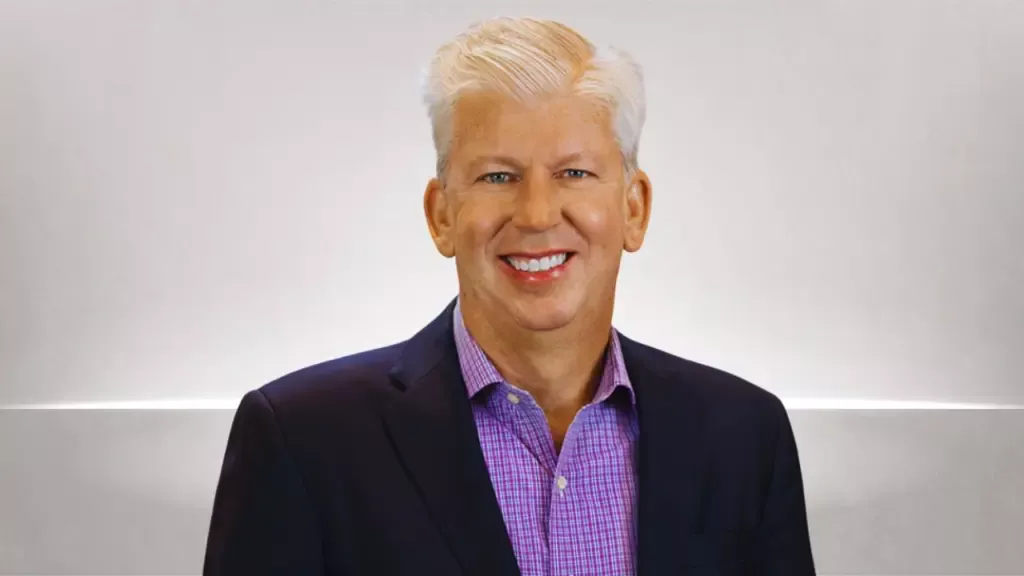
The current CEO of Newell Brands is Chris Peterson, who has served as President and Chief Executive Officer since May 2022. Peterson said after announcing Newell Brands’ fourth quarter and full year 2025 results, “Despite a fluid and challenging macroeconomic environment, our team executed well, and we exited 2025 a stronger and more resilient company.”
Ownership and Key Stakeholders Table
| Owner / Shareholder | Type | Stake | Key Detail |
|---|---|---|---|
| Newell Brands, Inc. (NASDAQ: NWL) | Direct Owner of Sharpie Brand | 100% of Sharpie brand | Publicly traded on NASDAQ; headquartered in Atlanta, Georgia |
| BlackRock, Inc. | Largest Institutional Shareholder | ~11% of Newell Brands | World’s largest asset manager; top shareholder of NWL |
| Vanguard Group, Inc. | Second Largest Institutional Shareholder | ~10.98% of Newell Brands | Passive index fund giant; second biggest NWL holder |
| Pzena Investment Management | Institutional Investor | Significant NWL stake | Active value-oriented institutional shareholder |
| State Street Corporation | Institutional Investor | Significant NWL stake | Major index fund manager; consistent NWL shareholder |
| Dimensional Fund Advisors | Institutional Investor | Significant NWL stake | Quantitative investment firm with consistent NWL holding |
| Public Shareholders | Retail Investors | Remaining shares | Anyone can buy NWL stock on the NASDAQ |
| Chris Peterson | CEO & President | Minimal executive stake | Leads Newell Brands since May 2022 |
| Sanford Manufacturing Company | Original Creator (Historical) | N/A — no longer exists independently | Founded Sharpie in 1964; acquired by Newell in 1992 |
The Origin Story: From Ink and Glue to the World’s Most Famous Marker
The story of Sharpie does not begin in a modern corporate boardroom. It begins in 1857, with two men, a small shop, and a very unglamorous product: ink and glue.
In 1857, Frederick W. Redington and William H. Sanford, Jr. founded the Sanford Manufacturing Company in Worcester, Massachusetts. The company focused on producing and selling ink and glue. In 1866, the company expanded and relocated to Chicago.
The company survived fires, the Great Depression, and two World Wars — slowly building its reputation as a reliable maker of quality ink products. After a ruinous fire in 1899, Sanford rebuilt its factory and headquarters, and started going from strength to strength. In 1940, the company became Sanford Ink Company, focusing on high-quality ink formulations.
Then came the moment that changed everything.
In 1964, right around the time the ballpoint pen was overtaking the old nib fountain pen as America’s preferred writing stick, Sanford needed a bold move to ensure its continued relevance in the industry. Their solution, developed and refined by VP and lead chemist Francis Gilbert, was a pen-like, felt-tipped permanent marker that could write cleanly on virtually any surface.
In 1964, Sanford Ink Company introduced the world to the Sharpie marker. The Sharpie Fine Point black marker was a groundbreaking invention — the first pen-style permanent marker on the market. What set it apart was its ability to write on almost any surface, including glass, wood, stone, plastic, metal, and paper.
NBC talk show hosts Johnny Carson and Jack Parr were some of the first celebrity endorsers. From late-night television to school supply lists, Sharpie spread fast — and it never looked back.
The Product Kept Evolving
One of the secrets behind Sharpie’s long-term success is that the brand never sat still. Every few years, a new product line arrived that pushed the brand into a fresh market.
In 1979, a new style tip was introduced in four colors — the Sharpie Extra Fine Point marker. In 1989, the Sharpie Ultra Fine Point was introduced. With its slim barrel, metal pocket clip, and precise tip that produces clean and accurate lines, the Sharpie Ultra Fine became the first marker to truly write like a pen.
In 2005, the company’s Accent highlighter brand was repositioned under the Sharpie brand name. The Sharpie Mini, a smaller marker with a clip for attaching to a keychain or lanyard, was also launched. In 2006, Sharpie introduced markers with button-activated retractable tips rather than a cap. Sharpie Paint markers were also introduced.
Each of these launches expanded the universe of Sharpie beyond the original black marker — turning it from a single product into a complete family of writing and marking tools.
How Newell Brands Came to Own Sharpie
Sharpie and Newell Brands came together through one of the most important acquisitions in the history of the American stationery industry.
In 1990, Sharpie was acquired by The Newell Companies (later Newell Rubbermaid) as part of Sanford, a leading manufacturer and marketer of writing instruments.
In 1992, The Newell Company bought Sanford Ink for over $680 million. Since then, Sanford under Newell has bought out other household names in writing like EXPO, Mr. Sketch, and Prismacolor.
Over the years, Newell kept growing through strategic acquisitions. In 1999, Newell acquired the Rubbermaid and Graco brand names in a megamerger worth $5.8 billion, renaming the combined firm Newell Rubbermaid. On December 14, 2015, Newell Rubbermaid announced that it would acquire Jarden for over $15 billion of cash and stock. The combined company would be known as Newell Brands.
That final name change — from Newell Rubbermaid to Newell Brands — is what the company is still called today. And Sharpie has been one of its most important and recognizable brands through every chapter of that evolution.
Sharpie’s Pop Culture Moment: Athletes, Presidents, and Astronauts
Few brands in American history have managed to become genuine cultural icons while still being sold for about a dollar at the checkout counter. Sharpie is one of the rare exceptions.
During an October 14, 2002 NFL Monday Night Football game, San Francisco 49ers wide receiver Terrell Owens pulled a black Sharpie marker out of his sock to sign the football he caught to score a touchdown and then gave the ball to his financial adviser in the stands. The moment went viral before “viral” was even a term people used, generating an estimated $5 million in free publicity for the brand overnight.
Sharpies are the writing utensil of choice for astronauts aboard the International Space Station because of their usability in zero gravity. According to Canadian astronaut Chris Hadfield, who commanded the ISS in 2012-2013, “you can hold it any which way and it still works.”
And then there is the White House connection. US President Donald Trump has a well-known preference for using Sharpies to sign official government documents. The brand even has its own political controversy — nicknamed “Sharpiegate” — following an incident in which an apparent alteration was made to a weather map using what appeared to be a Sharpie.
The $2 Billion American Manufacturing Comeback
Perhaps the most remarkable chapter in Sharpie’s recent history is not about marketing or celebrity endorsements — it is about a factory in Tennessee and a decision to bet $2 billion on American workers.
Since 2018, Newell Brands has made nearly $2 billion in investments and overhauled its production process to move Sharpie manufacturing back to the United States. After investing in robots and training, the Maryville factory now makes pens at three to four times its previous speed and has improved product quality.
The company’s $2 billion investment in automated production facilities in Maryville, Tennessee has sparked intense discussion about the future of American manufacturing. The automation did not eliminate jobs but transformed them, requiring different skills and commanding higher wages.
The Maryville facility employs about 550 people, and average wages at the facility have risen roughly 50% in five years. The company achieved these gains without layoffs, redeploying workers into new roles such as automation engineering, supported by expanded training and education programs. The investment has also helped Newell keep prices stable — a Sharpie still sells for about $1 per pen — while fulfilling orders more quickly and cutting shipping costs.
Newell Brands’ Maryville, Tennessee facility is now producing over half a billion markers annually, faster and more efficiently than ever before.
That is half a billion markers every year, made in America, by American workers, inside a factory that has been completely reimagined for the modern era.
What Other Brands Does Newell Brands Own?
Understanding who owns Sharpie also means understanding the enormous company that Sharpie calls home. Newell Brands (NASDAQ: NWL) is a leading global consumer goods company with a strong portfolio of well-known brands, including Paper Mate, Sharpie, Dymo, EXPO, Parker, Elmer’s, Coleman, Marmot, Oster, Sunbeam, FoodSaver, Mr. Coffee, Rubbermaid Commercial Products, Graco, Baby Jogger, NUK, Calphalon, Rubbermaid, Contigo, First Alert, and Yankee Candle.
That is an extraordinary range of products — from the marker in your junk drawer to the baby stroller in your garage to the candle on your dining room table. Newell Brands is one of those companies that touches virtually every room of every American home, even if most consumers have never heard the Newell Brands name.
Who Are the Biggest Shareholders of Newell Brands?
Because Newell Brands is publicly traded on the NASDAQ, ownership of Sharpie ultimately flows through whoever owns shares of NWL stock. And the biggest owners are some of the most powerful financial institutions on earth.
The largest shareholders of Newell Brands include BlackRock, Inc., Pzena Investment Management, Vanguard Group Inc., Dimensional Fund Advisors, Massachusetts Financial Services, and State Street Corp.
The largest institutional owner of Newell Brands is BlackRock, Inc., owning approximately 11% of the company’s total shares outstanding. The second largest institutional shareholder is Vanguard Group, Inc.
Vanguard Group Inc. owned 10.98% of Newell Brands at the end of the most recent reporting quarter, holding over 46 million shares.
No single individual controls Newell Brands the way a founder-led company might be controlled. This is a broadly held public company, where the biggest voices in the room are giant index funds and asset managers that represent millions of ordinary investors.
Sharpie is owned by Newell Brands, Inc. — a publicly traded company on the NASDAQ under the ticker symbol NWL, headquartered in Atlanta, Georgia. Newell Brands acquired the Sharpie brand in 1992 when it purchased Sanford Ink Company for over $680 million. The brand traces its roots all the way back to 1857, when two men started an ink and glue company in Worcester, Massachusetts — and it was officially born in 1964 when Sanford Ink launched the very first pen-style permanent marker in history.
Today, Sharpie is more than just a marker — it is a cultural institution used by astronauts in space, athletes on football fields, presidents in the Oval Office, and hundreds of millions of ordinary people who just need to label a box or sign a birthday card. And behind it all is Newell Brands — a quiet giant of American consumer goods that also makes your Rubbermaid containers, your Yankee Candle, your Coleman camping gear, and your Elmer’s glue.
The largest shareholders of Newell Brands are BlackRock (~11%) and Vanguard Group (~10.98%), with the remaining shares held by institutional investors and public shareholders. CEO Chris Peterson leads the company as it continues its remarkable $2 billion American manufacturing comeback in Maryville, Tennessee — producing over half a billion Sharpie markers every single year.
Frequently Asked Questions (FAQs)
Q1. Who owns Sharpie in 2026?
Sharpie is owned by Newell Brands, Inc., a publicly traded American consumer goods company that trades on the NASDAQ stock exchange under the ticker symbol NWL. Newell Brands is headquartered in Atlanta, Georgia, and has owned the Sharpie brand since 1992, when it acquired Sanford Ink Company — the original creator of the Sharpie marker. The largest institutional shareholders of Newell Brands are BlackRock, Inc. with approximately 11% and Vanguard Group with approximately 10.98% of the company’s shares.
Q2. Who originally created the Sharpie marker?
Sharpie was created by the Sanford Ink Company, which was originally founded in 1857 as Sanford Manufacturing Company in Worcester, Massachusetts by Frederick W. Redington and William H. Sanford, Jr. The company relocated to Chicago in 1866 and was renamed Sanford Ink Company in 1940. In 1964, the company introduced the very first Sharpie Fine Point black marker — the world’s first pen-style permanent marker. The brand was later acquired by Newell Brands in 1992 as part of a deal worth over $680 million.
Q3. Is Sharpie made in the United States?
Yes — and this is one of the most impressive recent stories in American manufacturing. Since 2018, Newell Brands has invested nearly $2 billion to bring Sharpie production back from China to the United States. The company’s factory in Maryville, Tennessee, now produces over half a billion Sharpie markers annually, running at three to four times the speed of previous production methods. The facility employs about 550 workers, whose average wages have risen roughly 50% over five years. Despite all these improvements, a Sharpie still sells for about $1 per pen.
Q4. What company is the parent of Sharpie?
The parent company of Sharpie is Newell Brands, Inc. (NASDAQ: NWL). Newell Brands is a large American consumer goods corporation that owns dozens of well-known household brands beyond Sharpie, including Rubbermaid, Paper Mate, EXPO, Elmer’s, Coleman, Yankee Candle, Graco, Calphalon, Mr. Coffee, and many more. The company is publicly traded, meaning anyone can purchase shares of NWL on the NASDAQ stock market. The current CEO of Newell Brands is Chris Peterson, who has led the company since May 2022.
Q5. Has Sharpie ever been owned by a different company?
Yes. Sharpie was created by the Sanford Ink Company, which operated as an independent company from 1857 all the way through the 1980s. By the summer of 1985, Sanford Corp. even went public for the first time on the stock market. Then in 1990, The Newell Companies began acquiring Sanford, completing the full acquisition in 1992 for over $680 million. Since that acquisition, Sharpie has been continuously owned and operated under the Newell family of companies — which went through several name changes and became today’s Newell Brands following the massive $15 billion merger with Jarden Corporation in 2016.
Discover more from Who Is The Owner Of
Subscribe to get the latest posts sent to your email.