
Right now, somewhere above your head, more than 10,000 satellites are orbiting the Earth at roughly 550 kilometers above the surface — moving so fast they complete a full orbit in about 90 minutes. Together, they form a single internet network that is beaming high-speed broadband to over 10 million people in more than 150 countries, from cattle ranchers in rural Montana to fishermen in remote parts of Southeast Asia to soldiers on active military deployments.
That network is called Starlink. And behind every one of those satellites, every internet connection, and every monthly subscription fee is one of the most fascinating and unusual ownership stories in the history of technology.
Who owns Starlink? The short answer is Elon Musk. But the full picture involves a private company that has raised money across 31 funding rounds, a $1.25 trillion merger that made headlines around the world, an upcoming IPO that could be the largest in history, and a man who controls nearly 79% of all votes in his company while owning just 42% of its equity. That gap between ownership and control is the single most important thing to understand about Starlink — and the story behind it is extraordinary.
Here is everything you need to know, explained clearly from the very beginning.
What Is Starlink?
Starlink is a satellite internet constellation operated by Starlink Services, LLC, an international telecommunications provider that is a wholly owned subsidiary of American aerospace company SpaceX, providing coverage to around 150 countries and territories.
In plain terms, Starlink is an internet service delivered not through cables buried in the ground or cell towers on hillsides — but through a massive network of small satellites flying in low Earth orbit. When you subscribe to Starlink, a small dish on your roof talks directly to those satellites passing overhead, giving you internet access even in places where no cable company would ever bother to lay a wire.
As of March 2026, the constellation consists of over 10,020 satellites in low Earth orbit. Starlink constitutes 65% of all active satellites currently orbiting Earth — meaning that more than half of every working satellite up there belongs to this one company.
The speed numbers are impressive too. Ookla data indicates Starlink accounted for 97.1% of all global satellite internet speed tests in Q3 2025, with U.S. users seeing median download speeds of 117.74 Mbps — faster than many home cable connections.
Who Owns Starlink Right Now in 2026?
Here is the clean, direct answer: Starlink is owned and operated by Starlink Services, LLC, which is a wholly owned subsidiary of SpaceX (Space Exploration Technologies Corp.). There is no outside company that holds any ownership stake in Starlink directly — only in SpaceX as a whole.
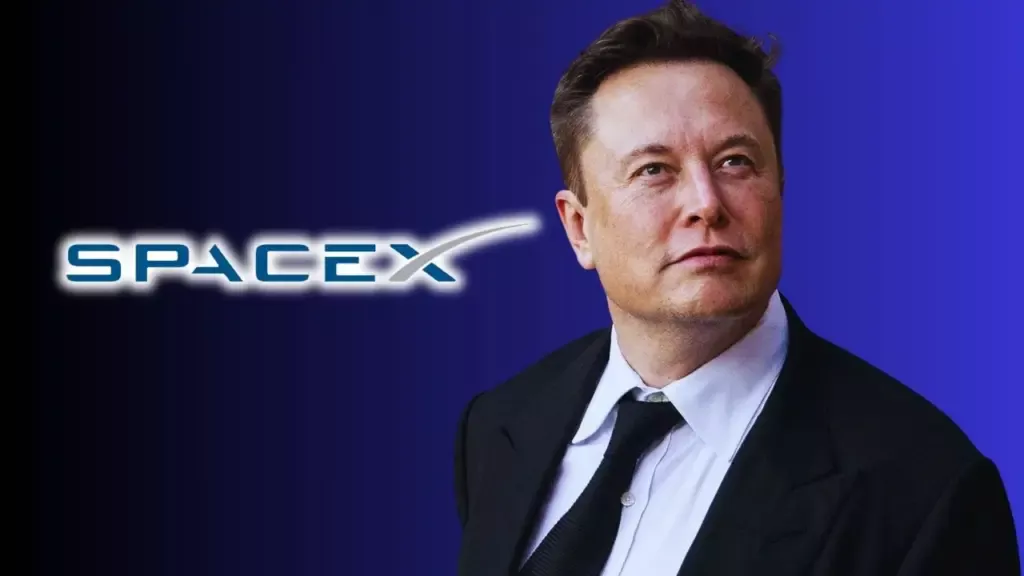
And SpaceX is controlled by Elon Musk.
SpaceX is primarily owned by Elon Musk, who holds approximately 42–43% of equity and controls roughly 79% of voting rights through a dual-class share structure.
That voting structure is the secret to understanding everything about how Starlink is governed. Musk does not need a majority of the shares to run the company exactly as he sees fit. His super-voting shares ensure that no matter how much equity has been distributed across 31 funding rounds and hundreds of investors, Elon Musk has the final word on every major decision — every satellite launch, every pricing change, every government contract, every strategic partnership.
Ownership and Key Stakeholders Table
| Owner / Shareholder | Type | Stake | Key Detail |
|---|---|---|---|
| Elon Musk | Founder, CEO & Controlling Shareholder | ~42–43% equity, ~79% voting power | Controls Starlink through SpaceX via super-voting dual-class shares |
| Alphabet Inc. (Google) | Institutional Investor | ~6–7.5% of SpaceX | $900 million investment in SpaceX’s 2015 Series F round |
| Fidelity Investments | Institutional Investor | Significant stake | Co-invested with Google in 2015; Contrafund holds major position |
| Founders Fund (Peter Thiel) | Venture Capital | ~1.5–3% of SpaceX | Invested $20 million in 2008 Series C; appreciated ~62,000% at current valuations |
| Sequoia Capital | Venture Capital | Significant stake | Entered during the 2021 Series J round |
| Andreessen Horowitz | Venture Capital | Significant stake | Led a $750 million raise in January 2023 |
| EchoStar | Strategic Investor | Up to $8.5 billion in SpaceX Class A stock | Received shares as part of a $17 billion spectrum acquisition deal |
| Saudi Arabia’s PIF & Abu Dhabi Investment Authority | Sovereign Wealth Funds | Undisclosed | Participated in 2023 financing rounds |
| NVIDIA & Qatar Investment Authority | Post-merger Investors | Undisclosed | Gained SpaceX stakes following the February 2026 xAI merger |
| SpaceX Employees | Internal Shareholders | ~10–15% collectively | Hold equity through stock options and direct grants |
| xAI (now SpaceX subsidiary) | Merged Entity | N/A | Acquired by SpaceX in February 2026 in an all-stock deal |
The Origin Story: PayPal Money, Three Failed Rockets, and a Dream
The story of Starlink cannot be told without first telling the story of SpaceX — because Starlink would not exist without the financial engine that SpaceX became, and SpaceX almost did not survive long enough to build it.
Elon Musk founded SpaceX in 2002 using approximately $100 million from the sale of PayPal to eBay. At the time, people thought he had lost his mind. Building rockets is one of the hardest, most expensive, most dangerous things a private company can attempt. The entire modern history of space exploration had been dominated by governments with unlimited budgets. A tech entrepreneur from Silicon Valley with a pile of internet money had no business trying to compete.
And for a while, it looked like the skeptics were right. SpaceX’s first three rocket launches all failed. By the time the fourth rocket flew — and succeeded — in 2008, Musk had spent almost all of the $100 million he had started with. He later said he had enough money for one more launch attempt. If that had failed too, SpaceX would have been over.
It did not fail. And everything that followed — including Starlink — became possible because of that fourth launch.
Starlink itself was conceived as a solution to a financial problem as much as a technological one. Starlink emerged as a project within SpaceX as a way to generate the recurring revenue needed to fund Musk’s broader space ambitions. The first batch of Starlink satellites launched in May 2019.
The idea was elegant: use SpaceX’s own rockets — which were already launching to put other people’s satellites into orbit — to fill the sky with SpaceX’s own satellites. Then charge consumers and businesses for internet access. The recurring subscription revenue would fund the Mars colonization mission. Starlink was never just an internet company. It was always a funding mechanism for something much bigger.
How Starlink Became SpaceX’s Financial Backbone
The numbers behind Starlink’s growth are some of the most impressive in the entire technology industry.
SpaceX announced that it had reached over 1 million subscribers in December 2022, 4 million subscribers in September 2024, 9 million subscribers in December 2025, and 10 million subscribers in February 2026.
Think about what that trajectory means. It took Starlink roughly two years to reach its first million subscribers. It then added another 9 million in the following three years — including adding 1 million new subscribers in just 53 days between January and February 2026. On average, Starlink is now gaining over 20,000 new users every single day.
The financial impact has been transformative. Starlink accounted for roughly $10 billion of SpaceX revenue in 2025, remaining the company’s main revenue engine. The service generated $7.7 billion in 2024 — up 83% year over year — comprising 58% of SpaceX’s total revenue.
Reuters reported SpaceX generated about $8 billion in profit on $15–16 billion in revenue, with Starlink contributing roughly 50–80% of total revenue. For a company that started by burning through $100 million on rocket failures, these numbers are almost surreal.
The xAI Merger: The Biggest Private Deal in Corporate History
The single most dramatic ownership development in Starlink’s recent history happened not in a launch control room but in a boardroom — and it reshaped the entire corporate structure that sits above Starlink.
On February 2, 2026, SpaceX announced that it had acquired xAI, an artificial intelligence company also founded by Musk, in an all-stock transaction that structured xAI as a wholly owned subsidiary of SpaceX. The acquisition combines SpaceX’s rocket and satellite capabilities with xAI’s artificial intelligence technology.
Following Monday’s merger, Tesla’s market cap of about $1.58 trillion is only 26% higher than SpaceX’s stated private market valuation of $1.25 trillion. The combined company — SpaceX plus xAI — is now worth more than all but a handful of the largest corporations in human history. Musk owns an estimated stake of 43% in SpaceX, compared to his 13% ownership of Tesla. That means SpaceX represents more than half of Musk’s paper wealth, which has ballooned past $852 billion.
The strategic logic behind the merger is tied directly to Starlink. SpaceX stated that the goal is to develop space-based AI data centers to overcome the power and cooling limitations of terrestrial facilities — deploying large numbers of satellites to provide AI compute capacity and exploring long-term operations on the Moon and Mars.
The SpaceX IPO: What It Means for Starlink Ownership
For years, Starlink and SpaceX have been the most coveted investment that ordinary people could not buy. That is about to change.
SpaceX is not publicly traded but is expected to have an initial public offering (IPO) in 2026. In January 2026, four banks were selected to lead the IPO.
Multiple financial news reports cite mid-2026, especially June, as the likely window for a SpaceX IPO. The Financial Times and other outlets have suggested that SpaceX could file for and price a listing as early as mid-June 2026 at a $1.75 trillion valuation, potentially raising up to $50 billion. If that happens, it would dwarf Saudi Aramco’s $29 billion debut and become the largest initial public offering in history.
If an IPO proceeds, Musk may pursue a dual-class stock structure or similar mechanism to retain voting control even after the company goes public. That would be the same playbook used by Hyatt, Alphabet, Meta, and Snap — a founder keeping control through super-voting shares even as ordinary investors buy in. It would mean that even after the IPO, Musk would still effectively own and control Starlink.
What Countries Have Complicated Starlink’s Growth?
Starlink’s global expansion has not been without friction. The network’s reach into every corner of the planet has made it a geopolitical flashpoint.
In June 2025, Starlink began notifying its users in South Africa that their service had been suspended. Earlier in March 2025, Musk claimed that “Starlink can’t get a license to operate in South Africa simply because I’m not black” — a reference to South African laws requiring 30% equity ownership to historically disadvantaged groups for telecom licensees. The claim was disputed by officials within the South African government.
On the other side of the world, expansion continued. In February 2026, Starlink received licenses from the Vietnamese Ministry of Science and Technology to operate fixed and mobile satellite networks in Vietnam, through its local unit headquartered in Hanoi. It is expected that Starlink will deploy four ground gateway stations and provide satellite internet access to up to 600,000 user terminals.
These contrasting stories illustrate something important about Starlink’s position in the world: it is powerful enough that governments cannot ignore it, and politically connected enough — through Musk’s relationships with the U.S. government and Department of Defense — that most countries ultimately find a way to work with it.
Is Elon Musk the Sole Owner of Starlink?
This is one of the most common questions people ask, and the answer requires a small but important distinction.
Elon Musk is the controlling owner of SpaceX, which is the parent company of Starlink. He holds approximately 42% of SpaceX’s equity and controls roughly 79% of its votes. No decision gets made at SpaceX — and therefore no decision gets made at Starlink — without Musk’s approval.
However, he is not the only owner of SpaceX. Other major shareholders include Alphabet (~7%), Fidelity, Founders Fund, Sequoia Capital, Andreessen Horowitz, EchoStar, and various sovereign wealth funds. Following the February 2026 xAI merger, former xAI investors including NVIDIA and Qatar Investment Authority also hold stakes.
The practical answer is this: Musk runs Starlink exactly as if he owns it outright — because his voting power gives him complete control. The other shareholders have money in the game, but none of them have the power to override or even meaningfully challenge his decisions.
Starlink is owned by Starlink Services, LLC, a wholly owned subsidiary of SpaceX (Space Exploration Technologies Corp.). SpaceX is a private company controlled by Elon Musk, who holds approximately 42–43% of equity and 79% of all voting power through a dual-class super-voting share structure.
The remaining equity in SpaceX is spread across some of the world’s most powerful institutional investors — including Alphabet, Fidelity, Sequoia Capital, Andreessen Horowitz, and several sovereign wealth funds from the Middle East. Following the landmark February 2026 merger with xAI, NVIDIA and the Qatar Investment Authority also joined the cap table.
Starlink has grown from its first satellite launch in 2019 to a network of over 10,020 satellites serving more than 10 million subscribers in 150+ countries — generating roughly $10 billion in annual revenue and representing 50–80% of all SpaceX income. A planned IPO in mid-2026 could value the combined SpaceX-xAI entity at $1.75 trillion — potentially the largest public offering in history. When that happens, Starlink will finally be something ordinary investors can own a piece of — even if Elon Musk will still be the one calling every shot.
Frequently Asked Questions (FAQs)
Q1. Who owns Starlink in 2026?
Starlink is owned by Starlink Services, LLC, a wholly owned subsidiary of SpaceX, which is controlled by Elon Musk.
Q2. What percentage of SpaceX does Elon Musk own?
Elon Musk owns approximately 42–43% of SpaceX’s equity and controls roughly 79% of all voting rights.
Q3. Is Starlink a separate company from SpaceX?
No. Starlink is a wholly owned subsidiary of SpaceX — it is not an independent company.
Q4. Who are the biggest investors in SpaceX besides Elon Musk?
The biggest outside investors include Alphabet (Google), Fidelity Investments, Sequoia Capital, and Andreessen Horowitz.
Q5. How many Starlink subscribers are there in 2026?
Starlink surpassed 10 million subscribers across more than 150 countries as of February 2026.
Q6. How much revenue does Starlink generate?
Starlink generated approximately $10 billion in revenue in 2025, representing 50–80% of all SpaceX income.
Q7. What was the SpaceX and xAI merger in 2026?
On February 2, 2026, SpaceX acquired Elon Musk’s AI company xAI in an all-stock deal valuing the combined entity at $1.25 trillion.
Q8. Can regular investors buy Starlink stock?
Not yet — SpaceX is private, but a public IPO is expected in mid-2026 at a target valuation of $1.75 trillion.
Discover more from Who Is The Owner Of
Subscribe to get the latest posts sent to your email.