
Two days ago, on March 24, 2026, one of the most talked-about artificial intelligence products in history quietly said goodbye. OpenAI posted a short message on X that simply read: “We’re saying goodbye to Sora. To everyone who created with Sora, shared it, and built community around it: thank you. What you made with Sora mattered, and we know this news is disappointing.”
Just like that, Sora was gone. No warning. No long runway. No farewell tour.
But the story of who owned Sora, how it was built, what it became, and why it collapsed in less than six months as a public product is one of the most fascinating — and in many ways heartbreaking — stories in the short history of artificial intelligence. It involves a young research team that built something genuinely revolutionary, a $1 billion Disney deal that evaporated overnight, a copyright war with Hollywood, and an AI company that decided it had spread itself too thin.
Here is the complete story, from the very first line of code to the very last goodbye.
What Was Sora?
Sora was a text-to-video model and social media app developed by OpenAI. The model generated short video clips based on prompts, and could also extend existing short videos.
In plain terms, you could type a sentence — “a golden retriever running through a field of sunflowers at sunset” — and Sora would generate a realistic, cinematic video clip of exactly that, in seconds. No camera crew. No director. No editing software. Just words, and then video.
When OpenAI announced Sora in February 2024, the reaction from the AI community was immediate. The model could generate realistic, cinematic video clips from text prompts — up to a minute long, with coherent camera movement, lighting, and scene composition that actually matched what you described. For a field that had been producing choppy, four-second clips with obvious artifacts, this was a significant leap.
It was, in the words of many people who saw it for the first time, a genuine shock. Nothing had ever looked like this before.
Who Owns Sora?
Sora was fully owned, developed, and operated by OpenAI — the American AI research company headquartered in San Francisco, California. It was never a separate company, never a spin-off, and never independently funded. It was an OpenAI product, built by an OpenAI team, and owned entirely by OpenAI from its very first day to its very last.
Understanding who owns Sora, then, means understanding who owns OpenAI — and that answer is more complicated and more interesting than most people realize.
OpenAI’s for-profit arm is now a public benefit corporation called OpenAI Group PBC. Under the new structure, the OpenAI Foundation holds a 26% stake in the for-profit, with 47% held by current and former employees and investors.
Microsoft holds roughly 27% of OpenAI Group, and the remaining 47% is held by current and former employees and investors.
So the ownership of Sora — as a product of OpenAI — flows directly from OpenAI’s own ownership structure, which is one of the most unusual in all of corporate America.
OpenAI Ownership and Key Stakeholders Table
| Owner / Stakeholder | Type | Stake | Key Detail |
|---|---|---|---|
| OpenAI Foundation (formerly OpenAI Nonprofit) | Controlling Shareholder | ~26% equity, 100% board control | Nonprofit entity; appoints all board members; valued at ~$130 billion |
| Microsoft | Largest External Shareholder | ~27% of OpenAI Group PBC | Invested $13+ billion total; valued at ~$135 billion; holds non-voting observer board seat |
| SoftBank | Major Investor | ~11% stake | Invested $40+ billion; one of the largest AI bets in history |
| Employees & Former Employees | Internal Shareholders | ~25% combined | Includes current and former staff with equity compensation |
| Other VC Investors | Institutional Investors | Remaining stake | Includes Andreessen Horowitz, Sequoia Capital, Thrive Capital and others |
| Sam Altman | CEO | 0% equity | Leads the company but holds no financial ownership stake |
| Sora Research Team (Bill Peebles, Tim Brooks) | Builders | No equity in Sora specifically | Built the technology inside OpenAI; Peebles headed Sora; Brooks left for Google in 2024 |
The Unusual Ownership Structure of OpenAI — Explained Simply
Most companies are owned by the people who put money into them. The more money you invest, the more of the company you own, and the more votes you get. OpenAI works nothing like that.
Microsoft is the largest external shareholder at 27% but does not control the company. The OpenAI Foundation maintains governance control despite holding only 26% equity.
The OpenAI Foundation appoints all members of the board of directors of OpenAI Group and can replace directors at any time.
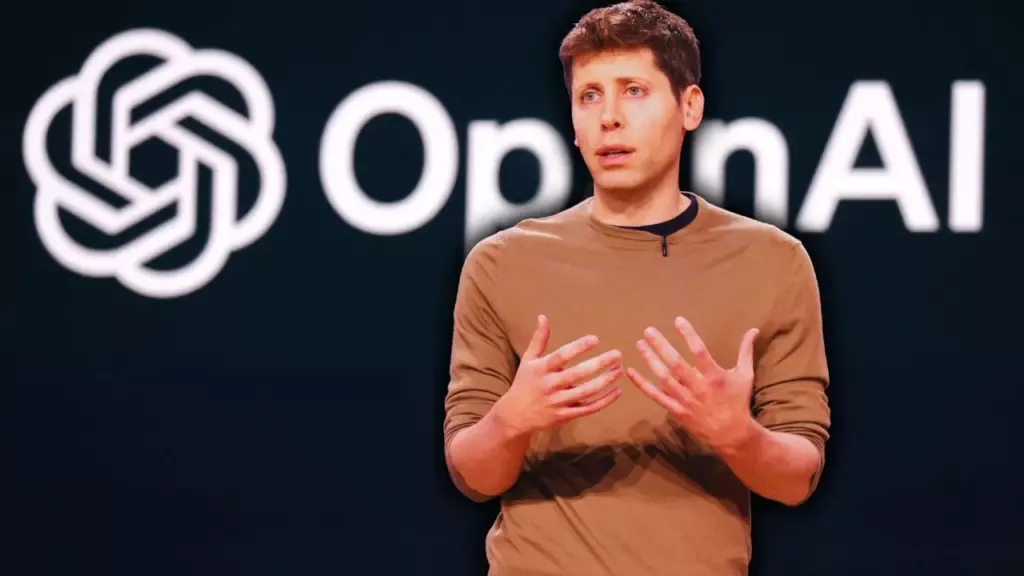
And here is the most remarkable detail of all: OpenAI CEO Sam Altman will not receive any equity in the company following the restructuring plan. This settles one of the most debated aspects of OpenAI’s evolution and signals that Altman will continue to lead the company without direct ownership — a rare position for a CEO at the center of one of the tech industry’s most valuable enterprises.
The man who runs one of the most powerful technology companies in the world, the CEO who approved and championed Sora, owns exactly zero percent of the company. That is almost unheard of in Silicon Valley history.
The People Who Actually Built Sora
While OpenAI owns Sora, two researchers deserve enormous credit for actually building it from scratch.
The Sora team was led by William (Bill) Peebles and Tim Brooks. Bill Peebles graduated from Berkeley in May 2023, and his co-authored diffusion Transformer paper became the core theory of Sora. Tim Brooks graduated in January 2023, and he helped kickstart the project at OpenAI in January 2023.
Together with Bill Peebles, a former Berkeley colleague, Brooks began to engineer a model that could generate high-definition clips up to a minute long. Their strategy involved a novel way of breaking images and videos into smaller bits of information, which allowed them to train their model on a broader range of visual data.
Sora researcher Tim Brooks stated that the model learned how to create 3D graphics from its dataset alone, while fellow Sora researcher Bill Peebles said that the model automatically created different video angles without being prompted.
These were two relatively young researchers — both fresh out of their PhDs — who built something that shook the entire entertainment industry. Tim Brooks eventually left OpenAI in October 2024 to join Google DeepMind, and Bill Peebles remained at OpenAI as head of Sora until its shutdown.
The Complete Timeline: From First Frame to Final Goodbye
January 2023 — The Project Begins Tim Brooks kickstarts the Sora project inside OpenAI. He and Bill Peebles begin engineering a model that can generate high-definition video clips from text.
February 15, 2024 — The World First Sees Sora On February 15, 2024, OpenAI first previewed Sora by releasing multiple clips of high-definition videos it had created — including an SUV driving down a mountain road, an animation of a short fluffy monster next to a candle, two people walking through Tokyo in the snow, and fake historical footage of the California gold rush. The internet went into a frenzy. The phrase “reality doesn’t exist anymore” went viral.
December 9, 2024 — Public Launch As of December 9, 2024, OpenAI had gradually made Sora available to the public for ChatGPT Pro and ChatGPT Plus users in the U.S. and Canada.
September 30, 2025 — Sora 2 Drops Sora 2 was unveiled on September 30, 2025, with an iOS app at the same time, as well as an Android app two months later. The app hit the No. 1 spot in the App Store’s Photo and Video category within 24 hours.
December 2025 — The Disney Deal The Walt Disney Company and OpenAI reached an agreement for Disney to become the first major content licensing partner on Sora. As part of the three-year licensing agreement, Sora would be able to generate short, user-prompted social videos drawing from more than 200 Disney, Marvel, Pixar and Star Wars characters. Disney would make a $1 billion equity investment in OpenAI.
It seemed like the ultimate validation. The most iconic entertainment company in the world had put its characters — and a billion dollars — behind Sora.
March 24, 2026 — The Shutdown OpenAI plans to discontinue its Sora AI video generator six months after the high-profile launch of a standalone app for the service, as the company works to simplify its portfolio of artificial intelligence products. The ChatGPT maker and Walt Disney Co. are also winding down their partnership, which had centered on Sora.
The Disney deal was gone. The app was gone. Sora was gone.
Why Did Sora Shut Down? The Real Reasons
The shutdown shocked millions of users and sent waves through the technology and entertainment industries. But if you look closely, the warning signs had been there for months.
The Economics Were Brutal
OpenAI was estimated to be spending $15 million a day on inference to enable users to produce videos. Beyond that, the head of Sora, Bill Peebles, admitted on social media that “the economics are completely unsustainable.”
Video generation requires dramatically more computing power than text generation. Every time a user created a clip, OpenAI was burning through expensive GPU time at a rate that the subscription revenue could never realistically cover.
The Revenue Was Nowhere Near Enough
Downloads peaked at over 3.3 million in November 2025 but dropped sharply to about 1.1 million by February 2026. In-app purchases generated only $2.1 million — far too little to justify the costs for a company burning cash ahead of a potential IPO.
The Copyright War Got Too Hot
A growing chorus of advocacy groups, academics and experts expressed concerns about the dangers of letting people create AI videos on just about anything they could type into a prompt, leading to the proliferation of nonconsensual images and realistic deepfakes. OpenAI was forced to crack down on AI creations of public figures — among them Michael Jackson, Martin Luther King Jr. and Mister Rogers — doing outlandish things, but only after an outcry from family estates and an actors’ union.
OpenAI Needed to Simplify
OpenAI as a company is looking to realign its workforce and investment to champion successes where it can make a difference, rather than trying to do a billion things badly. The company spent most of 2025 launching a series of apps, including Sora and its browser, Atlas, which have not necessarily succeeded in cutting through to the general public.
The Disney Deal That Vanished Overnight
The collapse of the Disney-OpenAI relationship is one of the most dramatic business reversals in recent memory.
In December 2025, Disney CEO Bob Iger and Sam Altman stood together announcing a landmark deal. Disney characters — Mickey Mouse, Cinderella, characters from Marvel, Pixar, and Star Wars — would come to life inside Sora. Disney would invest $1 billion in OpenAI. It was supposed to be the beginning of a new era for AI and entertainment.
A source familiar with the matter says Disney is exiting the deal it signed with OpenAI last year, in which it pledged to invest $1 billion in the company and agreed to license some of its characters for use in Sora.
The deal was entirely in stock warrants rather than a cash licensing fee. That detail matters — Disney had not yet handed over actual cash when the deal collapsed. The warrants were simply cancelled. Still, the reputational blow to both companies was significant.
What Comes Next for OpenAI Video?
The shutdown of Sora does not mean OpenAI is walking away from video forever.
A newer model — internally codenamed Spud — is set to take Sora’s place. OpenAI has been clear that it is not getting out of the AI video business entirely — it is getting out of the standalone app business, and focusing on integrating video generation directly into ChatGPT rather than running it as a separate product with its own infrastructure costs.
Meanwhile, the competition is already moving in. Elon Musk said his artificial intelligence company, xAI, plans to upgrade its AI video generator, seizing on an opening left by rival OpenAI’s decision to discontinue Sora. “The next Grok Imagine release will be epic,” Musk said in a social media post. “We are doubling down.”
Google, which has its own AI video product called Veo, is now arguably the biggest player left standing in the AI video generation space with real scale.
Sora was owned, built, and operated entirely by OpenAI — a company that is itself owned by the OpenAI Foundation (26%, with full board control), Microsoft (27%), SoftBank (~11%), and a combination of employees and other investors (remaining stake). CEO Sam Altman owns zero equity in the company despite running it.
Sora itself was built by a small, brilliant team led by researchers Bill Peebles and Tim Brooks, who turned a rejected academic paper into the most talked-about AI video tool in the world. It previewed in February 2024, launched publicly in December 2024, released Sora 2 in September 2025, signed a landmark $1 billion deal with Disney in December 2025, and then shut down entirely on March 24, 2026 — all in just over two years.
The economics were brutal, the copyright battles were relentless, and OpenAI ultimately decided its energy was better spent elsewhere. Sora ended not with a crash, but with a quiet goodbye on social media — and a promise that more is coming.
Frequently Asked Questions (FAQs)
Q1. Who owns Sora AI?
Sora was fully owned by OpenAI, the American AI research company based in San Francisco, California. It was never a standalone company or independently funded product — it was built entirely within OpenAI by an internal research team. OpenAI itself is controlled by the OpenAI Foundation, a nonprofit entity that holds 26% equity and 100% board appointment power, with Microsoft as the largest external shareholder at 27%, and SoftBank holding approximately 11%. On March 24, 2026, OpenAI officially shut Sora down.
Q2. Who created Sora and when?
Sora was created by a research team inside OpenAI, with the project beginning in January 2023. The two lead researchers were Tim Brooks and Bill Peebles — both of whom had just completed their PhDs from UC Berkeley. Tim Brooks helped kickstart the project and spearheaded its early research direction before leaving OpenAI for Google DeepMind in October 2024. Bill Peebles remained as head of Sora until its shutdown. OpenAI first publicly previewed Sora on February 15, 2024, and the product launched publicly in December 2024.
Q3. Why did OpenAI shut down Sora?
OpenAI shut down Sora on March 24, 2026 for several key reasons. The cost of running the product was unsustainable — the company was estimated to be spending $15 million a day on computing power to generate videos. Revenue from the app came to only $2.1 million in in-app purchases, nowhere near enough to cover those costs. Downloads also fell from a peak of 3.3 million in November 2025 to about 1.1 million by February 2026. On top of that, Sora faced intense backlash from Hollywood, copyright holders, and deepfake experts. OpenAI ultimately decided to simplify its product portfolio and redirect computing resources toward more profitable areas like coding and reasoning tools.
Q4. What happened to the Disney and Sora deal?
In December 2025, Disney and OpenAI announced a landmark three-year partnership in which Disney would license more than 200 characters from Disney, Marvel, Pixar, and Star Wars for use inside Sora, and would invest $1 billion in OpenAI through stock warrants. It was one of the biggest AI-entertainment deals ever announced. However, when OpenAI shut down Sora on March 24, 2026, the entire partnership immediately collapsed. Disney confirmed it was exiting the deal entirely. Since the investment was structured as stock warrants rather than cash, no money had actually changed hands — but the reputational impact on both companies was enormous.
Q5. Is OpenAI still doing AI video after shutting down Sora?
Yes. OpenAI has confirmed it is not walking away from AI video permanently — it is restructuring how it delivers that capability. Rather than maintaining Sora as a standalone app with its own massive infrastructure costs, the company plans to integrate video generation directly into ChatGPT. An internal successor model, codenamed Spud, is reportedly in development. OpenAI CEO Sam Altman has also said the company is not getting out of the AI video business, just simplifying its overall product lineup. Meanwhile, competitors like Google Veo and Tesla’s owner, Elon Musk‘s xAI Grok Imagine are already moving aggressively to fill the space that Sora’s shutdown has opened up.
Discover more from Who Is The Owner Of
Subscribe to get the latest posts sent to your email.