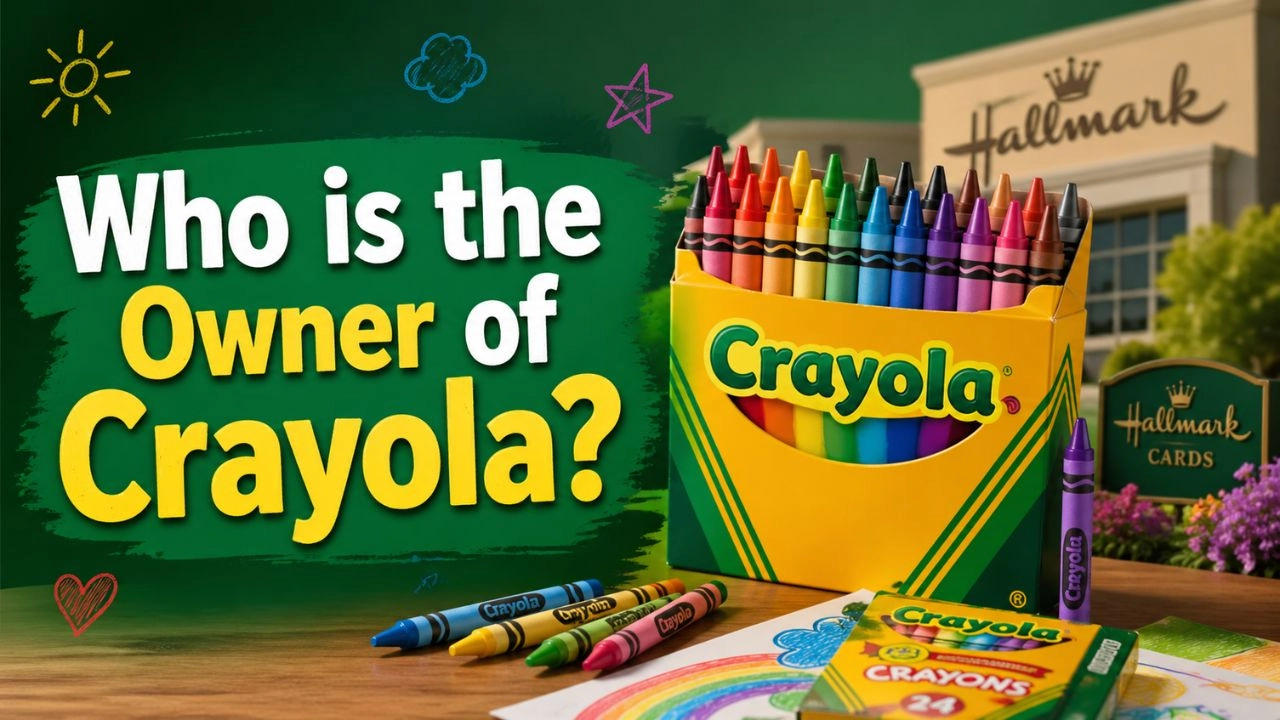
Who owns Crayola is one of those questions where the answer surprises most people. Crayola is not publicly traded, and it’s not owned by a toy conglomerate like Mattel or Hasbro. It’s owned by one of America’s most recognizable private companies — the greeting card giant Hallmark. Here’s the complete story of who owns Crayola in 2026.
🖍️ Crayola — Company Highlights
| Brand Founded | 1903 (Binney & Smith Company, est. 1885) |
| Current Owner | Hallmark Cards, Inc. |
| Acquired by Hallmark | 1984 |
| Ownership Type | Privately held (Hallmark is family-owned) |
| Headquarters | Easton, Pennsylvania |
| Crayons Produced | ~3 billion crayons per year |
| Key Products | Crayons, markers, colored pencils, Model Magic, paints, art kits |
Who Owns Crayola in 2026?
Crayola is owned by Hallmark Cards, Inc. — the Kansas City-based greeting card company that is itself privately held and majority-owned by the Hall family. Hallmark acquired Crayola’s parent company, Binney & Smith, in 1984, and has owned the Crayola brand ever since.
This means Crayola is not publicly traded. You cannot buy shares of Crayola on any stock exchange. The company operates as a subsidiary of Hallmark, producing art and craft supplies primarily for children, while Hallmark focuses on its core greeting card and entertainment businesses.
The Origins: Binney & Smith, 1885
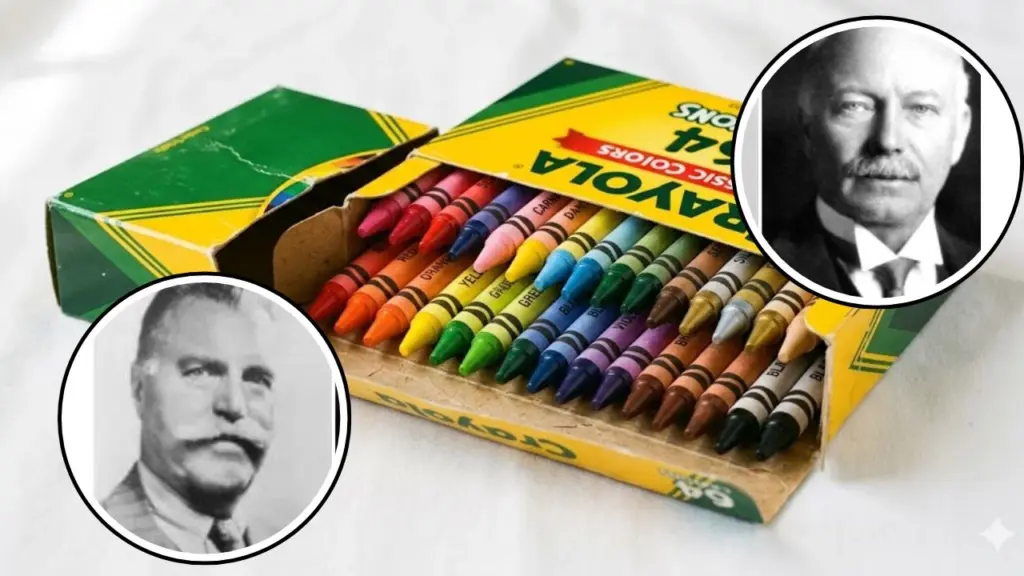
The company that would become Crayola started not as a toy company, but as an industrial pigment supplier. Binney & Smith was founded in 1885 in New York City by cousins Joseph Binney and C. Harold Smith. Their company initially made industrial products including carbon black (used in automobile tires) and red barn paint.
Edwin Binney — Joseph’s son — joined the company and led a pivot toward school supplies. In 1900, Binney & Smith began selling dustless chalk to schools. Noticing that children had no affordable, safe, colorful crayons to use, Edwin and his wife Alice Stead Binney developed a wax crayon using a European paraffin wax formula adapted for American schoolchildren.
The Birth of the Crayola Brand: 1903
In 1903, Binney & Smith introduced the first box of Crayola crayons — a set of 8 colors sold for just 5 cents. The name “Crayola” was coined by Alice Stead Binney, combining the French word “craie” (chalk) with “ola” from the word “oleaginous” (oily), reflecting the waxy composition of the crayons.
The product was an immediate success with schools and families. Over the following decades, Crayola expanded its color range dramatically. By the mid-20th century, Crayola was synonymous with childhood creativity across the United States.
Hallmark Acquires Binney & Smith: 1984
In 1984, Hallmark Cards acquired Binney & Smith — and with it, the Crayola brand — as part of a broader diversification strategy. Hallmark was looking to expand beyond greeting cards into related consumer products that involved creativity and personal expression. Crayola was a natural fit.
Hallmark has kept Crayola as a subsidiary ever since. In 2007, Binney & Smith officially changed its corporate name to Crayola LLC, reflecting the dominance of the Crayola brand over the original company name.
Who Is Hallmark Cards?
Hallmark Cards, Inc. was founded in 1910 by Joyce Clyde Hall — known as J.C. Hall — in Kansas City, Missouri. Hallmark is one of the largest privately held companies in the United States and remains majority-owned by the Hall family, descendants of the founder.
Hallmark is best known for its greeting cards, which are sold in over 100 countries. But the company also owns the Hallmark Channel (cable TV), the Crayola brand, and various other consumer products businesses. As a private company, Hallmark does not disclose detailed financial results, but it is estimated to generate billions in annual revenue.
Crayola’s Key Milestones
| Year | Event |
|---|---|
| 1885 | Binney & Smith founded in New York City by Joseph Binney and C. Harold Smith |
| 1903 | First box of 8 Crayola crayons introduced at 5 cents; name coined by Alice Stead Binney |
| 1958 | 64-crayon box with built-in sharpener introduced — becomes iconic |
| 1984 | Hallmark Cards acquires Binney & Smith (and the Crayola brand) |
| 1996 | Crayola opens its Experience museum in Easton, Pennsylvania |
| 2007 | Binney & Smith officially renames itself Crayola LLC |
| 2017 | Dandelion yellow retired from the 24-count box in a widely covered cultural moment |
| 2026 | Crayola continues as a Hallmark subsidiary; ~3 billion crayons produced annually |
How Many Crayola Colors Exist?
As of 2026, Crayola’s standard large set contains 120 colors. Over the history of the brand, Crayola has produced well over 200 distinct named colors, retiring some and introducing new ones periodically. Color names are a huge part of Crayola’s brand identity — names like “Tickle Me Pink,” “Razzmatazz,” and “Outer Space” have become culturally iconic.
Crayola produces approximately 3 billion crayons per year at its Easton, Pennsylvania factory — a figure that works out to roughly 12 million crayons every working day.
My Take on Crayola’s Ownership
Crayola being owned by Hallmark is one of those corporate pairings that makes intuitive sense the moment you hear it. Both brands are about personal expression — greeting cards and crayons occupy a similar emotional space in American life. They’re both tactile, nostalgic, and tied to handmade sentiment in ways that digital alternatives haven’t fully replaced.
What’s remarkable about Crayola is that it has survived over 120 years without being disrupted. It faced no serious existential threat from digital technology the way LeapFrog did from iPads, or the way Kodak was destroyed by digital cameras. A wax crayon is still a wax crayon, and children still want them.
The Hall family’s stewardship of both Hallmark and Crayola shows what long-term private ownership can do for a brand — no pressure from quarterly earnings reports, no activist investors demanding asset sales, just consistent, patient brand management across generations.
FAQs
Who owns Crayola?
Crayola is owned by Hallmark Cards, Inc. — the privately held greeting card company headquartered in Kansas City, Missouri. Hallmark acquired Crayola’s parent company, Binney & Smith, in 1984 and has owned the Crayola brand ever since.
Is Crayola publicly traded?
No. Crayola is not publicly traded. It operates as a privately held subsidiary of Hallmark Cards. Hallmark itself is also privately held and majority-owned by the Hall family, descendants of founder J.C. Hall.
Who invented Crayola crayons?
Crayola crayons were developed by Edwin Binney and introduced to the public in 1903. The name “Crayola” was coined by Edwin’s wife, Alice Stead Binney. The first box contained 8 colors and sold for 5 cents.
Where are Crayola crayons made?
Crayola crayons are manufactured at the company’s factory in Easton, Pennsylvania, which also houses the Crayola Experience visitor attraction. The factory produces approximately 3 billion crayons per year.
How old is the Crayola brand?
The Crayola brand was introduced in 1903, making it over 120 years old as of 2026. The parent company, Binney & Smith, was founded even earlier in 1885. Crayola is one of the longest-lasting consumer product brands in American history.