Who owns Hasbro is a question more people should be asking — because the answer reveals just how much of the toy industry is controlled by institutional Wall Street money, and how little of it is still in the hands of the families who built these companies. Hasbro started as a small textile remnants business run by two brothers in Providence, Rhode Island. Today it’s a $5 billion corporation whose shareholders are mostly giant index funds.
I find Hasbro fascinating because it’s one of those companies that feels American in a deep, almost nostalgic way — Monopoly, G.I. Joe, Nerf, Play-Doh. And yet the ownership story is entirely modern: no founding family, no single controlling visionary, just institutional investors managing billions in diversified portfolios.
Here’s the complete, real story of who owns Hasbro in 2026.
Who Owns Hasbro in 2026?
Hasbro, Inc. is a publicly traded American toy and entertainment company listed on the NASDAQ stock exchange under the ticker symbol HAS. The Hassenfeld family — who founded the company in 1923 — no longer holds a controlling stake. Ownership today is dominated by large institutional investment firms:
| Shareholder | Approximate Stake | Type |
|---|---|---|
| The Vanguard Group | ~8.5% | Institutional (index fund) |
| BlackRock, Inc. | ~7.2% | Institutional (asset manager) |
| State Street Corporation | ~4.8% | Institutional (index fund) |
| Geode Capital Management | ~2.1% | Institutional |
| Other Institutional Investors | ~60% | Mutual funds, pension funds, ETFs |
| Retail / Individual Investors | ~17% | Public shareholders |
No single entity holds a controlling interest in Hasbro. The company is governed by its board of directors and operates under typical public company governance rules.
🧸 Hasbro, Inc. — Company Highlights
| Full Name | Hasbro, Inc. |
| Founded | 1923, Providence, Rhode Island, USA |
| Founders | Henry and Helal Hassenfeld |
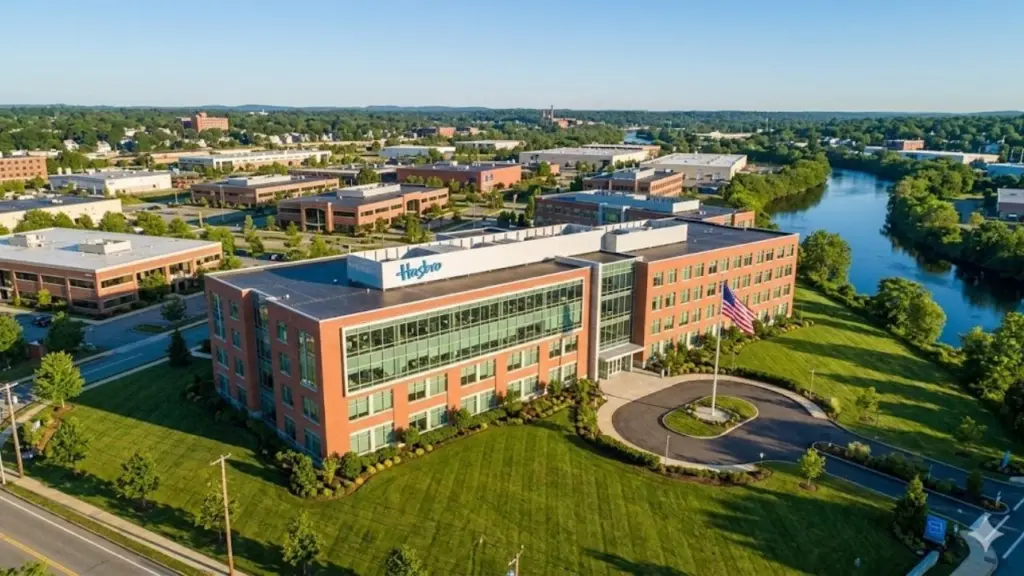
| Headquarters | Pawtucket, Rhode Island, USA |
| Stock Exchange | NASDAQ: HAS |
| CEO | Chris Cocks (since February 2022) |
| Annual Revenue | ~$4.97 billion (FY2023) |
| Employees | ~17,000 worldwide |
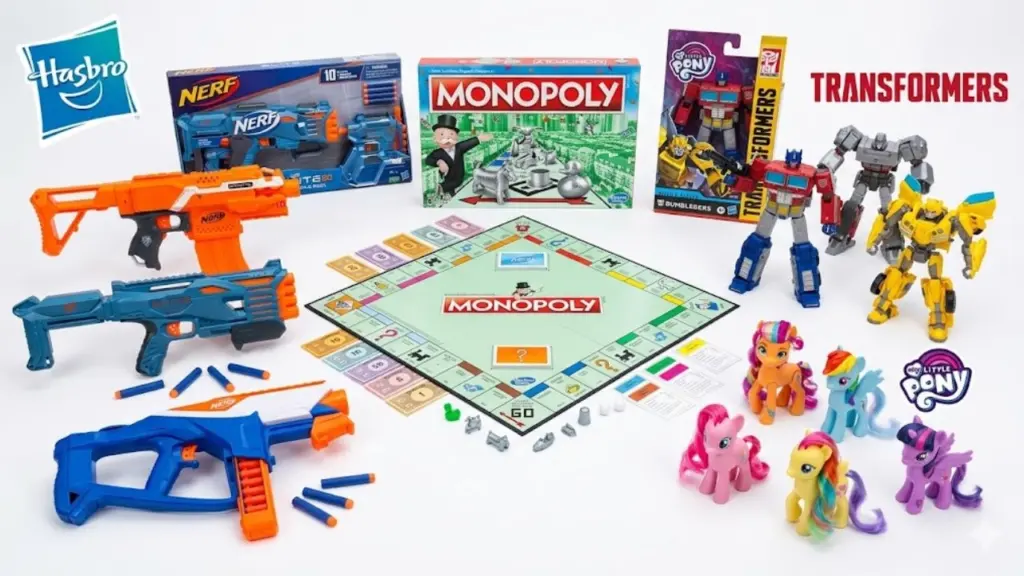
| Key Brands | Monopoly, G.I. Joe, Transformers, Nerf, My Little Pony, Play-Doh, Magic: The Gathering |
| Market Cap | ~$8 billion (2025) |
The Hassenfeld Family: Founders Who Shaped an Industry
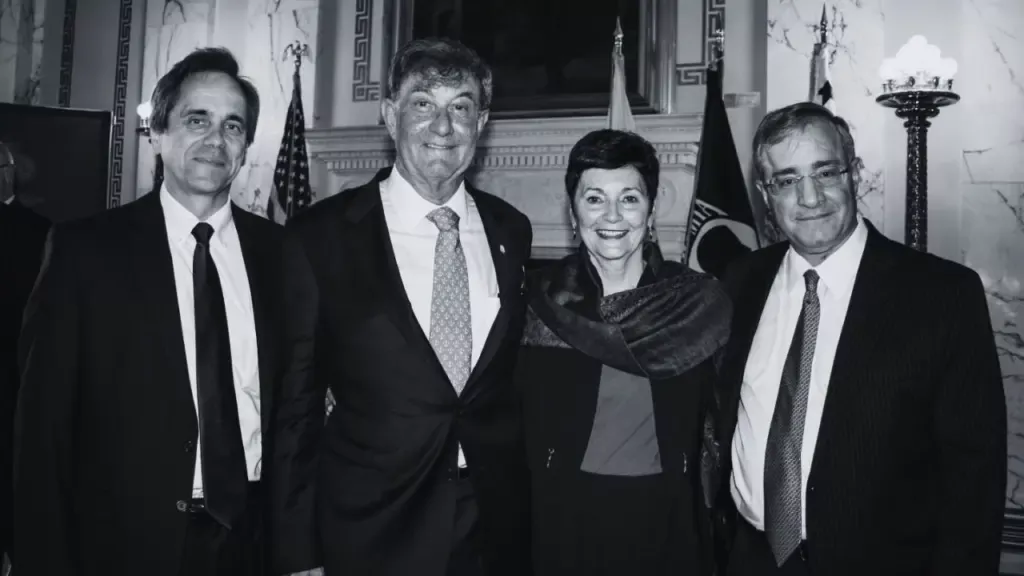
Hasbro began as Hassenfeld Brothers — a company founded by Henry and Helal Hassenfeld to sell textile remnants and pencil box kits. The name Hasbro is literally a contraction of “Has-bro” (Hassenfeld Brothers). The company pivoted to toys in the 1940s, producing doctor and nurse kits. In 1952, they introduced Mr. Potato Head — the first toy ever advertised on American television.
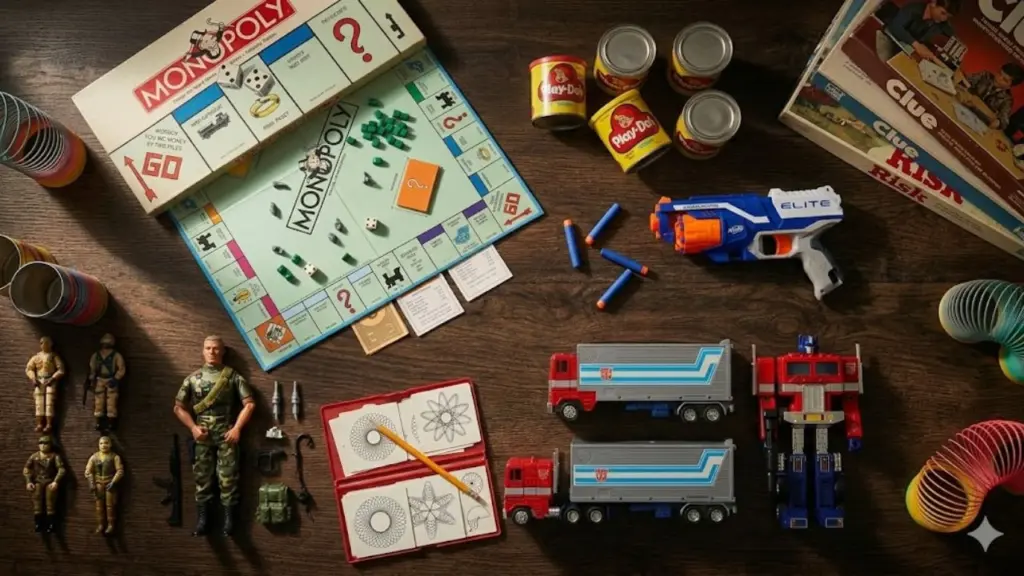
Stephen Hassenfeld, Henry’s grandson, took over leadership in 1980 and transformed Hasbro into a global powerhouse through a series of aggressive acquisitions. He launched G.I. Joe in 1982 and Transformers in 1984. Stephen died in 1989 at age 46. His brother Alan Hassenfeld ran the company until 2003. The Hassenfeld family no longer holds significant ownership, though their name lives on in the company’s identity.
How Hasbro Became One of America’s Biggest Toy Companies
Hasbro’s rise to dominance was built on acquisitions and licensing. Rather than inventing every toy from scratch, Hasbro was masterful at acquiring beloved brands and licensing popular entertainment properties. Key deals that shaped the modern Hasbro:
| Year | Acquisition / Deal | Significance |
|---|---|---|
| 1984 | Milton Bradley Company | Added Scrabble, Battleship, Yahtzee, Candy Land, and Life to Hasbro’s portfolio |
| 1991 | Kenner and Parker Brothers | Added Star Wars toys license, Sorry!, Risk, and Clue |
| 1995 | J.W. Spear & Sons (UK) | Secured global rights to Scrabble |
| 1998 | Galoob Toys | Added Micro Machines and Star Wars Micro Machines |
| 1999 | Wizards of the Coast | Gained Magic: The Gathering and Dungeons & Dragons — two massive franchises |
| 2019 | Entertainment One (eOne) | $3.8 billion deal; added Peppa Pig and PJ Masks to the portfolio |
Hasbro Key Events Timeline
| Year | Event |
|---|---|
| 1923 | Hassenfeld Brothers founded in Providence, Rhode Island as a textile remnants company |
| 1952 | Mr. Potato Head launches — first toy advertised on American TV |
| 1964 | G.I. Joe introduced — invented the term “action figure” to avoid the word “doll” |
| 1982 | G.I. Joe A Real American Hero relaunched; Hasbro begins collaborating with Marvel Comics |
| 1984 | Transformers launched in partnership with Takara (Japan); Milton Bradley acquired |
| 1999 | Wizards of the Coast acquired for ~$325 million — a deal that looks brilliant in hindsight |
| 2003 | Alan Hassenfeld steps down as CEO; Brian Goldner takes over (2008) |
| 2019 | eOne acquired for $3.8 billion; Hasbro gains Peppa Pig |
| 2021 | Brian Goldner dies of cancer; Chris Cocks named CEO in February 2022 |
| 2023 | Hasbro sells eOne’s film/TV operations to Lionsgate for $500 million; focuses on toys and games |
Hasbro Leadership in 2026
| Role | Person | Notes |
|---|---|---|
| CEO | Chris Cocks | Former president of Wizards of the Coast; took over in Feb 2022 after Brian Goldner’s death |
| CFO | Gina Goetter | Joined from Harley-Davidson; overseeing Hasbro’s financial transformation |
| Chairman of the Board | Rich Stoddart | Independent chairman; former CEO of InnerWorkings |
My Take on Hasbro’s Ownership and Future
Hasbro’s story since 2019 is one of overreach and correction. The $3.8 billion eOne acquisition looked like a smart move — buy a content company, turn Hasbro brands into films and TV shows, become an entertainment giant. The strategy made sense on paper. In practice, it saddled Hasbro with debt and content operations that didn’t integrate well with the core toy business.
Selling eOne’s film and TV business back to Lionsgate in 2023 was an admission that the vision didn’t work. But what Hasbro kept from eOne — the Peppa Pig brand — is genuinely valuable. Peppa Pig is one of the most recognizable children’s characters in the world. That alone may justify a significant portion of the purchase price in hindsight.
The real strength of Hasbro remains Wizards of the Coast. Magic: The Gathering and Dungeons & Dragons are cultural institutions, not just toys. The $325 million paid for Wizards in 1999 now looks like one of the best deals in entertainment history.
Related Ownership Profiles
For another major toy company’s ownership story, see who owns MGA Entertainment.
Frequently Asked Questions
Is Hasbro owned by the Hassenfeld family?
No. The Hassenfeld family founded Hasbro in 1923 but no longer holds a significant ownership stake. The last family member to lead the company was Alan Hassenfeld, who stepped down as CEO in 2003. Today Hasbro is a publicly traded company with no controlling family shareholder.
Where is Hasbro headquartered?
Hasbro is headquartered in Pawtucket, Rhode Island, USA. The company was founded in Providence, Rhode Island in 1923 and has maintained a New England base throughout its history.
What toys does Hasbro make?
Hasbro’s portfolio includes some of the most iconic toy brands in America: Monopoly, G.I. Joe, Transformers, Nerf, My Little Pony, Play-Doh, Scrabble, Battleship, Clue, Magic: The Gathering, Dungeons & Dragons, and Peppa Pig among many others.
Does Hasbro own Wizards of the Coast?
Yes. Hasbro acquired Wizards of the Coast in 1999 for approximately $325 million. Wizards of the Coast is the creator of Magic: The Gathering and the current publisher of Dungeons & Dragons. It operates as a subsidiary of Hasbro.
Who is the CEO of Hasbro in 2026?
Chris Cocks is the CEO of Hasbro. He was appointed in February 2022, following the death of longtime CEO Brian Goldner in October 2021. Cocks previously served as President of Wizards of the Coast.
Is Hasbro an American company?
Yes. Hasbro is a fully American company, founded in Providence, Rhode Island in 1923 and headquartered in Pawtucket, Rhode Island. It is listed on the NASDAQ stock exchange under ticker HAS and is one of the two largest toy companies in the United States.