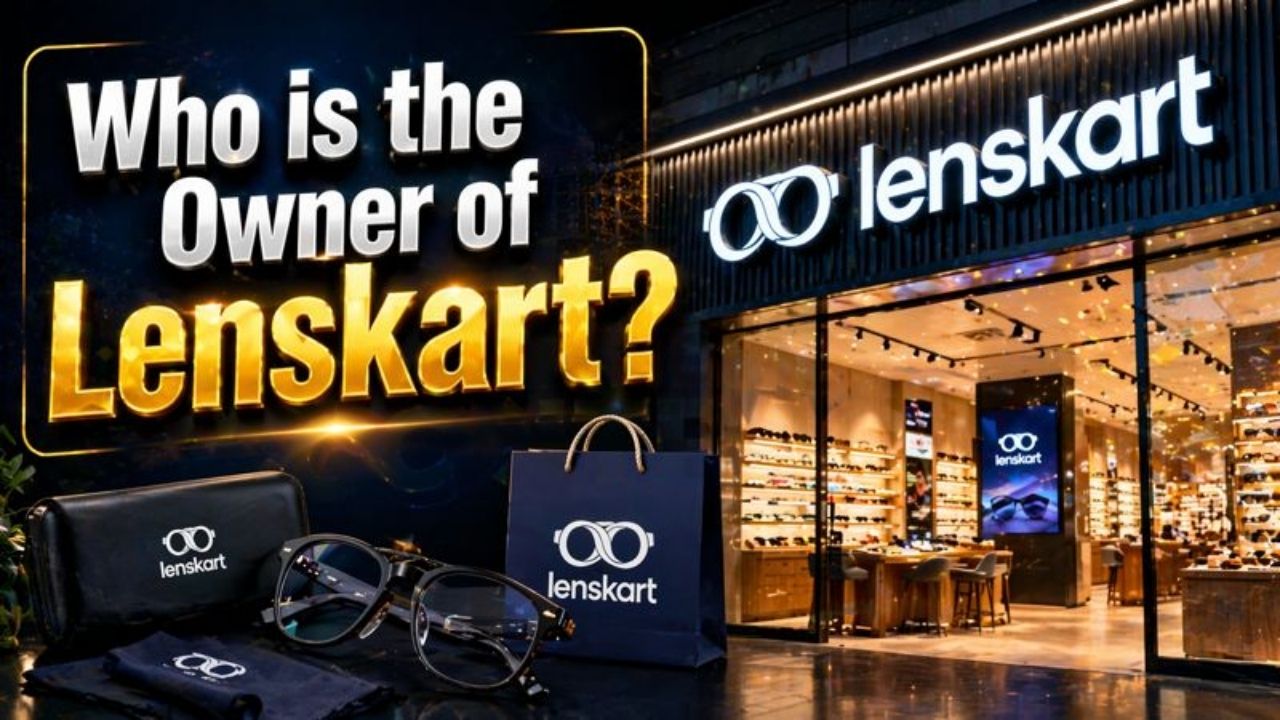
Walk into any Indian mall today and you will almost certainly spot a Lenskart store. Walk into a hospital, a busy high street in Singapore, or a shopping center in Dubai — and you will spot one there too. In less than 15 years, Lenskart went from a college classifieds website run out of a Delhi home to the largest eyewear retailer in Asia, a company now publicly listed with a market cap of approximately $9.4 billion. But who actually owns this remarkable business?
The answer involves a former Microsoft employee with a big dream, some of the world’s most powerful institutional investors, and one of India’s most closely watched stock market debuts in recent memory.
Lenskart Solutions Limited is an Indian multinational eyewear company based in Gurgaon. As a vertically integrated company, it designs, manufactures, distributes, and retails prescription and regular eyewear. It sells its products through its website, a mobile app, and 2,000+ physical stores. Lenskart has a manufacturing facility in Bhiwadi, Rajasthan, with an annual production capacity of 5 crore glasses.
Beyond India, Lenskart has expanded aggressively into international markets including Singapore, Dubai, Southeast Asia, and Japan through its 2022 acquisition of Owndays. As of 31 December 2025, Lenskart has a trailing 12-month revenue of $938 million and a current market cap of approximately $9.4 billion.
Who Owns Lenskart Right Now in 2026?
Lenskart went public in October 2025, making it a publicly listed company. Before and after the IPO, ownership is distributed across its founders and a powerful group of global institutional investors.
Funds own the majority of Lenskart’s shares at 84.90%, while founders hold 11.58%, ESOP holders account for 2.33%, enterprises hold 0.75%, and angels hold 0.28%.
The man at the center of it all is Peyush Bansal — co-founder, CEO, and the face of Lenskart who also appears as a “Shark” on Shark Tank India. Even after multiple funding rounds that diluted his stake, Peyush Bansal remains the primary promoter and CEO of Lenskart and continues to be the driving force behind its strategy, innovation, and long-term vision.
Ownership and Key Stakeholders Details

| Shareholder / Investor | Type | Stake / Investment | Key Detail |
|---|---|---|---|
| Peyush Bansal (CEO & Co-Founder) | Founder & Primary Promoter | Part of 11.58% founder stake | Former Microsoft employee; Shark Tank India judge |
| Amit Chaudhary | Co-Founder | Part of 11.58% founder stake | Co-founded company with Bansal in 2009 |
| Sumeet Kapahi | Co-Founder | Part of 11.58% founder stake | Joined as third co-founder in September 2011 |
| SoftBank Vision Fund | Largest Institutional Investor | Invested $275 million (2019) | Made Lenskart a unicorn at $1 billion+ valuation |
| Abu Dhabi Investment Authority (ADIA) | Sovereign Wealth Fund | $500 million (March 2023) | Invested at $4.5 billion valuation |
| Temasek | Singapore Sovereign Wealth Fund | Part of $220M (2021) + $200M (2024) | Consistent long-term investor across multiple rounds |
| KKR | Global Private Equity | $95 million (May 2021) | One of world’s largest PE firms |
| Alpha Wave Global (Falcon Edge) | Investment Fund | Led $220 million round (2021) | Invested at $2.5 billion valuation |
| Fidelity | Institutional Investor | Part of $200M secondary (2024) | Raised valuation to $6.1 billion in April 2025 |
| BlackRock & Government of Singapore | IPO Investors | Bought shares via IPO (2025) | Government of Singapore holds ~2.97% post-IPO |
| Ratan Tata & Azim Premji | Angel / Strategic Investors | ₹200 crore (Premji, 2016) | Industry legends who backed Lenskart early |
| Public Shareholders | Retail & Institutional | Post-IPO float | Listed on BSE & NSE since November 2025 |
The Origin Story: A Microsoft Job Left Behind
The story of Lenskart begins not in a fancy office but in a small room in Greater Kailash, Delhi — and with a decision most people would never make.
Peyush Bansal (born 26 April 1985) studied at McGill University in Montreal, Canada. In 2007, he came back to India and started SearchMyCampus.com, a classifieds website for college students. In June 2008, he registered a company called Valyoo Technologies in his parents’ house in Greater Kailash, Delhi.
After an early venture called Flyrr.com — an eyewear e-commerce platform for the US market — did not work out, in November 2010, he discontinued both websites and launched Lenskart.com for selling contact lenses in India, expanding to eyeglasses and sunglasses in early 2011. In September 2011, Sumeet Kapahi joined as the third co-founder.
The insight was simple but powerful: India had hundreds of millions of people who needed glasses, but the eyewear market was fragmented, overpriced, and inaccessible to most of them. Bansal saw a gap and built a company to fill it — first online, then through a relentless offline retail expansion that eventually became one of the fastest store rollouts in Indian retail history.
The Funding Journey: From $4 Million to $9.4 Billion
Lenskart’s rise from a small startup to a multi-billion dollar company happened through a series of landmark funding rounds, each bringing in bigger investors and higher valuations.

In 2011, IDG Ventures India invested $4 million in the company. In January 2015, the company raised ₹135 crore from TPG Growth, TR Capital, and IDG Ventures India. In May 2016, International Finance Corporation, Adveq Management, TPG Growth, and IDG Ventures India invested a total of $60 million. The company also saw investments from Ratan Tata and Kris Gopalakrishnan. In September 2016, Wipro’s Chairman Azim Premji invested around ₹200 crore through his family office PremjiInvest.
The real turning point came in 2019. Lenskart was valued at over $1 billion in December 2019 after SoftBank Vision Fund invested $275 million — making it one of India’s newest unicorns. In May 2021, KKR invested $95 million, and in July 2021, Temasek and Falcon Edge Capital led a $220 million investment round at a valuation of $2.5 billion. In July 2022, Lenskart was valued at $4.5 billion following a $200 million funding round led by Alpha Wave Global. In March 2023, the Abu Dhabi Investment Authority invested $500 million at a valuation of $4.5 billion.
In June 2024, Lenskart secured $200 million from Temasek and Fidelity in a secondary deal at a $5 billion valuation.
The IPO: Lenskart Goes Public in 2025
The biggest milestone in Lenskart’s ownership history came in October 2025 — its long-awaited stock market listing.
Lenskart’s $828 million IPO was among India’s most anticipated of the year, drawing bids more than 28 times the shares on offer. Institutional investors and high-net-worth individuals led the demand. Some of the top institutional investors in the Lenskart IPO include the Government of Singapore (2.97%) and global investors like BlackRock and Fidelity, which bought shares through multiple funds.
In late 2025, Peyush Bansal led Lenskart’s IPO, which was a significant event, raising over ₹7,200 crore with strong investor demand.
At the end of 2025, after its IPO listing and with continued investor confidence in the brand, Lenskart is currently valued at around $7.7 billion. Yes — Lenskart recorded a PAT of ₹297 crore in FY25 — a dramatic turnaround from a ₹10 crore loss in FY24 — confirming that profitability has finally arrived for this fast-growing company.
Global Acquisitions: Owndays and Meller
Lenskart has not just grown organically — it has also made bold international moves to become a truly global eyewear brand.
In June 2022, Lenskart announced the acquisition of a majority stake in the Japanese eyewear brand Owndays in a cash-and-stock deal that valued Owndays at around $400 million. After the acquisition, the combined entity had an annual revenue of $650 million, with $250 million coming from Owndays. In 2025, Lenskart acquired an 80% stake in Spanish eyewear brand Meller for over €40 million.
These acquisitions signal that Lenskart is thinking far beyond India — positioning itself as a serious global player in the eyewear industry, competing with international brands like Warby Parker and EssilorLuxottica subsidiaries.
Lenskart is now a publicly listed company traded on the BSE and NSE, founded by Peyush Bansal, Amit Chaudhary, and Sumeet Kapahi in 2010 and publicly listed in October 2025. Institutional funds collectively own approximately 84.90% of the company, with SoftBank Vision Fund, Abu Dhabi Investment Authority (ADIA), Temasek, KKR, Fidelity, and BlackRock among the most significant investors. The founders — led by Peyush Bansal — hold approximately 11.58% combined. With a market cap of $9.4 billion, trailing revenue of $938 million, and over 2,000 stores across the world, Lenskart has firmly established itself as one of India’s greatest startup success stories.
Frequently Asked Questions (FAQs)
Q1. Who is the owner of Lenskart?
Peyush Bansal is the co-founder, CEO, and primary promoter of Lenskart, supported by co-founders Amit Chaudhary and Sumeet Kapahi.
Q2. Is Lenskart a publicly traded company?
Yes. Lenskart went public in October 2025, raising $828 million through its IPO on the BSE and NSE.
Q3. What is Lenskart’s current valuation in 2026?
Lenskart has a market cap of approximately $9.4 billion as of April 2026, with trailing 12-month revenue of $938 million.
Q4. Who are the biggest investors in Lenskart?
The major investors are SoftBank Vision Fund, Abu Dhabi Investment Authority (ADIA), Temasek, KKR, Alpha Wave Global, Fidelity, and BlackRock.
Q5. When was Lenskart founded?
Lenskart was founded in 2010 by Peyush Bansal and Amit Chaudhary under Valyoo Technologies, with Sumeet Kapahi joining as the third co-founder in 2011.
Q6. How many stores does Lenskart have in 2026?
Lenskart operates over 2,700 stores across India and international markets including Singapore, Dubai, Japan, and Southeast Asia.
Q7. Did Lenskart acquire any international brands?
Yes. Lenskart acquired a majority stake in Japanese brand Owndays in 2022 for $400 million, and an 80% stake in Spanish brand Meller in 2025 for over €40 million.
Q8. What percentage of Lenskart do founders own?
The founders collectively hold approximately 11.58% of Lenskart, while institutional funds own the majority at 84.90%.
Discover more from Who Is The Owner Of
Subscribe to get the latest posts sent to your email.