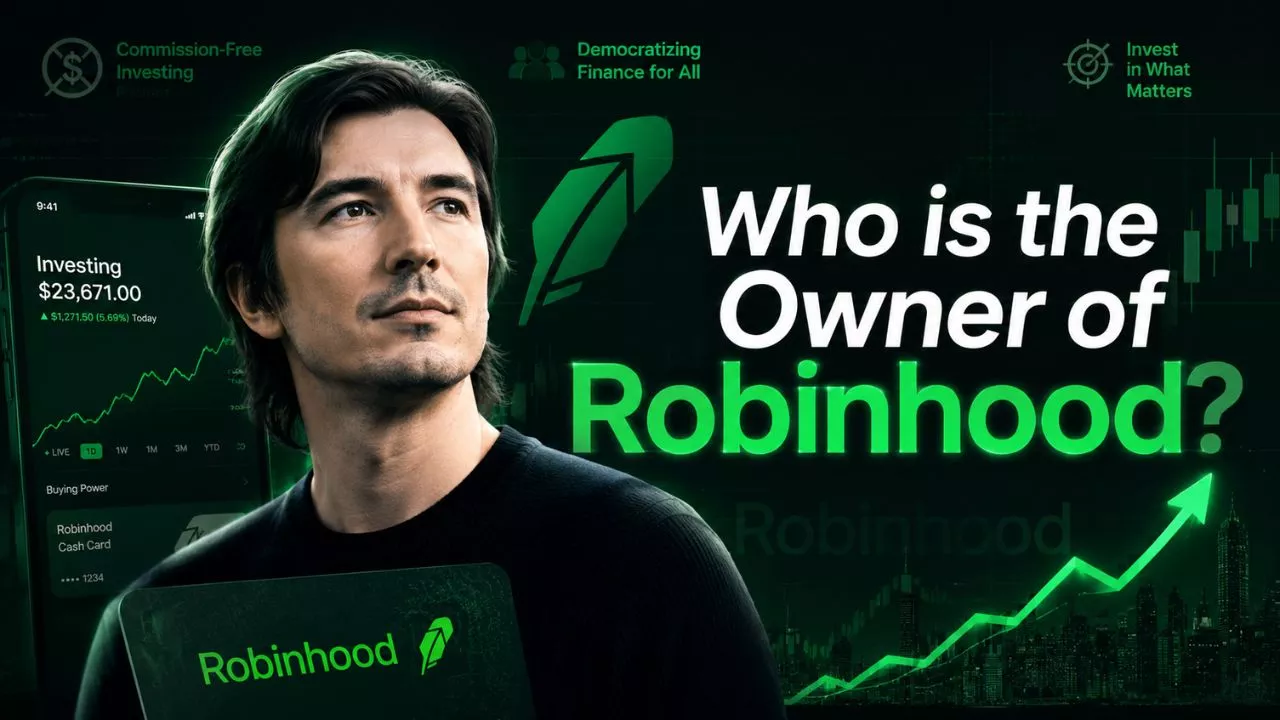
Robinhood Markets democratized retail investing when it launched in 2013 with a simple premise: commission-free stock trading for everyone. The app grew explosively during the pandemic-era retail investing boom, became the platform of choice for meme stock traders during the GameStop saga, and has since evolved into a broader financial services company. Robinhood is publicly traded on NASDAQ and continues to expand its product range — from crypto trading to retirement accounts to credit cards. Its founders Vlad Tenev and Baiju Bhatt retain meaningful stakes and continue to shape the company’s direction.
📈 Robinhood — Company Highlights
| Full Name | Robinhood Markets, Inc. |
| Ticker | NASDAQ: HOOD |
| Founded | 2013 |
| Headquarters | Menlo Park, California, USA |
| CEO | Vlad Tenev (co-founder) |
| Co-Founders | Vlad Tenev and Baiju Bhatt |
| Revenue (2024) | ~$2.9 billion |
| Key Products | Commission-free stocks, crypto, Robinhood Gold, IRA, credit card |
Who Owns Robinhood?
Robinhood is publicly traded. Co-founder and CEO Vlad Tenev is the largest individual shareholder, with significant voting power through Class B shares. Co-founder Baiju Bhatt also retains a meaningful stake. Institutional investors including Vanguard, BlackRock, and ARK Invest are among the largest holders by share count.
| Shareholder | Type | Approx. Stake | Notes |
|---|---|---|---|
| Vlad Tenev | Co-founder / CEO | ~8% economic / majority voting | Class B shares (10 votes each) |
| Baiju Bhatt | Co-founder | ~26% | Stepped back from daily operations post-IPO |
| Vanguard Group | Institutional | ~9% | Largest institutional holder |
| ARK Invest | Institutional | ~5% | Cathie Wood’s firm; significant holder |
Robinhood — Key Milestones
| Year | Milestone |
|---|---|
| 2013 | Vlad Tenev and Baiju Bhatt found Robinhood; mission is democratizing finance |
| 2015 | App launches publicly; commission-free trading attracts millions of users |
| 2021 (Jan) | GameStop short squeeze; Robinhood restricts GME trading; congressional testimony follows |
| 2021 (Jul) | IPO on NASDAQ; stock falls below offering price on first day |
| 2022 | Crypto market crash and tech selloff hits Robinhood hard; lays off ~23% of staff |
| 2023 | Launches Robinhood Gold card; expands into retirement accounts (IRA) |
| 2024 | Revenue grows to ~$2.9B; acquires Bitstamp crypto exchange for $200M |
Leadership at Robinhood
Vlad Tenev has served as CEO since co-founding the company with Baiju Bhatt. Tenev is the public face of Robinhood — he testified before Congress during the GameStop controversy and has been central to the company’s navigation of regulatory scrutiny. Bhatt has gradually stepped back from day-to-day operations. Tenev has been pushing Robinhood toward becoming a full-service financial super-app, moving well beyond its original stock trading roots.
My Take on Robinhood
Robinhood genuinely changed retail investing — before it, commission-free trading didn’t exist for most people. But the GameStop episode revealed serious questions about whose interests the platform actually serves. Restricting trading during a historic retail squeeze — while hedge funds on the other side of the trade were unaffected — damaged trust in a way the company is still recovering from. That said, the product expansion into credit cards, retirement accounts, and crypto infrastructure is smart. If Robinhood can become a genuine financial super-app, it will have earned its place as a lasting company. The jury is still out.
Frequently Asked Questions
Is Robinhood actually free to use?
Trades are commission-free, yes — but Robinhood makes its money through payment for order flow (PFOF), meaning it routes your trades to market makers who pay for that privilege. You also pay indirectly through margin interest, the Gold subscription, and crypto spreads. Free to sign up, but not entirely free in practice.
Who owns Robinhood?
Robinhood is publicly traded on NASDAQ (HOOD). Co-founder Baiju Bhatt holds around 26% of shares, while CEO Vlad Tenev holds roughly 8% economically but controls voting through Class B shares. Institutional investors like Vanguard (~9%) and ARK Invest (~5%) are among the largest holders.
What happened with GameStop and Robinhood in 2021?
Reddit traders drove GameStop’s stock up nearly 1,700%, squeezing hedge funds that had shorted it. At the peak, Robinhood halted buying of GME — citing clearinghouse collateral requirements — while institutional players were unaffected. The backlash was massive. Vlad Tenev testified before Congress, and the trust damage lingered for years.
Is Robinhood safe? Is my money protected?
Stock holdings are protected up to $500,000 through SIPC in the event of broker failure — not market losses. Cash may also qualify for FDIC insurance through partner banks. Your investments can still lose value; SIPC just ensures your assets are recoverable if Robinhood itself goes under.
What is Robinhood Gold?
Robinhood Gold is the platform’s $5/month premium tier. It offers a higher APY on cash, margin access, Level II Nasdaq data, a better IRA contribution match, and access to the Robinhood Gold Card. Worth it for active users and those holding large cash balances — less so for occasional investors.
Does Robinhood offer retirement accounts?
Yes. Robinhood launched traditional and Roth IRAs in 2023 with a contribution match — 1% for regular users, 3% for Gold members. Most brokerages offer no IRA match at all, so this was a genuine differentiator. A holding period applies before the match is yours to keep.
Where is Robinhood headed?
Beyond stock trading. Robinhood is building toward a financial super-app — crypto, retirement accounts, a credit card, and banking features are all part of the picture. The 2024 acquisition of Bitstamp for $200 million signals serious crypto ambitions. Whether it can compete with Fidelity, Schwab, and Coinbase on their home turf remains to be seen.