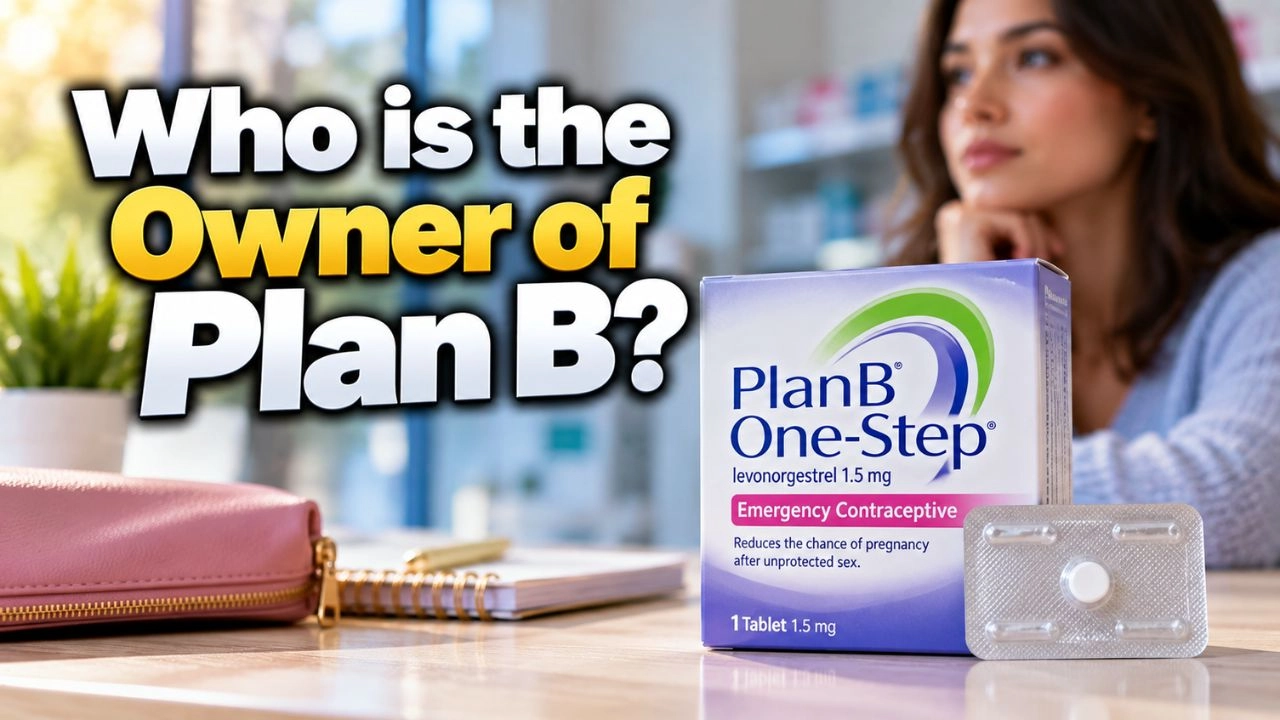
Plan B One-Step is the most widely used emergency contraceptive in the United States — recognizable by its distinct packaging in practically every pharmacy across the country.
But behind that familiar white box is an ownership story that runs through a major Israeli pharmaceutical company, two private equity firms, and a strategic decision made in March 2026 that put the brand’s future entirely front and center. Most people who have bought Plan B have no idea who actually owns it. Here is the full story.
What Is Plan B?
Plan B One-Step (levonorgestrel 1.5 mg tablet) is the #1 OB/GYN recommended emergency contraception brand in the United States. It is an over-the-counter (OTC) medication available without a prescription to anyone, regardless of age, since 2013.
It works by temporarily delaying or preventing ovulation and is not an abortion pill — a distinction that the FDA clarified by updating its labeling in December 2022 to make explicitly clear that the medication does not alter the course of an existing pregnancy.
Plan B One-Step has been used safely and effectively by millions of women for over 20 years and remains the dominant brand in the American emergency contraception market, sold at an average retail price of approximately $45 per dose at major pharmacy chains including CVS, Walgreens, and Walmart.
Who Owns Plan B Right Now in 2026?
Plan B One-Step is owned by Foundation Consumer Healthcare LLC (FCH) — a privately held, Pittsburgh, Pennsylvania-based over-the-counter consumer healthcare company. Foundation Consumer Healthcare is itself owned by two private equity firms: Kelso & Company and Juggernaut Capital Partners.
Foundation Consumer Healthcare (FCH) is an OTC consumer healthcare company that develops and markets expert-recommended consumer health products.
FCH is a portfolio company owned by affiliates of Kelso & Company and Juggernaut Capital Partners — two private equity investment firms that jointly control the business. There is no publicly traded entity involved — Plan B has been entirely privately owned since 2017.
Ownership and Key Stakeholders Table
| Owner / Party | Role | Stake | Key Detail |
|---|---|---|---|
| Foundation Consumer Healthcare LLC (FCH) | Direct Brand Owner | 100% ownership of Plan B One-Step | Privately held OTC healthcare company; HQ in Pittsburgh, PA |
| Kelso & Company | Private Equity Co-Owner of FCH | Majority PE stake | New York-based PE firm; co-owns FCH since the 2017 acquisition |
| Juggernaut Capital Partners | Private Equity Co-Owner of FCH | Significant PE stake | Washington DC-based PE firm; co-owns FCH alongside Kelso |
| Greg Bradley | CEO of Foundation Consumer Healthcare | Management role | Announced the March 2026 strategic pivot to focus solely on women’s health |
| Teva Pharmaceutical Industries | Previous Owner | Fully exited in 2017 | Israeli pharma giant; sold Plan B One-Step to FCH for $675 million in cash |
| Barr Pharmaceuticals | Historical Owner | Exited; acquired by Teva in 2008 | Developed and launched Plan B; merged into Teva via acquisition |
| No public shareholders | N/A | Private company | Plan B has never been independently publicly traded |
The Origin Story: From Lab to Pharmacy Shelf
Plan B was not developed overnight. Its journey to becoming America’s most recognized emergency contraceptive spans decades of pharmaceutical development, regulatory battles, and shifting political landscapes.
Plan B was originally developed and manufactured by Barr Pharmaceuticals, an American pharmaceutical company that specialized in generic and proprietary drugs.
Barr launched Plan B as a prescription medication in 1999 and then spent years fighting to make it available over the counter — a campaign that faced significant political resistance from conservative lawmakers and the George W. Bush administration, which delayed FDA approval despite the agency’s own scientists recommending it.
In 2006, the FDA approved Plan B for over-the-counter sale to women 18 and older. In 2009, a federal judge ordered the age restriction lowered to 17. And in 2013, the FDA finally removed all age restrictions, making Plan B One-Step fully available to anyone without a prescription — the way it remains today.
In 2008, Teva Pharmaceutical Industries, an Israeli pharmaceutical giant, acquired Barr Pharmaceuticals — and Plan B came along as part of that deal. Teva owned Plan B through a period of massive growth in the brand’s recognition and sales, but by 2017, Teva was restructuring its global business and decided to exit its women’s health portfolio entirely.
How Private Equity Took Over Plan B
In 2017, Foundation Consumer Healthcare — backed by private equity firms Kelso & Company and Juggernaut Capital Partners — bought Plan B One-Step and other emergency contraception brands from Teva Pharmaceutical Industries for $675 million in cash. That deal marked the beginning of Plan B’s current private equity ownership era.
Under FCH’s ownership, Plan B became even more commercially dominant. Foundation invested heavily in marketing, shelf placement, and public education campaigns — all while carefully staying out of the culture war spotlight that surrounded emergency contraception.
The strategy worked. Plan B became the go-to brand for emergency contraception in America, and by 2023, reports surfaced that FCH’s private equity backers were exploring a potential sale of the entire company for more than $4 billion — a remarkable return on their $675 million initial investment.
The March 2026 Pivot: Foundation Doubles Down on Plan B
The most significant recent development in Plan B’s ownership story happened on March 20, 2026 — when Foundation Consumer Healthcare announced it had sold a large portion of its non-women’s health brands to Prestige Consumer Healthcare Inc. (NYSE: PBH) for $1.045 billion.
The sold portfolio included ten OTC brands — including Breathe Right Nasal Strips, Children’s Dimetapp, and Anbesol — that had nothing to do with women’s health. The one brand that was not included in the sale was Plan B One-Step. Foundation CEO Greg Bradley made the strategic rationale crystal clear:
“We’ve made the strategic decision to focus on women’s health. Plan B One-Step has a long-standing heritage in the emergency contraception space. This decision enables us to unlock additional value for the company and explore new partnerships and opportunities in which to grow this portfolio.”
In simple terms, Foundation Consumer Healthcare has now stripped itself down to one core mission — and that mission is Plan B. The brand is no longer one product in a diversified OTC portfolio. It is now the entire business.
Plan B in a Politically Charged Environment
No ownership story about Plan B in 2026 would be complete without acknowledging the extraordinary political environment surrounding it.
Since the U.S. Supreme Court overturned Roe v. Wade in June 2022, emergency contraception has faced renewed scrutiny from lawmakers and anti-abortion advocates who incorrectly conflate it with abortion-inducing medication.
The FDA’s December 2022 labeling update — clarifying that Plan B does not terminate an existing pregnancy — was a direct response to persistent misinformation about the product. The International Federation of Gynecology and Obstetrics and American medical associations all support this scientific consensus.
Foundation Consumer Healthcare has chosen to stay largely out of the political debate, focusing instead on education, access, and brand marketing.
Their bet is straightforward: whatever the political climate, American women will continue to need access to emergency contraception, and Plan B will continue to be the brand they trust. That bet has paid off handsomely so far.
Plan B Entertainment: A Different “Plan B” Worth Noting
It is worth a brief mention that there is a completely separate “Plan B” that often comes up in searches — Plan B Entertainment, the Hollywood film production company co-founded by Brad Pitt and Jennifer Aniston in 2001.
This company has absolutely no connection to the emergency contraceptive. In December 2022, Brad Pitt sold a 60% majority stake in Plan B Entertainment to French media conglomerate Mediawan while retaining a minority stake himself.
Frequently Asked Questions (FAQs)
Q1. Who owns Plan B in 2026?
Plan B One-Step is owned by Foundation Consumer Healthcare LLC, a private company co-owned by private equity firms Kelso & Company and Juggernaut Capital Partners.
Q2. Who originally made Plan B?
Plan B was originally developed and launched by Barr Pharmaceuticals in 1999, which was later acquired by Teva Pharmaceutical Industries in 2008.
Q3. When did Teva sell Plan B?
Teva Pharmaceutical Industries sold Plan B One-Step to Foundation Consumer Healthcare in 2017 for $675 million in cash.
Q4. Where is Foundation Consumer Healthcare headquartered?
Foundation Consumer Healthcare LLC is headquartered in Pittsburgh, Pennsylvania, and is a privately held company not listed on any stock exchange.
Q5. What happened to Plan B’s ownership in March 2026?
In March 2026, Foundation Consumer Healthcare sold ten non-women’s health brands to Prestige Consumer Healthcare for $1.045 billion, retaining Plan B One-Step as its sole flagship focus.
Q6. Is Plan B the same as an abortion pill?
No. The FDA updated Plan B’s labeling in December 2022 to make clear that it does not terminate an existing pregnancy — it works by temporarily delaying or preventing ovulation.
Q7. Is Plan B publicly traded?
No. Plan B One-Step is owned by Foundation Consumer Healthcare, a fully private company with no stock exchange listing.
Q8. Is Plan B Entertainment the same company that owns the pill?
No. Plan B Entertainment is Brad Pitt’s Hollywood production company — a completely separate business with no connection to the emergency contraceptive.
Plan B Entertainment is the company behind award-winning films like Moonlight, 12 Years a Slave, and The Departed — and is an entirely different business from the Plan B pill.
Plan B One-Step is owned by Foundation Consumer Healthcare LLC, a privately held Pittsburgh-based company co-owned by private equity firms Kelso & Company and Juggernaut Capital Partners.
FCH acquired Plan B from Teva Pharmaceutical Industries in 2017 for $675 million. In March 2026, FCH sold its non-women’s health brand portfolio for $1.045 billion and sharpened its entire strategic focus onto Plan B One-Step as its sole flagship product.
The brand remains the #1 OB/GYN recommended emergency contraceptive in the U.S., available over the counter to anyone, with no signs of its commercial dominance slowing down.