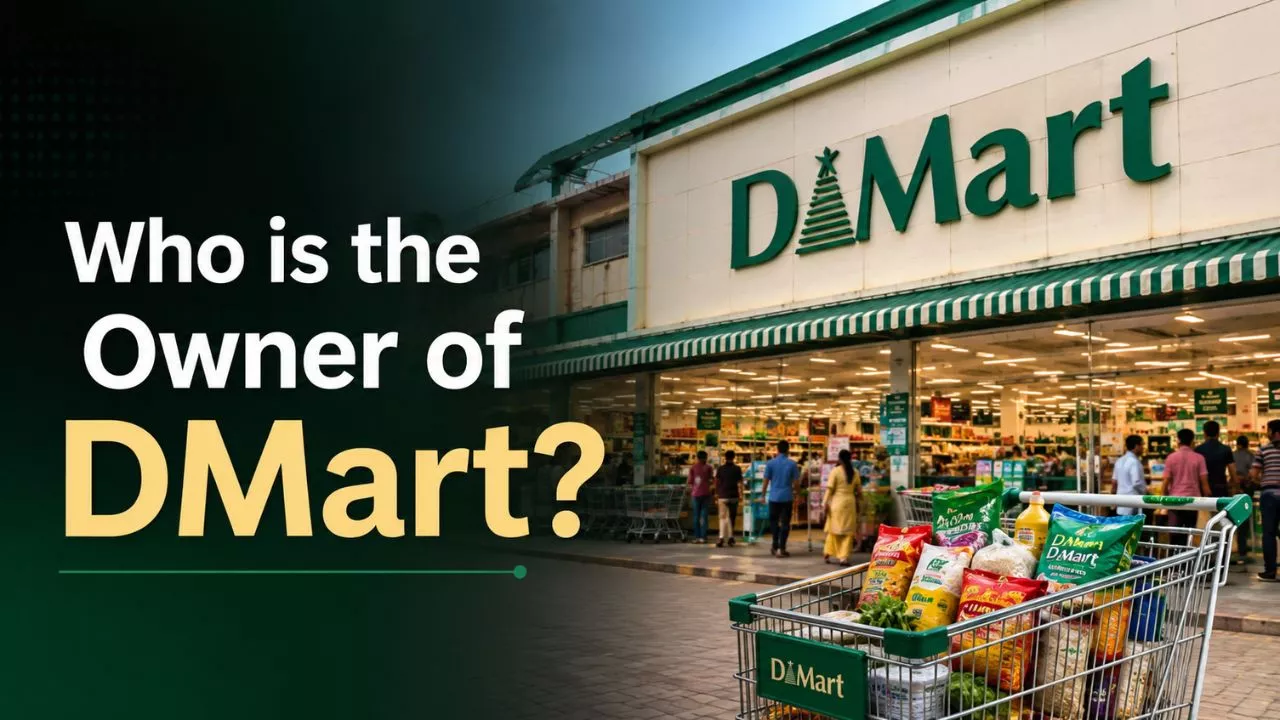
Walk into any DMart store in India, and you will immediately notice something different. The prices are lower than almost anywhere else. The shelves are stacked high. There are no fancy decorations, no loud music, no extra frills. Everything about the store is built around one simple idea: sell more, spend less, and pass the savings to the customer. That philosophy did not come from a business school or a corporate strategy session. It came from one remarkably quiet man who quit the stock market to build India’s most profitable retail chain from scratch.
DMart is owned by Radhakishan Damani — often called the “Retail King of India” — through his publicly listed company Avenue Supermarts Limited. Here is the complete, verified story.
More India Beauty Brand Stories
DMart isn’t the only fast-growing Indian retail story. See our breakdown of who owns Tira Beauty, India’s fastest-growing beauty brand.
What Is DMart?
DMart is an Indian retail chain of supermarkets and hypermarkets operated by Avenue Supermarts Limited (ASL). As of March 2026, DMart has 479 stores across 12 states and union territories in India. In April 2026, DMart touched 500 stores all over India.
DMart is a one-stop supermarket chain that aims to offer customers a wide range of basic home and personal products under one roof. Each DMart store stocks home utility products — including food, toiletries, beauty products, garments, kitchenware, bed and bath linen, home appliances and more — available at competitive prices.
The full name of DMart is Damani Mart — named directly after its founder. Everything sold at DMart reflects the same value-first, low-cost philosophy that Radhakishan Damani applied to his decades of investing in the stock market before he switched to retail.
Who Owns DMart in 2026?
The answer is direct: DMart is owned by founder Radhakishan Damani through Avenue Supermarts Ltd, which remains majority promoter-held with a limited public float.
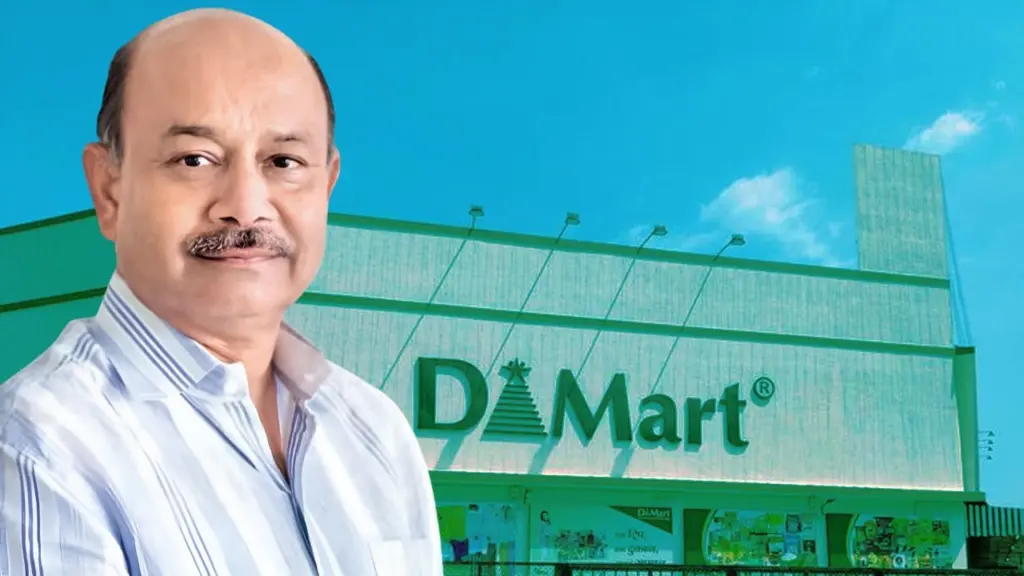
Radhakishan Damani and his immediate family are classified as the “promoter group” under Indian securities law. The group includes his wife Shrikantadevi Damani and his brother Gopikishan Damani, among others. Together, they hold approximately 74.51% of all outstanding shares in Avenue Supermarts. That concentration gives the family effective control over board appointments, capital allocation, and the company’s overall direction.
Avenue Supermarts Limited trades on both the Bombay Stock Exchange (BSE) and the National Stock Exchange (NSE) under the ticker symbol DMART.
Ownership and Key Stakeholders Table
| Shareholder / Owner | Type | Ownership Stake | Key Detail |
|---|---|---|---|
| Radhakishan Damani & Family (Promoter Group) | Founding Family & Controlling Shareholder | ~74.51% of Avenue Supermarts | Includes wife Shrikantadevi, brother Gopikishan, and daughter Manjri Chandak |
| Foreign Institutional Investors (FIIs) | International Institutional Investors | ~9% of Avenue Supermarts | Includes global mutual funds and institutional buyers |
| Domestic Institutional Investors (DIIs) | Indian Mutual Funds & Insurance Cos | ~9% of Avenue Supermarts | Includes major Indian mutual funds and LIC |
| Public / Retail Shareholders | Individual Investors | Remaining ~7.5% | Listed on BSE and NSE under ticker: DMART since March 2017 |
| Anshul Asawa | MD & CEO (current) | Minimal insider stake | Took over as MD & CEO in February 2026; formerly at Unilever |
| Manjri Chandak | Daughter of Damani | Part of promoter group | Manages key business operations at DMart |
The Origin Story: From Dalal Street to Retail King
The story of DMart starts not in a supermarket but in the chaos of Dalal Street in the 1980s.
Radhakishan Shivkishan Damani was raised in a Maheshwari Marwari Hindu family in a single-room apartment in Mumbai. He studied commerce at the University of Mumbai but dropped out after one year. After the death of his father who worked on Dalal Street, Damani left his ball bearing business and became a stock market broker and investor.
In the early 1990s, he made big profits by short-selling stocks that had been artificially inflated by Harshad Mehta. Damani was reportedly the largest individual shareholder of HDFC Bank after it went public in 1995.
In 1999, he operated a franchise of Apna Bazaar, a cooperative department store, in Nerul, but was “unconvinced” by its business model. He quit the stock market in 2000 to start his own hypermarket chain, DMart, setting up the first store in Powai in 2002.
DMart opened its first store in Powai, Mumbai, in 2002. In its early years, the company adopted an everyday low price strategy and pursued “slow expansion”, growing to 29 stores across Maharashtra and Gujarat in 2010. Unlike other Indian supermarkets which typically leased 4,000 sq ft properties, DMart operated much larger stores, ranging up to 30,000 sq ft, most of which it owned.
That detail — owning the stores rather than leasing them — is one of the smartest and most underappreciated parts of Damani’s strategy. By owning the real estate, DMart eliminated a massive recurring cost and gave itself a permanent structural cost advantage over every competitor.
The 2017 IPO That Made History
For 15 years, DMart was entirely private — run quietly by Damani and his family, expanding steadily without any outside pressure from public markets.
The company launched its initial public offering (IPO) in March 2017 and got listed on the National Stock Exchange and Bombay Stock Exchange. On its listing date 22 March 2017, it became the 65th most valuable Indian firm.
The DMart IPO became one of the most oversubscribed in Indian market history. Investors who had watched Damani’s disciplined approach for years rushed to buy shares. The stock listed at nearly double its issue price. Since 2017, Avenue Supermarts stock has risen close to 600%.
Even after the IPO, the Damani family retained tight control — holding approximately 74.51% of all shares. Going public gave the company access to capital and a higher public profile, but it changed nothing about who calls the shots.
Who Is Radhakishan Damani?
Radhakishan Damani is one of the most unusual billionaires in India — perhaps in the world. He is enormously wealthy, enormously influential, and almost entirely invisible to the general public.
He is referred to as the “Retail King of India”. Forbes ranked Radhakishan number 185 on its 2026 Billionaires list. Most of his money comes from DMart. His net worth is estimated between $15.5 billion and $26 billion depending on the source and the Avenue Supermarts share price at any given time.
He manages his investment portfolio through his investment firm, Bright Star Investments Private Limited. He holds significant stakes in companies like VST Industries, Trent, and Sundaram Finance alongside his dominant position in Avenue Supermarts.
He received the Padma Shri award in 2021 — one of India’s highest civilian honors — for his contributions to trade and industry. Yet despite all of this, he likes to keep a low profile and rarely gives any interviews. In a country where billionaires routinely compete for column inches and television appearances, Damani is almost never seen in public.
The New CEO: Anshul Asawa Takes Over in 2026
DMart’s leadership changed significantly in early 2026 — a major transition that marks a new chapter for the company.
After Neville Noronha led Avenue Supermarts for over 20 years as Managing Director and CEO, the company transitioned to Anshul Asawa, who used to work at Unilever. Anshul took over as MD and CEO in February 2026.
This is the first time in DMart’s history that an outsider — someone who did not grow up inside the Damani organization — has taken the top executive role. Asawa brings experience from Unilever, one of the world’s most sophisticated consumer goods companies, and is expected to focus on strengthening DMart’s response to the growing competition from quick commerce platforms like Blinkit, Zepto, and Swiggy Instamart.
Despite the leadership change, Radhakishan Damani remains Chairman and the dominant shareholder. The Damani family still controls 74.51% of Avenue Supermarts — so the ownership story has not changed, even if the management has.
The DMart Business Model: Why It Works
DMart’s business model is deceptively simple — and extraordinarily hard to copy.
Unlike many retail chains that franchise their locations, DMart runs every store directly. The company handles procurement, logistics, and pricing centrally, which is how it maintains the thin margins and deep discounts the brand is known for. Owning the stores outright — DMart owns the real estate for a significant portion of its locations rather than leasing — also reduces long-term operating costs.
The strategy that Damani built DMart on is called “everyday low pricing” (EDLP). Instead of running frequent sales and promotions, DMart simply keeps its prices low every single day. Suppliers love this because they get consistent, predictable orders. Customers love it because they do not need to wait for a sale.
DMart has also been disciplined about geography. Rather than spreading thin across the entire country, it has concentrated its stores in clusters — primarily Maharashtra, Gujarat, Telangana, Andhra Pradesh, and Karnataka — where it can achieve the delivery density and distribution efficiency that makes its low prices possible.
Frequently Asked Questions (FAQs)
Q1. Who owns DMart in 2026?
DMart is owned by Radhakishan Damani and his family, who hold approximately 74.51% of Avenue Supermarts Limited — the parent company of DMart.
Q2. What is the parent company of DMart?
The parent company of DMart is Avenue Supermarts Limited (ASL), listed on the NSE and BSE under the ticker symbol DMART.
Q3. Who founded DMart and when?
DMart was founded by Radhakishan Damani. The company was incorporated in May 2000 and the first store opened in Powai, Mumbai in 2002.
Q4. How many DMart stores are there in India in 2026?
DMart crossed 500 stores across India in April 2026, spread across 12 states and union territories.
Q5. Who is the current CEO of DMart in 2026?
Anshul Asawa is the current MD and CEO of Avenue Supermarts, having taken charge in February 2026, succeeding Neville Noronha.
Q6. Is DMart a publicly listed company?
Yes. Avenue Supermarts has been publicly listed on the BSE and NSE since March 22, 2017, under the ticker symbol DMART.
Q7. What is Radhakishan Damani’s net worth in 2026?
Radhakishan Damani’s net worth is estimated between $15.5 billion and $26 billion in 2026, with most of his wealth tied to his stake in Avenue Supermarts.
Q8. Does Radhakishan Damani own other businesses?
Yes. Besides DMart, Damani holds significant investments in VST Industries, Trent, Sundaram Finance, and manages his portfolio through Bright Star Investments Private Limited.
DMart is owned by Radhakishan Damani — India’s most private billionaire and the country’s undisputed “Retail King” — through his publicly listed company Avenue Supermarts Limited (NSE/BSE: DMART). The Damani family collectively holds approximately 74.51% of all Avenue Supermarts shares, giving them complete effective control of the company.
DMart was incorporated in 2000, opened its first store in Powai, Mumbai in 2002, went public in a landmark IPO in March 2017, and has now crossed 500 stores across India as of April 2026. Under new MD & CEO Anshul Asawa, who took charge in February 2026, DMart is navigating the challenge of quick commerce while staying true to the low-price, own-the-real-estate philosophy that Radhakishan Damani built it on.