🛒 Goodwill Industries — Key Facts
| Type | Non-profit 501(c)(3) — no private owner |
| Founded | 1902, Boston, Massachusetts (by Rev. Edgar J. Helms) |
| Structure | Federated: 156+ independent local non-profits; GII provides branding |
| GII CEO | Steve Preston (since 2019) |
| HQ | Rockville, Maryland |
| Mission | Job training & employment services for people with disabilities or disadvantages |
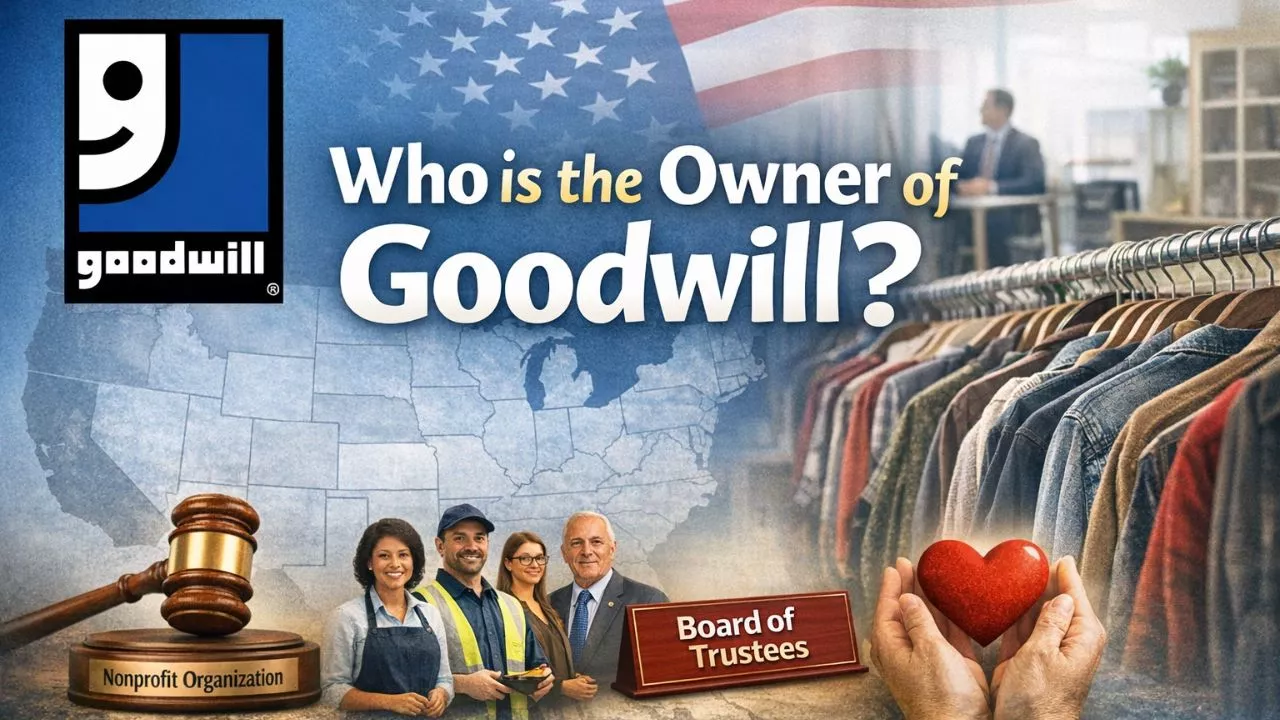
Goodwill Industries is a non-profit 501(c)(3) organization with no private owner, shareholder, or individual proprietor. It was founded in 1902 by Reverend Edgar J. Helms in Boston, Massachusetts, and operates as a federated network of 156+ independent local Goodwill organizations. Goodwill Industries International (GII), headquartered in Rockville, Maryland, provides the umbrella brand, standards, and coordination, but each local Goodwill chapter is independently incorporated as its own non-profit.
Who Is the Owner of Goodwill?
Goodwill has no private owner. Each local Goodwill organization is an independent 501(c)(3) non-profit governed by its own board of directors, operating under its own executive leadership, and serving its local community. Goodwill Industries International (GII) serves as the umbrella — providing brand licensing, standards, training, and network coordination — but GII does not own or control the individual Goodwill organizations. Each local chapter controls its own thrift store operations, employment programs, and revenue. Steve Preston has served as GII CEO since 2019, previously having served as Secretary of Housing and Urban Development under President George W. Bush.
How Goodwill Works
Goodwill’s business model is elegantly simple: people donate used goods (clothing, furniture, electronics, books, housewares), Goodwill sells those goods in thrift stores, and the revenue funds job training, employment placement, and support services for people with disabilities, those with criminal records, veterans, seniors, and others facing employment barriers. Goodwill collectively places hundreds of thousands of people into employment annually. Its 3,300+ thrift stores across North America have become a major retail category, particularly popular with budget shoppers, vintage clothing enthusiasts, and environmentally conscious consumers who prefer secondhand over fast fashion.
Goodwill’s Controversies
Despite its charitable mission, Goodwill has faced criticism. The most persistent is its historical use of a Special Minimum Wage certificate under Section 14(c) of the Fair Labor Standards Act, which allowed Goodwill to pay workers with disabilities sub-minimum wages based on productivity relative to non-disabled workers. Some chapters paid disabled workers as little as pennies per hour under this arrangement — widely criticized as exploitative. Many Goodwill chapters have since voluntarily moved to pay all workers at least minimum wage, and federal advocacy efforts to abolish 14(c) have grown. The controversy highlights the tension between Goodwill’s charitable self-image and some of its historical employment practices.