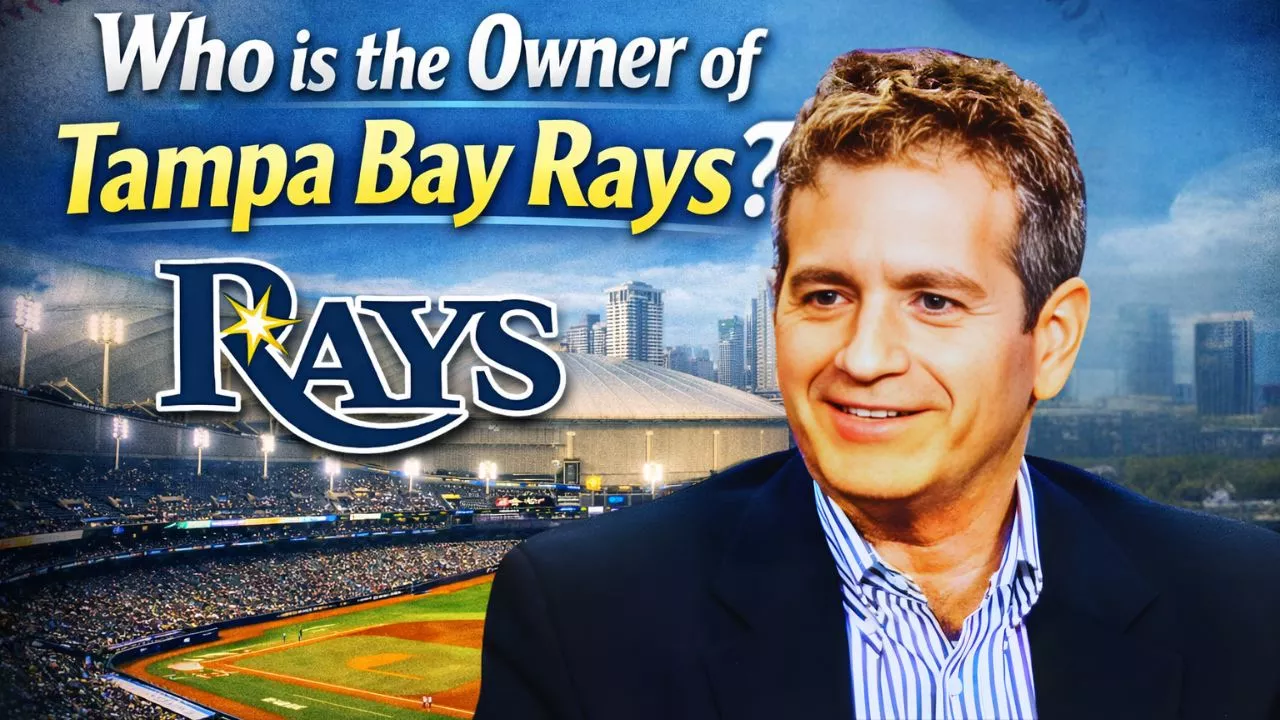
Quick Facts: Tampa Bay Rays
| Owner | Stuart Sternberg (Principal Owner) |
| Team President | Matt Silverman |
| Founded | 1998 (as Tampa Bay Devil Rays) |
| Headquarters | St. Petersburg, Florida, USA |
| Ownership Type | Private |
| Stock Ticker | N/A |
| Publicly Traded | No |
Who Owns the Tampa Bay Rays?
The Tampa Bay Rays are principally owned by Stuart Sternberg, a former Goldman Sachs executive who began purchasing ownership stakes in the franchise as early as 2004 and formally became the principal owner in 2005, when he acquired majority control from the franchise’s founding ownership group led by Vince Naimoli. Sternberg purchased his initial stake for approximately $65 million with partners, then gained full control for a total investment that settled around $200 million. Matt Silverman, a Yale-educated attorney who has been with the organization since the Sternberg era began, serves as the team’s President and is the day-to-day operational executive most visible in the franchise’s management.
Under Stuart Sternberg’s ownership, the Tampa Bay Rays have become one of baseball’s most celebrated examples of small-market success. Despite operating with one of the lowest payrolls in Major League Baseball, the Rays have built a consistent winning culture through elite player development, analytically driven roster construction, and creative tactical approaches. The team changed its name from the Tampa Bay Devil Rays (the founding name from 1998) to simply the Tampa Bay Rays in 2008, simultaneously adopting a new color scheme of navy and light blue. That same 2008 season, the Rays reached the World Series for the first time in franchise history, losing to the Philadelphia Phillies.
The Rays have been involved in a long-running and contentious effort to secure a new ballpark to replace Tropicana Field in St. Petersburg, Florida — an aging dome stadium widely considered one of the worst venues in Major League Baseball. Various proposals for new stadium sites in both St. Petersburg and the broader Tampa Bay area have been debated for years, and the issue has been central to the Rays’ relationship with local government and their long-term future in the market. A catastrophic hurricane damaged Tropicana Field in 2024, adding urgency to the stadium replacement question.
About Stuart Sternberg
Stuart Sternberg built his career at Goldman Sachs, rising to become a partner in the firm’s equities division. His investment acumen and financial background have been evident in how the Rays organization has been managed — with an emphasis on finding undervalued players, leveraging advanced analytics, and maximizing competitive output relative to payroll investment. Sternberg has been less publicly visible than many franchise owners, preferring to let team president Matt Silverman and the baseball operations staff be the organizational faces. The Rays’ success — reaching the World Series in 2008 and 2020 — has validated the analytically driven, budget-conscious approach Sternberg has championed.
Key Ownership Highlights
- Stuart Sternberg took control of the Rays in 2005: Former Goldman Sachs executive Stuart Sternberg became the principal owner of the Tampa Bay franchise in 2005, buying out the founding ownership group. He has since established one of baseball’s most analytically sophisticated organizations despite operating with limited financial resources.
- The Rays reached the World Series in 2008 and 2020: The franchise made its first World Series appearance in 2008 (losing to the Philadelphia Phillies) and returned to the Fall Classic in 2020 in the COVID-shortened bubble season (losing to the Los Angeles Dodgers). Both runs demonstrated the organization’s ability to compete with far wealthier opponents.
- One of MLB’s most innovative franchises: The Rays have been widely credited with pioneering analytical approaches to player valuation, defensive positioning, bullpen usage (the “opener” strategy), and roster construction that have since been adopted league-wide. Their success with limited payroll is studied in business schools and sports analytics programs worldwide.
- The name changed from Devil Rays to Rays in 2008: In 2008, the franchise dropped “Devil” from its name, becoming simply the Tampa Bay Rays, and adopted new team colors (navy and light blue). The rebrand coincided with the team’s dramatic on-field transformation from perennial also-ran to World Series contender that same season.
- A long-running stadium challenge: The Rays have long sought a replacement for Tropicana Field, an aging dome in St. Petersburg that is widely considered one of the worst venues in baseball. The stadium situation has been a persistent issue in the franchise’s relationship with the Tampa Bay community and local government.
Frequently Asked Questions
Who owns the Tampa Bay Rays?
The Tampa Bay Rays are principally owned by Stuart Sternberg, a former Goldman Sachs executive who became the majority owner in 2005. Matt Silverman serves as the team’s President, overseeing day-to-day operations. The franchise is privately held.
Are the Tampa Bay Rays publicly traded?
No. The Tampa Bay Rays are a privately held franchise and are not listed on any public stock exchange.
When did the Rays play in the World Series?
The Tampa Bay Rays have appeared in the World Series twice: in 2008 (losing to the Philadelphia Phillies in five games) and in 2020 (losing to the Los Angeles Dodgers in six games in the COVID pandemic bubble season at Globe Life Field in Texas).
Why are the Rays considered a model small-market franchise?
Despite consistently operating with one of MLB’s lowest payrolls, the Rays have built a winning culture through elite player development, data-driven roster decisions, and creative tactical strategies like the “opener” bullpen approach. Their ability to reach the World Series twice (2008 and 2020) while outspent by competitors has made them a widely studied model for small-market efficiency in professional sports.
Related Reading
See also our profile of fellow MLB franchise the Chicago White Sox.