If you have ever walked into a store and found walls lined with LEGO sets, bins overflowing with loose bricks, and display cases packed with rare minifigures — there is a good chance you were standing inside a Bricks and Minifigs location. It is the largest LEGO resale franchise in the world, and it has grown from a tiny shop in Washington State to over 300 locations across the United States and Canada in just over a decade. But who actually owns it?
The answer starts with two passionate collectors in Portland, passes through a chance encounter at a Salt Lake City comic convention, and ends with two brothers who turned a side hustle into a $95 million business — and are now at the center of one of the most viral franchise controversies of 2026.
What Is Bricks and Minifigs?
Bricks and Minifigs (BAM) is an American retail franchise focused on buying, selling, and trading new and used LEGO products. The company operates stores throughout the United States and Canada, offering retired LEGO sets, loose bricks, minifigures, and related accessories. In addition to retail sales, many locations host community events.
The business model is simple and brilliant. LEGO sets — especially retired and limited-edition ones — hold and grow in value over time. Bricks and Minifigs stores give collectors a physical place to buy, sell, and trade those sets, filling a gap that neither LEGO’s own retail stores nor online platforms like eBay can fully serve.
The expansion set new revenue records, including $37,301 in a single grand opening day and over $1.7 million for a single store in 2025. Overall brand revenue exceeded $95 million, with multiple locations achieving million-dollar sales.
Who Owns Bricks and Minifigs Right Now in 2026?
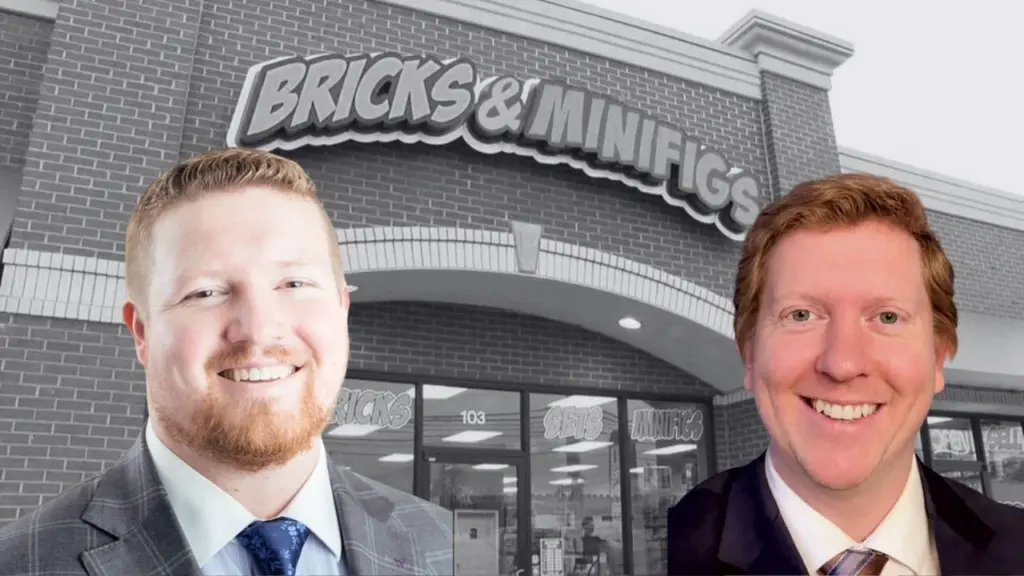
Bricks and Minifigs is owned and operated by brothers Ammon McNeff and Matt McNeff, who acquired the franchise company in 2018. Ammon McNeff serves as CEO and Matt McNeff serves as Chief Operating Officer (COO).
The parent company behind the franchise is BAM Franchising, Inc., an Oregon corporation headquartered at 225 West 520 North, Orem, Utah 84057.
In 2018, Bricks and Minifigs was acquired by brothers Ammon McNeff and Matt McNeff, who had previously operated a franchise location in Utah. In 2018, the company moved its headquarters to Utah. At the time of the acquisition, the company reported 35 franchise locations.
“When I first joined Bricks and Minifigs as CEO in 2018, we had just 35 franchisees operating, and my brother and I were among them,” said Ammon McNeff. “Since then, I’m incredibly proud that we’ve grown that number into over 300 locations across the U.S. and Canada.”
Ownership and Key Stakeholders Table
| Owner / Party | Role | Details |
|---|---|---|
| Ammon McNeff | Owner & CEO | Acquired the company in 2018; leads all strategic decisions |
| Matt McNeff | Owner & COO | Co-acquired in 2018; manages day-to-day operations |
| BAM Franchising, Inc. | Parent Corporate Entity | Oregon corporation; HQ in Orem, Utah; franchising since 2011 |
| John Masek | Original Co-Founder (Historical) | Co-founded with David Ortiz in 2009–2010 in Washington State |
| David Ortiz | Original Co-Founder (Historical) | Met Masek in 2003; opened first store in Battle Ground, WA |
| Individual Franchise Owners | Independent Franchisees | Own and operate each store location independently |
| LEGO Group | Trademark Holder Only | Has no ownership in BAM; does not sponsor or endorse the franchise |
The Origin Story: Two Competitors Who Became Partners
The Bricks and Minifigs story starts not in a boardroom, but in the LEGO resale community in Portland, Oregon, in 2003.
The concept of Bricks and Minifigs originated with original founders John Masek and David Ortiz. The duo met through the LEGO resale community in Portland in 2003. They started as competitors both looking to purchase a large quantity of vintage LEGOs, but soon realized if they combined their skill sets, they would make a great team. Using Ortiz’s contacts in the LEGO community and Masek’s retail experience, they opened their first Bricks and Minifigs location in 2009 in Battle Ground, Washington as co-founders. The location was so successful, they decided to open a second location in Canby, Oregon in 2010, which became the flagship store.
By 2011, the founders began offering franchise opportunities, incorporating BAM Franchising, Inc. as an Oregon corporation on April 29, 2011. The franchise grew steadily through the early 2010s — but the real transformation came when the McNeff brothers entered the picture.
How the McNeff Brothers Took Over
The story of how Ammon and Matt McNeff came to own Bricks and Minifigs is one of those business tales that sounds almost too good to be true.
Brothers Ammon and Matt McNeff grew up in an entrepreneurial family and worked for a family-owned healthcare legal services business. Years later, they came across Bricks and Minifigs while attending Salt Lake Comic Con with their children, at the time creating and selling leather superhero masks. Their kids were familiar with LEGO through video games, as the brand by then had extended far beyond plastic bricks. The McNeffs were hooked and saw the products as another way to play and engage with their children sans electronics. Within three months, the brothers signed a franchise agreement.
They opened their own Bricks and Minifigs franchise in Utah and quickly became some of the strongest performers in the network. That hands-on experience as operators — learning what worked and what did not from inside a real store — gave them a unique advantage when the opportunity to buy the entire company came along in 2018.
When Ammon McNeff became CEO of Bricks and Minifigs in 2018, he arrived not as an outside executive but as a customer and franchisee first. His first-hand familiarity with the business from the owner’s perspective — the daily rhythms of acquisition and resale, the community relationships that anchor each store, the pleasure and the challenge of building a business around a passion product — shaped the strategic direction he brought to the CEO role.
The Growth Under McNeff Leadership: 35 to 300 Stores
What the McNeff brothers have built since 2018 is one of the most impressive growth stories in American franchising.
The brand had 35 locations when they stepped in. It hit 300 stores in 2025, and between 70 and 100 units are expected to open in 2026. The initial cost to operate a Bricks and Minifigs franchise ranges from $241,000 to $570,000, according to its franchise disclosure document. The average franchisee generated $50,000 in sales per quarter when the brothers took over in 2018. As of the second quarter of 2025, that number was a little more than $121,000.
In just 18 months, Bricks and Minifigs grew from its 100th store to its 200th, bringing its hands-on, community-centric LEGO experience to hundreds of new neighborhoods across North America and now Canada.
Ammon McNeff alongside his brother Matt McNeff envision a future with over 3,500 stores worldwide. The company has already expanded from the United States into Canada, where two locations are already open, and is authorized to sell in Australia.
The $200,000 LEGO Controversy of 2026
No ownership article about Bricks and Minifigs in 2026 would be complete without covering the franchise controversy that sent the company’s name viral across TikTok, YouTube, and social media in May 2026.
In 2026, Oregon news outlets reported a dispute over a LEGO Star Wars collection worth $200,000 consigned to the Bricks and Minifigs franchise location in Keizer, Oregon. According to the Statesman Journal, the owner of the collection’s son, Bryan Mansell, said the collection had been consigned in 2023 and that, after a change in franchise ownership in November 2024, the new operators refused to return unsold inventory or honor the consignment contract.
Former Bricks and Minifigs franchise owner Chrystal Gorman claimed the business was “illegally seized by corporate” more than a year ago. She said she and her husband had invested their life savings into the store and built “a warm and fun and inclusive environment” for customers. She also alleged she was removed from the premises “under threat of police action” without notice and without compensation.
The case attracted significant attention through videos published by YouTuber Reckless Ben, who maintained that evidence, including photographs, videos, and court filings, supported the family’s claims. CEO Ammon McNeff said BAM Franchising terminated the prior franchise and maintained that consignment agreements are not authorized under franchise rules — a clause disputed by former franchise owner Chrystal Gorman.
Bricks and Minifigs CEO Ammon McNeff said the company found only a small amount of inventory potentially connected to the collection after taking over the Salem location. He stated the items, estimated between $2,000 and $5,000 in value, had been set aside and offered back to the family despite the company maintaining it held no legal responsibility for the original arrangement.
The controversy remains active and unresolved as of publication.
Related Ownership Profiles
For another well-known American retail chain’s ownership story, see who owns JCPenney.
Frequently Asked Questions (FAQs)
Q1. Who owns Bricks and Minifigs in 2026?
Bricks and Minifigs is owned by brothers Ammon McNeff (CEO) and Matt McNeff (COO), who acquired the company in 2018.
Q2. Who founded Bricks and Minifigs?
The company was founded by John Masek and David Ortiz, who opened the first store in Battle Ground, Washington in 2009–2010.
Q3. Is Bricks and Minifigs affiliated with LEGO?
No. LEGO Group does not sponsor, authorize, or endorse Bricks and Minifigs. It is an independent resale franchise.
Q4. How many Bricks and Minifigs locations are there in 2026?
The brand surpassed 300 locations across the U.S. and Canada in 2025, with 70–100 new stores expected to open in 2026.
Q5. What is BAM Franchising, Inc.?
BAM Franchising, Inc. is the parent corporate entity behind Bricks and Minifigs, incorporated in Oregon and headquartered in Orem, Utah.
Q6. How much does it cost to open a Bricks and Minifigs franchise?
The initial investment ranges from $241,000 to $570,000, according to the company’s official franchise disclosure document.
Q7. What is the $200,000 LEGO controversy about?
A Star Wars LEGO collection worth an estimated $200,000 was allegedly not returned after a franchise location in Keizer, Oregon changed ownership in November 2024, sparking a viral legal dispute in 2026.
Q8. What is the annual revenue of Bricks and Minifigs?
Overall brand revenue exceeded $95 million in 2025, with one top-performing store generating over $1.7 million in annual sales.
Bricks and Minifigs is privately owned by brothers Ammon McNeff (CEO) and Matt McNeff (COO), who acquired the company in 2018 through BAM Franchising, Inc., headquartered in Orem, Utah. The franchise was originally founded in 2009–2010 by John Masek and David Ortiz in Battle Ground, Washington, and began franchising in 2011.
Under the McNeff brothers, the brand has grown from 35 locations to over 300 stores, generated $95 million in brand revenue, and set its sights on 3,500 stores worldwide. Each individual store is independently owned by a franchisee who pays between $241,000 and $570,000 to open a location. LEGO Group holds no ownership interest in Bricks and Minifigs — it simply owns the trademarks on the products the stores buy and sell.