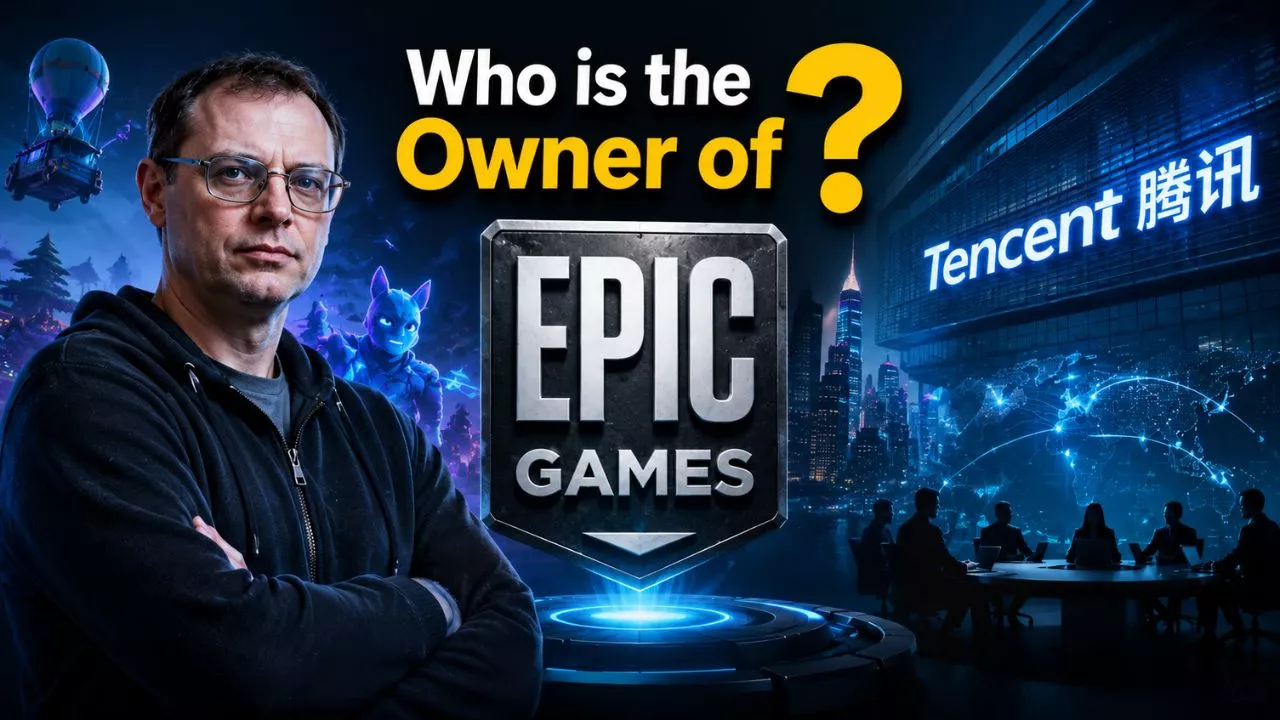
Epic Games is the company behind Fortnite, Unreal Engine, and the Epic Games Store — and it’s privately owned in a way that gives its founder Tim Sweeney extraordinary control over one of the most valuable gaming companies in the world. What makes Epic’s ownership story particularly interesting is the Tencent element: the Chinese tech giant owns approximately 40% of Epic, which has made Epic a recurring figure in US national security discussions about Chinese tech investment in American companies. Sweeney has been vocal about protecting Epic’s independence, and the legal battle with Apple over App Store fees turned Epic into an unexpected champion for developer rights.
🎮 Epic Games — Company Highlights
| Full Name | Epic Games, Inc. |
| Type | Private company |
| Founded | 1991 |
| Headquarters | Cary, North Carolina, USA |
| CEO / Founder | Tim Sweeney (majority owner) |
| Largest Investor | Tencent (~40%) |
| Valuation | ~$31.5 billion (2022 peak); revised lower since |
| Key Products | Fortnite, Unreal Engine, Epic Games Store, Fall Guys |
Who Owns Epic Games?
Tim Sweeney, who founded Epic Games in 1991 at age 20, holds a majority stake — estimated at around 50%+ — and maintains full operational control. He has never taken the company public and has been explicit about preferring private ownership. Tencent, the Chinese social media and gaming conglomerate, owns approximately 40% of Epic following a $330 million investment in 2012. While Tencent’s stake is large, Sweeney has structured Epic so that he retains decision-making authority. Other notable investors include Sony Interactive Entertainment, which invested $1 billion in 2020 and 2021.
| Owner / Investor | Type | Approx. Stake | Notes |
|---|---|---|---|
| Tim Sweeney | Founder / CEO | ~50%+ | Maintains voting control; has never taken Epic public |
| Tencent | Strategic investor | ~40% | Invested $330M in 2012; largest external shareholder |
| Sony Interactive Entertainment | Strategic investor | ~5% | $1B invested in 2020–2021 rounds |
| Other investors | Venture / institutional | Minority | Including Baillie Gifford, T. Rowe Price, others |
Epic Games — Key Milestones
| Year | Milestone |
|---|---|
| 1991 | Tim Sweeney founds Epic MegaGames from his parents’ home; later renamed Epic Games |
| 1998 | Releases Unreal Engine; becomes one of the most licensed game engines in history |
| 2012 | Tencent acquires ~40% stake for $330 million |
| 2017 | Launches Fortnite Battle Royale; becomes a global cultural phenomenon almost overnight |
| 2019 | Launches Epic Games Store; uses Fortnite revenue to subsidize developer-friendly 12% fee |
| 2020 | Files lawsuit against Apple over App Store fees after Apple bans Fortnite |
| 2021 | Raises $1B from Sony and others at $28.7B valuation |
| 2023 | Settles FTC case over child privacy; lays off ~900 employees; monetization challenges |
Leadership at Epic Games
Tim Sweeney is one of the most principled — and occasionally combative — executives in the tech industry. He’s been openly critical of Apple and Google’s app store policies for years, turned it into a federal lawsuit, and has made the 12% Epic Games Store fee a deliberate statement against the industry standard 30% cut. He’s also been public about his views on the future of the metaverse and open digital ecosystems. Sweeney is not a typical CEO — he’s an engineer who codes, a forest conservationist who has donated large tracts of North Carolina land for preservation, and someone who genuinely seems to be building Epic on his own terms rather than for an exit.
My Take on Epic Games
I find Epic Games genuinely interesting to write about because Tim Sweeney is one of the few founder-CEOs who seems to be playing a long game on principle rather than for a payday. The Apple lawsuit was a real financial risk — Epic deliberately triggered it by violating App Store rules, knowing it would get Fortnite removed. That’s a bold call. The Tencent ownership question is real and won’t go away in an era of heightened US-China tech tensions. But Sweeney has structured control carefully. The Unreal Engine business — licensing the most widely used game engine in the world — is a genuinely durable revenue base that most people overlook when they focus on Fortnite. Epic is more than one game.
FAQs
Q1. Who owns Epic Games?
Epic Games is majority-owned by its founder and CEO Tim Sweeney, who holds an estimated 50%+ stake and retains full voting control. The company has never gone public.
Q2. Does Tencent own Epic Games?
Tencent owns approximately 40% of Epic Games following a $330 million investment in 2012. However, Tim Sweeney has structured the company so that decision-making authority remains with him.
Q3. How much is Epic Games worth?
Epic Games was valued at approximately $31.5 billion at its 2022 peak. The valuation has since been revised downward following a round of layoffs and monetization challenges in 2023.
Q4. Why did Epic Games sue Apple?
In 2020, Epic deliberately violated Apple’s App Store rules by adding a direct payment system in Fortnite, knowing Apple would remove the game. This triggered a lawsuit challenging Apple’s 30% commission — turning Epic into an unlikely champion for developer rights.
Q5. Does Sony own a part of Epic Games?
Yes. Sony Interactive Entertainment invested $1 billion across 2020 and 2021, giving it roughly a 5% stake in Epic Games.
Q6. How does Epic Games make money?
Epic’s two primary revenue streams are Fortnite in-game purchases and Unreal Engine licensing fees. Unreal Engine is one of the most widely used game engines in the world, powering games, films, and architectural visualizations.
Q7. Will Epic Games ever go public (IPO)?
Tim Sweeney has never announced IPO plans and has been publicly vocal about preferring private ownership. As of now, there are no confirmed plans for an Epic Games IPO.