For nearly 95 years, walking into a Giant Eagle in Pittsburgh felt like stepping into something that belonged to the community. No distant corporate headquarters in New York or Chicago pulling the strings. No hedge fund demanding quarterly returns. Just five Pittsburgh-area families who had been running grocery stores since the Great Depression and never stopped. That era ended today.
On July 1, 2026, Kroger — the Cincinnati-based grocery giant — announced it is acquiring Giant Eagle for $1.65 billion, ending nearly a century of family ownership. The deal has not yet closed, and Giant Eagle stores will keep their name. But the families who built this company from the ground up are stepping aside, and one of the most beloved regional grocery stories in American history is turning a new page.
Here is the full story — from the founding families who started it all, to the $1.65 billion deal that just changed everything.
What Is Giant Eagle?
Giant Eagle is a privately held American supermarket chain headquartered in Cranberry Township, Pennsylvania. The company generates approximately $9 billion in annual sales with 197 supermarkets and 11 standalone pharmacies spread across western Pennsylvania, northern Ohio, West Virginia, Maryland, and Indiana.
Giant Eagle operates several store formats under its umbrella — the standard Giant Eagle supermarket, the upscale Market District premium grocery concept, and GetGo convenience stores, though the GetGo division was sold to Alimentation Couche-Tard in early 2025 as the company refocused on its core grocery and pharmacy business.
Forbes has consistently ranked Giant Eagle among the top 50 largest private companies in America — remarkable for a regional grocery chain that has never listed on a public stock exchange in its entire history.
Who Owns Giant Eagle Right Now in 2026?
Until today, Giant Eagle was owned entirely by the descendants of five founding families — the Goldsteins, the Porters, the Chaits, the Moravitzes, and the Weizenbaums. These families founded the company in 1931 and maintained private family control through nearly a century of American retail history.
Giant Eagle has been family-owned and locally-operated for 95 years. No private equity firm. No public shareholders. No outside board members calling the shots. Just five families and their descendants, passing equity from generation to generation.
But as of July 1, 2026, that is changing. Kroger and Giant Eagle announced that Kroger will acquire Giant Eagle in a deal that will end nearly 100 years of local ownership for the Cranberry-headquartered food and pharmacy retailer. According to Kroger, the purchase price for Giant Eagle was $1.65 billion.
The transaction is expected to close in 2027, meaning Giant Eagle remains family-owned for now — but its future belongs to Kroger.
Ownership and Key Stakeholders Table
| Owner / Party | Type | Stake | Key Detail |
|---|---|---|---|
| Goldstein Family | Founding Family | Undisclosed private share | Co-founders of original Eagle Grocery in 1918; anchor family of Giant Eagle |
| Porter Family | Founding Family | Undisclosed private share | One of three families behind the original Eagle Grocery chain |
| Chait Family | Founding Family | Undisclosed private share | Co-founded Eagle Grocery; part of 1931 Giant Eagle merger |
| Moravitz Family | Founding Family | Undisclosed private share | Co-founded OK Grocery; merged with Eagle Grocery to form Giant Eagle |
| Weizenbaum Family | Founding Family | Undisclosed private share | Co-founded OK Grocery alongside the Moravitz family |
| Shapira Family | Major Descendant Shareholders | Recognized as primary anchor | Led the company for decades; Laura Shapira Karet departed as board chair in 2023 |
| Kroger Co. (Pending) | Acquirer | $1.65 billion deal | Announced July 1, 2026; deal expected to close 2027; Giant Eagle name retained |
| Bill Artman | CEO (Current) | No ownership stake | Named CEO August 2023; succeeds Shapira family leadership era |
The Origin Story: Five Families, One Great Depression
The story of Giant Eagle starts not in a boardroom but in the working-class neighborhoods of Pittsburgh during one of the hardest economic periods in American history.
After World War I, three Pittsburgh-area families — the Goldsteins, Porters, and Chaits — built a grocery chain called Eagle Grocery. In 1928, Eagle, which at the time had 125 stores, merged with Kroger. The three families agreed to stay out of the grocery business for at least three years. Meanwhile, the Moravitz and Weizenbaum families built their own successful chain of grocery stores named OK Grocery. In 1931, OK Grocery merged with Eagle Grocery to form Giant Eagle, which was incorporated two years later.
The founding families deliberately structured the company so that no single family could dominate. The Goldsteins, Chaits, Porters, Shapiras, and Moravitzes formed the initial ownership group, each holding a portion of equity to prevent single-family dominance. That cooperative ownership model — five families sharing power and decision-making — defined Giant Eagle’s culture for nearly a century.
The first Giant Eagle supermarket opened on Brownsville Road in Pittsburgh in 1936. Through the Great Depression, World War II, and decades of retail transformation, the families held on — growing the company from a neighborhood grocery into a $9 billion regional powerhouse while never once taking it public or selling to an outside buyer.
The Shapira Family: The Most Recognized Leadership Dynasty
Among the five founding families, the Shapira family became the most publicly associated with Giant Eagle’s leadership over the decades. Saul Shapira became president of Giant Eagle in the company’s early years, and subsequent generations of the Shapira family held top executive and board positions well into the 21st century.
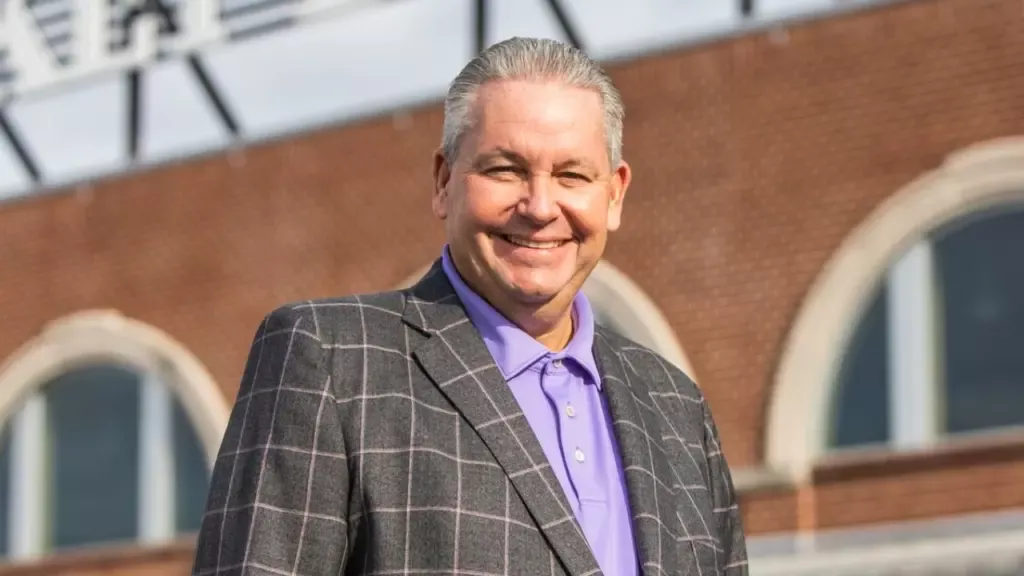
The Giant Eagle board ended Shapira family leadership of the company and its board with Laura Shapira Karet’s departure in March 2023. That moment marked the end of a multi-generational era of direct family executive leadership — and opened the door to professional management under CEO Bill Artman, who was named to the position in August 2023.
The transition from family leadership to professional management is widely seen as one of the key factors that made the Kroger acquisition possible. With no family member in the CEO chair and a board that had already shifted toward professional governance, the conditions for a sale were set.
The GetGo Sale: Preparing for What Came Next
Before the Kroger deal, Giant Eagle made another major move that quietly signalled the company was preparing for a strategic transformation.
In 2025, Giant Eagle completed a major divestiture of GetGo to Alimentation Couche-Tard, refocusing on supermarkets and pharmacies while remaining privately held by descendants of its founding families. GetGo was Giant Eagle’s convenience store and fuel station division, operating 274 fuel stations that now operate under the Circle K ownership of Couche-Tard.
The GetGo sale did two things. First, it simplified Giant Eagle’s business — stripping it back to its core supermarket and pharmacy operations. Second, it generated significant capital that funded store remodels and technology investments. It also effectively made the company a cleaner, simpler acquisition target — exactly the kind of focused grocery and pharmacy business that Kroger CEO Greg Foran described as a “strong strategic fit.”
The $1.65 Billion Kroger Deal: Breaking News
Kroger has acquired family-owned regional supermarket chain Giant Eagle for $1.65 billion. The definitive agreement was announced in a Kroger press release on July 1, 2026 after the Kroger Board of Directors unanimously approved of the transaction.
The structure of the deal will see $1.25 billion offered in cash consideration, coupled with the company assuming roughly $400 million of Giant Eagle’s outstanding liabilities.
This is Kroger’s first major acquisition following its failed mega-merger with top rival Albertsons. That deal, worth nearly $25 billion, fell apart in 2024 after the two largest U.S. supermarket chains failed to convince multiple courts that they should be allowed to merge.
The big question on everyone’s mind was: will the Giant Eagle name survive? The answer is yes. Giant Eagle says it will keep its name as part of Kroger, and Giant Eagle will continue to run the supermarkets, pharmacy, and Market District brands as a division of Kroger. Giant Eagle also told KDKA-TV that Kroger plans to maintain the Giant Eagle myPerks loyalty program.
Giant Eagle CEO Bill Artman called the deal “an exciting next chapter” for employees, customers, vendors, and community partners, saying it will position the combined grocer to grow and deliver a “better shopping experience.”
Related Ownership Profiles
For the full story behind the recent $1.65 billion store deal, see who owns Kroger.
Why Did the Founding Families Decide to Sell?
Five families held onto Giant Eagle through nearly a century of American retail upheaval — the rise of supermarkets, the invasion of Walmart, the disruption of Amazon, and a global pandemic. So why sell now?
Several factors converged. The Shapira family’s departure from board leadership in 2023 removed the most emotionally invested advocates for continued independence. Competitive pressure in Pittsburgh had intensified — in early 2025, the hottest grocery headline in town was Wegmans’ announcement that it would open a new store in Cranberry Township, about a mile from Giant Eagle’s corporate headquarters.
Giant Eagle has been rated as the worst grocer in the country according to 2026 data from the American Customer Satisfaction Index. That kind of ranking creates real urgency — and the scale and technology investment that only a company like Kroger can provide may be exactly what the brand needs to compete in the years ahead.
Frequently Asked Questions (FAQs)
Q1. Who owns Giant Eagle in 2026?
Giant Eagle is currently owned by descendants of its five founding families — the Goldsteins, Porters, Chaits, Moravitzes, and Weizenbaums — but Kroger announced its $1.65 billion acquisition on July 1, 2026.
Q2. Is Giant Eagle being sold to Kroger?
Yes. Kroger announced on July 1, 2026 that it will acquire Giant Eagle for $1.65 billion, with the deal expected to close in 2027.
Q3. Who founded Giant Eagle and when?
Giant Eagle was founded in 1931 when the Moravitz and Weizenbaum families’ OK Grocery merged with the Goldstein, Porter, and Chait families’ Eagle Grocery in Pittsburgh, Pennsylvania.
Q4. Is Giant Eagle a publicly traded company?
No. Giant Eagle has been a private company since its founding in 1931 and has never listed on any stock exchange. It is one of the largest private companies in America.
Q5. Will Giant Eagle keep its name after Kroger buys it?
Yes. Kroger has confirmed that Giant Eagle will keep its name, its Pittsburgh headquarters, its myPerks loyalty program, and its current CEO Bill Artman after the deal closes.
Q6. How much revenue does Giant Eagle generate?
Giant Eagle generates approximately $9 billion in annual sales through its 197 supermarkets and 11 standalone pharmacies across five states.
Q7. What happened to Giant Eagle’s GetGo division?
Giant Eagle sold its GetGo convenience store and fuel station division — 274 locations — to Alimentation Couche-Tard in early 2025. Those stations now operate under the Circle K brand.
Q8. Who is the current CEO of Giant Eagle?
Bill Artman has served as CEO of Giant Eagle since August 2023, succeeding the Shapira family era of leadership when Laura Shapira Karet departed as board chair in March 2023.
Giant Eagle was owned for 95 years by the descendants of five founding Pittsburgh-area families — the Goldsteins, Porters, Chaits, Moravitzes, and Weizenbaums — who merged two Depression-era grocery chains in 1931 and never sold, never went public, and never let outside investors in. The Shapira family became the most prominent leadership dynasty within that ownership group, guiding the company for decades until Laura Shapira Karet left the board chair in March 2023.
That era ended on July 1, 2026, when Kroger announced a $1.65 billion acquisition of Giant Eagle — its first major deal after the failed Albertsons merger collapsed in 2024. The deal is expected to close in 2027. Giant Eagle will keep its name, its Pittsburgh headquarters, its CEO Bill Artman, and its myPerks loyalty program. But after nearly a century, the five founding families are passing the torch.