Shopify has done something that very few technology companies manage to do: it genuinely democratized something that was previously only available to large businesses. Before Shopify, building an online store required either a large technical team or significant budget for custom development.
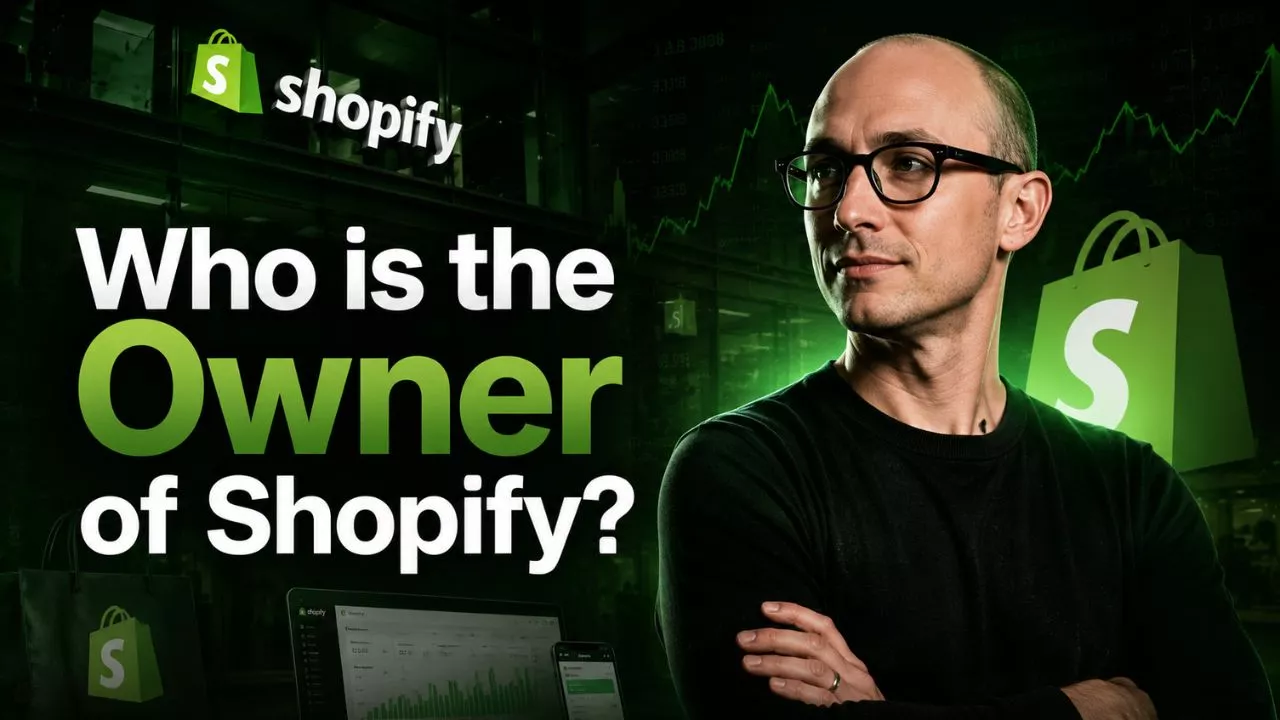
Shopify made it accessible to anyone — from a solo creator selling handmade goods to a mid-sized brand shipping internationally. I’ve watched Shopify grow from a niche e-commerce platform into a company that now powers over 10% of all US e-commerce. Its founder Tobi Lütke remains the controlling shareholder and CEO, and his unconventional approach to building a company has made Shopify one of the most interesting leadership case studies in tech.
🛍️ Shopify — Company Highlights
| Full Name | Shopify Inc. |
| Ticker | NYSE: SHOP |
| Founded | 2006 (Ottawa, Canada) |
| Headquarters | Ottawa, Ontario, Canada (major US operations) |
| CEO | Tobi Lütke (founder) |
| Revenue (2024) | ~$8.9 billion |
| Merchants | 2+ million merchants in 175+ countries |
| US Market Share | ~10%+ of US e-commerce (second only to Amazon) |
Who Owns Shopify?
Shopify is publicly traded on the NYSE, but its founder Tobi Lütke retains significant control through a dual-class share structure. Lütke holds Class B shares with 10 votes each, giving him effective majority voting power despite owning a smaller economic percentage of the company. He is the single largest individual shareholder. Institutional investors — Vanguard (~8%), BlackRock (~7%), Baillie Gifford, and others — are the largest holders by share count but have limited governance influence. For those interested in how other founder-controlled tech companies are structured, see our posts on who owns Meta and who owns Stripe.
| Shareholder | Type | Approx. Stake | Notes |
|---|---|---|---|
| Tobi Lütke | Founder / CEO | ~7% economic / majority voting | Class B shares (10 votes each); founder control |
| Vanguard Group | Institutional | ~8% | Largest institutional holder by share count |
| BlackRock | Institutional | ~7% | Major passive index holder |
| Baillie Gifford | Institutional | ~5% | Scottish investment firm; long-term growth investor |
| Public shareholders | NYSE | Remaining % | Class A shares; one vote each |
Shopify — Key Milestones
| Year | Milestone |
|---|---|
| 2004 | Tobi Lütke builds an e-commerce platform to sell snowboards; becomes the foundation for Shopify |
| 2006 | Shopify officially launches as a platform; opens to external merchants |
| 2015 | IPO on NYSE and TSX; raises $131 million |
| 2016–2019 | Rapid merchant growth; launches Shopify Payments, Shopify Capital, and fulfillment services |
| 2020 | COVID-19 accelerates e-commerce; Shopify revenues more than double; stock surges ~175% |
| 2022 | Post-COVID correction; acquires Deliverr for $2.1B (later partially divested logistics) |
| 2023 | Sells logistics business to Flexport; refocuses on core commerce platform; margins improve |
| 2024 | Revenue reaches ~$8.9B; integrates AI tools across the platform; Shopify Magic launched |
Leadership at Shopify
Tobi Lütke is one of tech’s most unconventional founder-CEOs. A German-Canadian who dropped out of school at 16 to pursue an apprenticeship in computer science, he built Shopify because he wanted a better platform for his own snowboard business — and ended up building one of the most important e-commerce companies in the world. Lütke is known for writing long memos about company culture (his “trust battery” framework became widely read), being highly transparent about how Shopify operates, and having strong opinions about remote work and focused deep work. He famously spent years at sea sailing and is genuinely passionate about sailing as a metaphor for business execution.
Related Ownership Profiles
For another major semiconductor and tech company, see who owns Broadcom.
My Take on Shopify
Shopify has earned its position as the most important e-commerce platform for independent merchants. The decision to sell the logistics business and refocus on core platform strengths was the right call — a lesson in knowing what you’re actually good at. What interests me most about Shopify’s future is its AI integration: if Shopify can genuinely help small merchants compete with Amazon through AI-powered product photography, copywriting, and customer service, it has a compelling value proposition that gets stronger, not weaker, as AI improves. The risk is always Amazon — Shopify’s success depends partly on people choosing to buy from independent stores rather than defaulting to Amazon Prime.
FAQs
1. Who founded Shopify and why?
Shopify was founded by Tobi Lütke in 2006. He originally built the platform to sell snowboards online and found that no existing e-commerce solution met his needs — so he built his own, which eventually became Shopify.
2. Is Shopify publicly traded?
Yes. Shopify trades on the NYSE under the ticker SHOP and is also listed on the Toronto Stock Exchange (TSX). It went public in 2015, raising $131 million in its IPO.
3. Does Tobi Lütke still control Shopify?
Yes. Through a dual-class share structure, Lütke holds Class B shares with 10 votes each, giving him effective majority voting control over the company despite owning roughly 7% of its economic value.
4. How does Shopify make money?
Shopify earns revenue through subscription plans (merchant-facing software), transaction fees via Shopify Payments, merchant cash advances through Shopify Capital, and additional commerce services. It generated approximately $8.9 billion in revenue in 2024.
5. What is Shopify’s biggest competitive threat?
Amazon remains Shopify’s most significant long-term risk. Shopify’s growth depends on consumers continuing to shop from independent stores rather than defaulting to Amazon Prime — making merchant success and differentiation critical to Shopify’s own future.