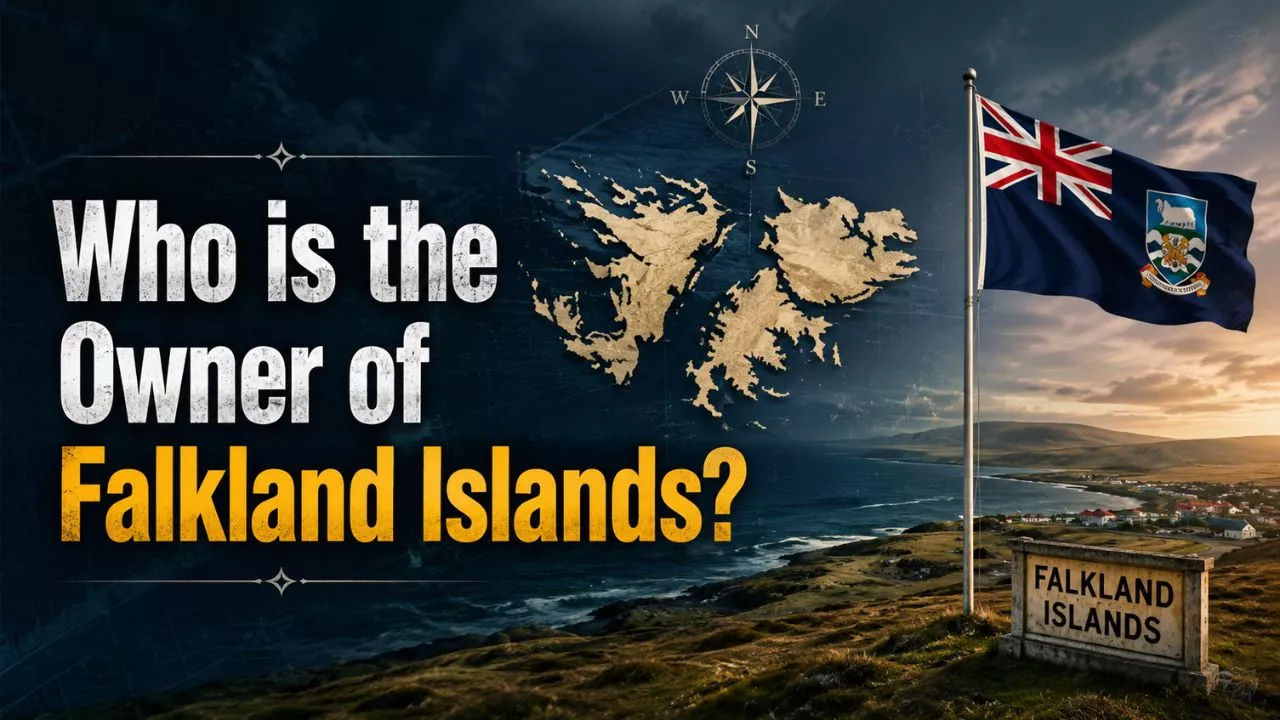
Few questions in modern geopolitics are as simple to ask and as complicated to answer as this one: who owns the Falkland Islands? Depending on who you ask, the answer changes completely. Ask the United Kingdom, and the reply is instant — “We do. Full stop.” Ask Argentina, and the answer is equally firm — “They are ours. They always have been.” Ask the roughly 3,500 people who actually live there, and an overwhelming 99.8% of them will tell you they want to remain British.
And yet in 2026, the question is back in the headlines with more urgency than at any point since the 1982 war — with a leaked Pentagon memo, a new push from Argentine President Javier Milei, and a Trump administration that has openly signaled it may no longer automatically back Britain. The ownership of these islands has never felt more unsettled.
Here is the complete story — from the first recorded landing in 1690 to the geopolitical firestorm of 2026.
More Consumer Tech Ownership Stories
For a look at a fast-growing consumer tech brand, read who owns Anker Brand.
What Are the Falkland Islands?
The Falkland Islands are an archipelago — a group of islands — located in the South Atlantic Ocean, approximately 300 miles (480 km) off the coast of Argentina and roughly 8,000 miles from the United Kingdom. The island group consists of two main islands — East Falkland and West Falkland — plus around 776 smaller islands.
The islands have a population of approximately 3,500 people, most of whom are descendants of British settlers. The capital and largest settlement is Stanley (also called Port Stanley), located on East Falkland. The economy is built primarily on fishing, sheep farming, and tourism. In Argentina, the islands are called Las Malvinas — and that name carries enormous emotional and political weight.
Who Currently Controls the Falkland Islands?
The direct answer is: the United Kingdom.
The United Kingdom currently governs the Falkland Islands as a British Overseas Territory, with roughly 3,500 residents who hold full British citizenship. The islands have their own government — the Falkland Islands Government — with a locally elected Legislative Assembly, but defence and foreign policy are handled by London. The UK maintains a permanent military garrison on the islands called British Forces South Atlantic Islands (BFSAI).
Argentina disputes this arrangement and claims sovereignty over the islands, which it calls Las Malvinas, treating their recovery as a constitutional mandate. The result is one of the longest-running territorial disputes in modern history.
Sovereignty — Who Claims What Table
| Party | Position | Legal Basis | Current Status |
|---|---|---|---|
| United Kingdom | Claims full sovereignty | Continuous administration since 1833; 2013 referendum result | Administers the islands as a British Overseas Territory |
| Argentina | Claims full sovereignty | Successor state to Spain; geographic proximity; UN resolutions | Disputes UK control; calls islands “Las Malvinas” in its constitution |
| Falkland Islands residents | Choose to remain British | Right to self-determination | Voted 99.8% in favour of UK in 2013 referendum |
| United Nations | Lists islands as Non-Self-Governing Territory | UN decolonization framework | Calls for negotiated settlement between UK and Argentina |
| United States | Officially neutral | Long-standing non-alignment on sovereignty | Backed UK in 1982; Trump administration stance shifted in 2026 |
| Latin American nations | Generally support Argentina | Regional solidarity; OAS resolutions | Back Argentina’s right to negotiate sovereignty |
The Origin Story: France, Britain, Spain, and Argentina
The ownership dispute over the Falkland Islands is centuries old, and understanding it requires going back to the very beginning.
English captain John Strong made the first recorded landing on the uninhabited archipelago in 1690, naming the sound between the two main islands after Viscount Falkland, a British naval official. The name was later applied to the whole island group.
In 1764, French colonists established the settlement of Port Louis on East Falkland. The following year, 1765, a British expedition reached West Falkland and took formal possession of it in the name of the British Crown. A British settlement was established on West Falkland in 1766. That same year, the French colony was sold to Spain, which named it Puerto de la Soledad.
By 1774, London withdrew its physical administration from the islands. However, to counter any argument that this implied abandonment of the British claim, a plaque was left in place proclaiming continued sovereignty. Spain also eventually withdrew from the islands in the early 1800s, following the Latin American independence movements.
Argentina declared its independence from Spain in 1816 and asserted authority over the Falklands as the successor state to Spain. In 1820, the islands were claimed on behalf of Buenos Aires. But Britain had never formally relinquished its own claim — and in January 1833, sent a warship to the islands and expelled the remaining Argentine military personnel, establishing continuous British administration that has lasted until today.
The 1982 War: The Defining Moment
No event in the history of the Falklands dispute comes close to matching the importance of the 1982 war — and no article about ownership of these islands can be complete without it.
On 2 April 1982, Argentine military forces invaded and occupied the Falkland Islands. The Argentine military junta, led by General Leopoldo Galtieri, launched the invasion hoping that Britain — under Prime Minister Margaret Thatcher — would not respond militarily given the distance of the islands from the UK.
They were wrong.
Thatcher dispatched a Royal Navy task force of over 100 ships to retake the islands. The war lasted 74 days. When it ended on 14 June 1982, Britain had recaptured the islands. The human cost was significant — 255 British servicemen, 649 Argentine soldiers, and 3 Falkland civilians lost their lives.
The 1982 war fundamentally changed the dynamics of the dispute. Argentina was forced to accept that Britain was willing to fight for the islands. Britain emerged with a strengthened legal and moral case based on the principle of self-determination — the right of the islanders to choose their own future. And Thatcher’s political standing in the UK was transformed by the victory.
The 2013 Referendum: 99.8% Choose Britain
Thirty-one years after the war, the Falkland Islanders were given a chance to formally express their wishes through a democratic vote.
In 2013, when Lord Cameron was Prime Minister, islanders voted in a 90% turnout referendum in which 1,513 were in favour of remaining a UK overseas territory while just three votes were against. That is a 99.8% majority for remaining British — one of the most decisive referendum results in modern democratic history.
The UK has consistently pointed to this referendum as the definitive expression of the islanders’ wishes and the clearest possible application of the principle of self-determination. Britain has consistently declined to enter sovereignty talks while the islanders oppose them, pointing to the 2013 referendum as the final word on the matter.
Argentina disputes this framing entirely. Argentina strongly maintains that this is a sovereignty dispute — not a matter of self-determination — and that the people on the islands are an artificially implanted settler population whose preferences cannot override Argentina’s territorial claim.
What Is Happening in 2026: Trump, Milei, and a Leaked Pentagon Memo
The ownership question around the Falkland Islands has returned to the centre of global attention in 2026 — and it is more combustible than at any time since the 1982 war.
Argentine President Javier Milei has launched a new effort to claim control of the Falkland Islands, reigniting the long-standing dispute with the United Kingdom. On April 2, 2026 — the 44th anniversary of the Argentine invasion — Milei attended a ceremony in Buenos Aires to honour victims of the 1982 war and publicly reaffirmed that the islands “were, are and will always be Argentine.” In April 2026, Argentina reiterated its willingness to resume bilateral negotiations with the United Kingdom over sovereignty.
But the most explosive development came from Washington. A leaked memorandum from the US Department of War, prepared by Elbridge Colby, the Pentagon’s top policy adviser, mooted a re-evaluation of the British title to the islands — apparently to punish the UK for its lukewarm stance on the US and Israeli war against Iran. Trump has expressed frustration with NATO allies publicly over their refusal to join the Iran War, and the leaked memo was widely interpreted as a signal that the Trump administration might withdraw the automatic American backing for British sovereignty that has existed since 1982.
The UK responded quickly. Britain said that sovereignty over the islands “rests with the UK.” Opposition leader Kemi Badenoch was equally direct: “The Falklands are British. Full stop. We fought for them when it mattered most and paid the price.”
US Secretary of State Marco Rubio later appeared to step back from the leaked memo’s implications — but the damage to certainty had been done. For the first time in decades, Argentina has a genuine reason to believe that Washington might not automatically take London’s side.
The UK’s Legal and Moral Case
Britain’s claim to the Falkland Islands rests on three main pillars.
The first is historical administration — Britain has administered the islands continuously since 1833, with the single brief interruption of the 74-day Argentine occupation in 1982. That is nearly 200 years of unbroken governance.
The second is the 2013 referendum result — 99.8% of islanders choosing to remain British is as clear an expression of democratic will as exists anywhere in the world.
The third is the principle of self-determination — enshrined in the UN Charter — which gives peoples the right to determine their own political status. The UK argues this principle applies fully to the Falkland Islanders.
Argentina’s Legal and Moral Case
Argentina’s case is equally firmly stated — just built on different foundations.
Argentina claims to be the rightful successor state to Spain, which once administered the islands. Under international law, newly independent states inherit the territories of their colonial predecessors — a principle called uti possidetis juris. Argentina argues that when it gained independence from Spain in 1816, it inherited sovereignty over the Falklands.
Argentina also argues that Britain’s 1833 expulsion of Argentine settlers was an illegal act of colonial aggression — and that the islanders’ British identity today is the product of an artificially implanted settler population, not a native community with natural self-determination rights.
The United Nations has passed multiple resolutions calling on Britain and Argentina to negotiate — but none of these resolutions legally compel either side to act.
Frequently Asked Questions (FAQs)
Q1. Who owns the Falkland Islands in 2026?
The United Kingdom governs the Falkland Islands as a British Overseas Territory, though Argentina disputes this and claims full sovereignty.
Q2. What does Argentina call the Falkland Islands?
Argentina calls them Las Malvinas — a name that carries deep national and emotional significance in Argentine culture and is enshrined in the country’s constitution.
Q3. What happened in the 1982 Falklands War?
Argentina invaded the islands on April 2, 1982, and Britain sent a task force that recaptured them after 74 days of fighting, with 255 British, 649 Argentine soldiers, and 3 civilians killed.
Q4. What did the 2013 referendum say?
In 2013, Falkland Islanders voted 99.8% in favour of remaining a UK Overseas Territory — one of the most decisive referendum results in modern democratic history.
Q5. What is the US position on Falklands sovereignty in 2026?
A leaked Pentagon memo in 2026 suggested the Trump administration might re-evaluate British title to the islands, though Secretary of State Marco Rubio later appeared to pull back from that position.
Q6. Has the UN taken a side in the Falklands dispute?
No. The UN calls the islands a Non-Self-Governing Territory and has passed resolutions urging UK-Argentina negotiations — but has not ruled on legal sovereignty for either side.
Q7. What is Argentina’s latest move in 2026?
Argentine President Javier Milei reiterated his sovereignty claim on April 2, 2026 — the 44th anniversary of the 1982 invasion — and pushed for renewed bilateral negotiations with the UK.
Q8. Can Argentina legally take back the Falkland Islands?
No. International law does not give Argentina the right to take the islands by force, and the UK has made clear it will defend them militarily. Any transfer of sovereignty would require negotiations and the consent of the islanders.
The Falkland Islands are currently governed and administered by the United Kingdom as a British Overseas Territory. The approximately 3,500 islanders hold full British citizenship and voted 99.8% in favour of remaining British in the 2013 referendum.
Argentina disputes this completely, calling the islands Las Malvinas and treating their recovery as a constitutional obligation. The dispute has never been fully resolved by international law, and the UN continues to list the islands as a Non-Self-Governing Territory.
In 2026, the dispute is more alive than ever. Argentine President Javier Milei is pushing harder for sovereignty talks. A leaked Trump administration Pentagon memo has suggested the US may re-evaluate its traditional support for British control. And Britain — though firm in its public position — is navigating a more complicated geopolitical landscape than it has faced since 1982.
The islands have changed hands many times in history. Whether they will change hands again remains one of the most watched geopolitical questions of our time.