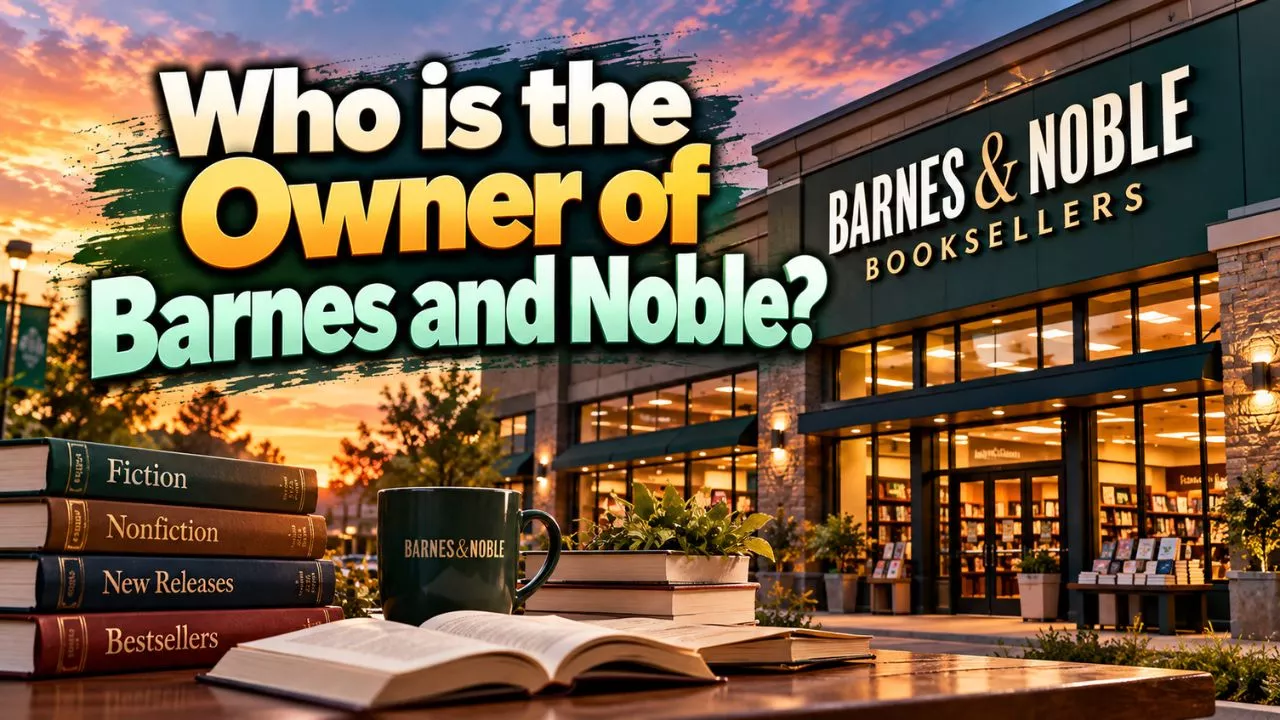
Barnes & Noble is the largest retail bookseller in the United States — a brand so iconic that it feels like it has always been part of the American landscape. But the story of who owns it today is one of the most dramatic business turnarounds in modern retail history.
It involves a hedge fund that bet on physical bookstores at the worst possible time, a British bookseller who flew to New York to save them, and a comeback so impressive that a multibillion-dollar IPO is now on the table for 2026.
Who Owns Barnes and Noble Right Now in 2026?
Barnes & Noble is currently owned by Elliott Investment Management — one of the largest and most powerful investment firms in the world. Elliott acquired Barnes & Noble for $683 million in an all-cash deal on August 7, 2019, taking the company completely private.
Since that day, Barnes & Noble has been a privately held, wholly owned subsidiary of Elliott, and its shares no longer trade on any stock exchange.
The man Elliott brought in to run it is James Daunt — a celebrated British bookseller and the same person who had already saved Waterstones, Elliott’s UK bookstore chain, from near-certain collapse. Daunt now serves as CEO of both Barnes & Noble and Waterstones simultaneously, making him the most powerful bookselling executive in the English-speaking world.
Ownership and Key Stakeholders Table
| Owner / Party | Role | Stake | Key Detail |
|---|---|---|---|
| Elliott Investment Management | Owner & Parent Company | 100% of Barnes & Noble | Acquired for $683M on August 7, 2019; took company fully private |
| James Daunt | Chief Executive Officer | No separate ownership stake | British bookseller; also CEO of Waterstones and founder of Daunt Books |
| Waterstones (UK) | Sister Company under Elliott | 100% owned by Elliott | Elliott acquired Waterstones in June 2018, one year before B&N |
| Paper Source | Subsidiary of Barnes & Noble | Acquired May 2021 | Stationery and gift retailer acquired by B&N out of bankruptcy |
| NOOK Digital, LLC | Barnes & Noble subsidiary | Fully owned by B&N | eBook and audiobook platform owned entirely by B&N |
| SparkNotes | Barnes & Noble brand | Fully owned by B&N | Educational study guide platform owned under the B&N umbrella |
| Sterling Publishing | Barnes & Noble brand | Fully owned by B&N | Book publisher operating under the Barnes & Noble group |
| No public shareholders | N/A | Private company | B&N stock was delisted from NYSE on August 7, 2019 |
The Origin Story: 1886 to Leonard Riggio
The story of Barnes & Noble stretches back further than most people realize. A major part of what would become Barnes & Noble was founded in 1886 as a bookstore called Arthur Hinds & Company.
In 1917, G. Clifford Noble bought out the original owner and partnered with William Barnes — and the name was changed to Barnes & Noble shortly after.
The company passed through several hands over the decades, including the Amtel conglomerate after John Barnes died in 1964. But the defining moment in its modern history came in 1971, when a 26-year-old bookseller named Leonard Riggio purchased the Barnes & Noble trade name and its flagship store in New York City.
Riggio turned that single store into the largest bookstore chain in America, pioneering the “book superstore” format in the 1980s and 1990s that made Barnes & Noble a household name. By 2008, it operated 726 stores across the United States — its all-time peak.
Just like Barnes & Noble, many iconic American brands have dramatic ownership stories — including who owns Taco Bell and who owns Sharpie.
The Amazon Crisis: How Barnes and Noble Almost Died
The rise of Amazon nearly ended Barnes & Noble completely. From 2014 to 2019, the company lost over $1 billion in market value as Amazon captured approximately 50% of all book sales in the United States. In FY2018, despite revenues of $3.7 billion, Barnes & Noble posted a net loss of $125.5 million.
The company tried everything — it launched the NOOK e-reader to compete with Amazon’s Kindle, added toys and games, and explored mergers with rivals. Nothing worked. By 2019, the stock price had collapsed, the board was desperate for a buyer, and the company’s future looked genuinely bleak.
The Elliott Acquisition: A $683 Million Bet on Books
Elliott Investment Management was founded by billionaire Paul Singer in 1977 and is one of the most sophisticated activist investors in the world — known for buying struggling assets, fixing them aggressively, and selling at a substantial profit.
Elliott had already proven its thesis in the book world. In June 2018, it acquired Waterstones — the largest retail bookseller in the UK — and put James Daunt in charge. Within months the business was improving dramatically.
When Elliott bought Barnes & Noble for $683 million in August 2019, it imported the exact same blueprint: bring in Daunt, trust the booksellers, and let the stores breathe. On August 7, 2019, Barnes & Noble’s stock was permanently delisted from the New York Stock Exchange.
Sports and entertainment companies go through equally dramatic ownership changes — read about who owns Fanatics and who owns NASCAR for similar stories.
The James Daunt Turnaround: How One Man Saved the Bookstore
Achilles James Daunt — born October 18, 1963 — is the person most directly responsible for Barnes & Noble’s survival. He is a Cambridge-educated British bookseller who opened his own independent bookshop, Daunt Books, in London in 1990. He later saved Waterstones from near-bankruptcy after being appointed its Managing Director in 2011.
When Daunt took over Barnes & Noble, he immediately scrapped the old model. He ended the system of paid front-of-store placement by major publishers — meaning books were no longer positioned based on how much a publisher paid, but on what store teams genuinely believed customers would love.
He gave individual store managers far more control over what they stocked, how they arranged displays, and what local events they hosted. He reduced the emphasis on non-book merchandise like toys and games, renovated locations, and leaned into the cultural moment created by BookTok — the TikTok community devoted to book recommendations that brought millions of younger readers back into physical stores.
The results were extraordinary. December 2025 foot traffic hit 22 million visits — up 15% compared to December 2017. The combined Elliott bookselling entity reported approximately $400 million in annual profit on $3 billion in sales as of December 2025. Daunt was appointed a Commander of the Order of the British Empire (CBE) in the 2022 Queen’s Birthday Honours for services to the publishing industry.
Barnes and Noble in 2026: Expansion and IPO Plans
Barnes & Noble in 2026 is a company that looks almost nothing like the one Elliott bought in 2019 — in the best possible way.
The store count has grown from 627 locations when Elliott acquired the chain to 721 locations as of November 2025, with 60 new stores planned to open in 2026.
That expansion pace — 30 new stores in 2023, 61 in 2024, 67 in 2025, and 60 planned for 2026 — is the fastest new store growth Barnes & Noble has seen in decades. Many new locations are smaller — around 14,000 square feet — and are opening in repurposed retail spaces including former Bed Bath & Beyond suites and multi-tenant shopping centers.
Elliott Investment Management is now reportedly preparing to take Barnes & Noble and Waterstones public in a combined IPO, potentially in the second half of 2026.
Rothschild has been enlisted as independent adviser. The listing could happen in London rather than New York, given the steady income the combined entity generates. According to a Bloomberg report cited by Axios, Elliott is actively considering the move — though no final decision has been made.
CEO James Daunt has also made headlines by saying Barnes & Noble is open to stocking AI-written books — provided they are clearly labeled and do not use copyrighted material without permission. It is a pragmatic position that reflects the wider debate the publishing industry is navigating in the AI era.
Tech and media ownership stories are equally fascinating — explore who owns Sora and who owns Starlink for more.
Is Barnes and Noble Education the Same Company?
This is a very common source of confusion — and the answer is a firm no.
Barnes & Noble Education, Inc. (NYSE: BNED) is a completely separate and independent public company that operates bookstores for colleges and universities and offers digital education services.
Despite the similar name, it has no affiliation with Barnes & Noble the bookstore chain. The two businesses split apart years ago and are entirely unrelated in ownership, operations, and management.
Frequently Asked Questions (FAQs)
Q1. Who owns Barnes and Noble in 2026?
Barnes & Noble is 100% owned by Elliott Investment Management, a private hedge fund that acquired it for $683 million in August 2019.
Q2. Is Barnes and Noble publicly traded?
No. Barnes & Noble was taken private on August 7, 2019, when Elliott completed its acquisition and delisted the stock from the NYSE.
Q3. Who is the CEO of Barnes and Noble in 2026?
James Daunt is the CEO — a British bookseller who also runs Waterstones in the UK and founded Daunt Books in London in 1990.
Q4. When did Elliott Management buy Barnes and Noble?
Elliott Management completed its acquisition on August 7, 2019, paying $6.50 per share in an all-cash deal valued at $683 million.
Q5. How many Barnes and Noble stores are there in 2026?
Barnes & Noble had 721 locations as of November 2025, with 60 new stores planned to open through 2026.
Q6. Is Barnes and Noble Education the same as Barnes and Noble?
No. Barnes & Noble Education, Inc. (NYSE: BNED) is a completely separate public company with no affiliation to Barnes & Noble the retail bookseller.
Q7. Will Barnes and Noble have an IPO in 2026?
Elliott Management is reportedly considering a combined IPO for Barnes & Noble and Waterstones in the second half of 2026, with Rothschild appointed as independent adviser.
Q8. Who founded Barnes and Noble?
The Barnes & Noble name dates to 1917, but the modern chain was built by Leonard Riggio, who bought the trade name and flagship New York store in 1971.
Barnes & Noble is 100% privately owned by Elliott Investment Management, the powerful New York-based hedge fund that acquired it for $683 million in August 2019.
Under CEO James Daunt, Barnes & Noble has staged one of the most dramatic retail comebacks in modern American business history — going from losing $125.5 million in a single year to generating hundreds of millions in annual profit across a growing network of over 720 stores.
With 60 new stores planned for 2026 and a potential IPO on the horizon, the bookstore chain once left for dead by Amazon is now one of the most exciting stories in American retail. Elliott bought it cheap, fixed it brilliantly, and is now preparing to cash out for far more than they paid.