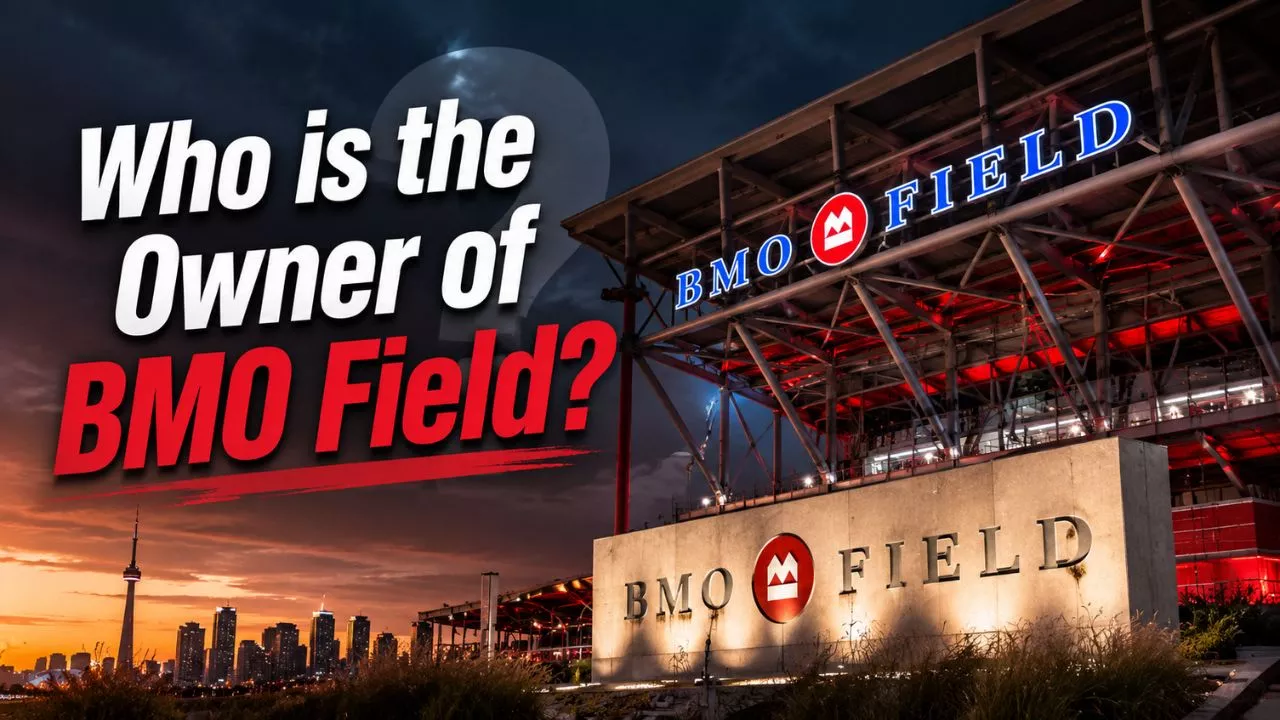
Of all the World Cup venues I’ve researched, BMO Field in Toronto might have transformed the most. It started life as a modest soccer-specific stadium and had to physically grow to be ready for the world’s biggest tournament. And like several venues, the people who run it aren’t the people who own it.
With Toronto hosting six FIFA World Cup 2026 matches — including Canada’s opening game — here is the complete story of who owns BMO Field.
What Is BMO Field?
BMO Field is a stadium on the Exhibition Place grounds in Toronto, Ontario, opened in 2007 as Canada’s first soccer-specific stadium. It’s the home of MLS’s Toronto FC and the CFL’s Toronto Argonauts. Its normal capacity is about 28,000, but a temporary expansion pushed it to roughly 45,700 for the World Cup. During the tournament, FIFA refers to it as “Toronto Stadium.”
Who Owns BMO Field?
BMO Field is owned by the City of Toronto. It’s a public asset, and the city manages it through a partnership with Maple Leaf Sports & Entertainment (MLSE), the sports giant that operates the venue and owns its main tenant, Toronto FC.
This split showed up clearly in the World Cup upgrades. Of the roughly CAD $157.9 million in improvements, the City of Toronto paid about $132.9 million and MLSE contributed the remaining $25 million — a textbook example of a public owner and a private operator sharing the bill.
BMO Field Ownership at a Glance
| Party | Role | Key Detail |
|---|---|---|
| City of Toronto | Owner | Public owner; funded the bulk of the World Cup upgrades |
| Maple Leaf Sports & Entertainment (MLSE) | Operator | Manages the stadium and owns Toronto FC and the Argonauts |
| Rogers Communications / Larry Tanenbaum | MLSE Owners | Control MLSE, the operator of the venue |
| BMO (Bank of Montreal) | Naming-Rights Holder | Name only — no ownership stake |
Who Owns Toronto FC and MLSE?
Toronto FC is owned and operated by MLSE, which also owns the Toronto Maple Leafs, the Toronto Raptors, and the Argonauts. MLSE itself is controlled by Rogers Communications, the telecom giant, alongside chairman Larry Tanenbaum‘s Kilmer Sports. So while the City of Toronto owns the field, the operating muscle comes from one of the most powerful ownership groups in North American sports.
The Naming Rights Story
The name comes from BMO, the Bank of Montreal, which has held the naming rights since the stadium opened in 2007. It’s a long-running, distinctly Canadian partnership — but, as everywhere, the bank pays for the name and owns none of the stadium. For the World Cup, the BMO branding is swapped out for “Toronto Stadium.”
The Little Stadium That Grew
Here’s the detail I find most charming. BMO Field is by far the smallest of the U.S. and NFL-scale venues at this World Cup, so to meet FIFA’s requirements, crews installed a temporary seating expansion of around 17,000 seats, lifting capacity from about 28,000 to roughly 45,700. It’s a reminder that a stadium’s size — like its name — can be temporary, while its ownership stays put with the city.
BMO Field at the FIFA World Cup 2026
Toronto is hosting six matches as “Toronto Stadium,” and it carries special weight: it stages Canada’s opening match of the tournament. It’s one of two Canadian venues, alongside BC Place in Vancouver. See how it compares with every host in my World Cup 2026 stadium ownership guide.
Could the Ownership Ever Change?
The City of Toronto’s ownership is stable. The more dynamic story is at the operator level: Rogers has been consolidating its control of MLSE, so the group that runs BMO Field is evolving even as the city’s ownership of the building stays the same.
In short: the City of Toronto owns BMO Field, MLSE (controlled by Rogers and Larry Tanenbaum) operates it and Toronto FC, and the Bank of Montreal rents the name. For six matches in 2026 — starting with Canada’s opener — the little stadium that grew becomes “Toronto Stadium.”
Frequently Asked Questions (FAQs)
Q1. Who owns BMO Field?
The City of Toronto owns BMO Field. Maple Leaf Sports & Entertainment (MLSE) manages it and owns the resident club, Toronto FC.
Q2. Who controls MLSE?
MLSE is controlled by Rogers Communications, alongside chairman Larry Tanenbaum‘s Kilmer Sports.
Q3. Does the Bank of Montreal own BMO Field?
No. BMO holds only the naming rights, dating to 2007. The city owns the stadium.
Q4. What is BMO Field called during the World Cup?
It is referred to as “Toronto Stadium” during the 2026 FIFA World Cup.
Q5. How many World Cup matches will Toronto host?
Six matches, including Canada’s opening game.