Coca-Cola is arguably the world’s most recognized brand — a fizzy red can that has been present at every FIFA World Cup since 1950. With the FIFA World Cup 2026 currently underway in the USA, Canada, and Mexico, Coca-Cola is once again one of the most visible FIFA partners. But who actually owns Coca-Cola, who controls the largest shares, and how does the ownership structure of one of the most valuable companies on earth actually work? I spent time going through the ownership records, Berkshire disclosures, and company filings. Here’s the complete picture.
| Full Name | The Coca-Cola Company |
| Founded | 1892 (Asa Griggs Candler; formula invented 1886 by John Pemberton) |
| Headquarters | Atlanta, Georgia, USA |
| CEO | James Quincey |
| Listed On | NYSE (KO) |
| Largest Shareholder | Berkshire Hathaway (~9.3%) |
| Market Cap | ~$300 billion (2026) |
| FIFA Partnership | Official Worldwide Partner since 1974; FIFA World Cup partner since 1950 |
Who Owns Coca-Cola?
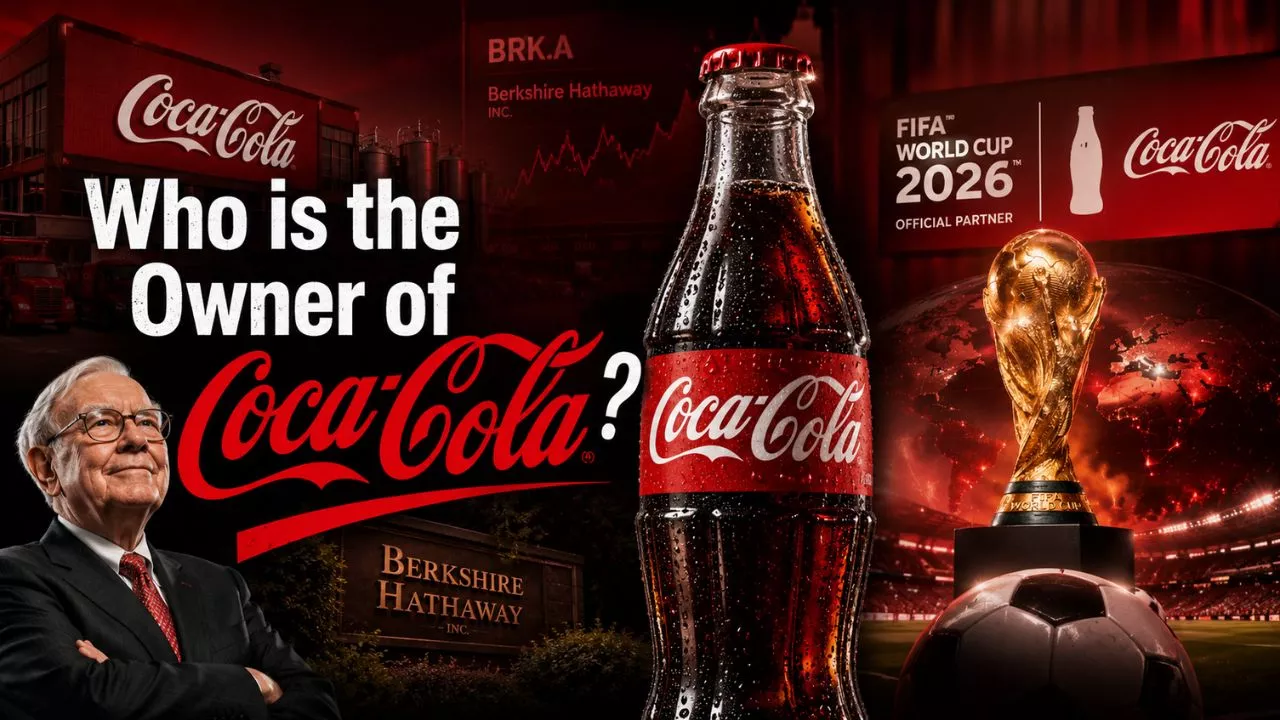
The Coca-Cola Company (NYSE: KO) is a publicly traded corporation, meaning it is owned by its shareholders across the world. However, Berkshire Hathaway — Warren Buffett’s investment conglomerate — is the single largest institutional shareholder with approximately 9.3% of outstanding shares, a stake worth roughly $25–28 billion at current prices. Berkshire started buying Coca-Cola shares in 1988 and has held them ever since, calling it one of the best investments of the 20th century. Other major institutional shareholders include Vanguard Group (~8%), BlackRock (~6%), and State Street (~4%). No individual, family, or government controls Coca-Cola — it is a classic widely-held American corporation with dispersed ownership. The CEO James Quincey has led the company since 2017 and has steered it through a post-pandemic recovery and premiumisation strategy. Coca-Cola is present in 200+ countries and sells over 500 brands beyond the flagship Cola including Sprite, Fanta, Thums Up (India), Minute Maid, and Dasani. For FIFA partnership details, see also who owns Visa — another top FIFA World Cup 2026 partner.
| Shareholder | Type | Approximate Stake |
|---|---|---|
| Berkshire Hathaway (Warren Buffett) | Institutional investor | ~9.3% |
| Vanguard Group | Index fund / institutional | ~8% |
| BlackRock | Institutional investor | ~6% |
| State Street Global Advisors | Institutional investor | ~4% |
| Other institutional & retail investors | Public float | ~72% |
Who is the CEO of Coca-Cola?
James Quincey is the Chairman and CEO of The Coca-Cola Company. He joined Coca-Cola in 1996, worked his way through multiple country and regional roles, and became CEO in May 2017. Quincey is a British national, born in London, making him one of few non-Americans to lead Coca-Cola. His strategy has focused on reducing the company’s portfolio from 400+ brands to core high-performing brands, expanding into hot beverages (Coca-Cola acquired Costa Coffee in 2019), and pushing premiumisation. Under Quincey, Coca-Cola’s operating profit margins have improved significantly.
Is Coca-Cola an American Company?
Yes, Coca-Cola is an American company, headquartered in Atlanta, Georgia, USA — the same city where pharmacist John Pemberton invented the formula in 1886. The Coca-Cola Company is incorporated in Delaware (like most US multinationals) but operationally based in Atlanta. Despite being genuinely global, Coca-Cola is deeply American in its corporate identity, listed on the New York Stock Exchange (NYSE: KO), and subject to US securities laws and regulations.
Is Coca-Cola Publicly Traded?
Yes. The Coca-Cola Company is listed on the New York Stock Exchange (NYSE) under the ticker symbol KO. It has been publicly traded since 1919 and is a component of the Dow Jones Industrial Average (DJIA) — one of the 30 major US companies tracked by that index. KO is considered a classic “dividend aristocrat” — it has increased its dividend every year for over 60 consecutive years, making it a favourite of income investors including Warren Buffett.
Coca-Cola and FIFA World Cup 2026
Coca-Cola has been an official FIFA partner continuously since 1974 and has been associated with FIFA World Cups since 1950 — making it the longest-running FIFA World Cup commercial partner. For FIFA World Cup 2026 (hosted across 16 cities in USA, Canada, and Mexico), Coca-Cola is a FIFA Worldwide Partner — the highest tier of FIFA sponsorship. This means Coca-Cola branding appears on all stadium LED boards, in broadcast advertising, on official merchandise, and in fan zones. Coca-Cola also runs the Official Trophy Tour and activates through its local brands globally. The FIFA World Cup 2026 is the first to feature 48 teams (expanded from 32), making it the largest in history — and Coca-Cola’s advertising investment is correspondingly the largest of any FIFA World Cup.
Key Milestones
| Year | Milestone |
|---|---|
| 1886 | John Pemberton invents Coca-Cola formula in Atlanta |
| 1892 | Asa Griggs Candler incorporates The Coca-Cola Company |
| 1919 | Company sold to Ernest Woodruff group for $25 million; goes public on NYSE |
| 1950 | First FIFA World Cup association (Brazil 1950) |
| 1974 | Becomes official FIFA partner |
| 1988 | Warren Buffett begins buying Coca-Cola shares for Berkshire Hathaway |
| 2017 | James Quincey becomes CEO |
| 2019 | Acquires Costa Coffee from Whitbread for $4.9 billion |
| 2026 | Official FIFA World Cup 2026 partner (USA, Canada, Mexico) |
My Take on Coca-Cola’s Ownership
What’s remarkable about Coca-Cola’s ownership story is that Warren Buffett has held shares since 1988 without selling a single share despite the stock going through multiple cycles, criticism over sugar content, diet trends, and competitive pressure from PepsiCo. His reasoning — that Coca-Cola is a brand so globally embedded that it’s essentially a cash machine — has been vindicated. The KO stock has compounded reliably. Quincey’s strategic reorientation away from being “a beverage company” toward being “a total beverage company” (adding coffee, water, sports drinks, and juice) is the right long-term move. The FIFA World Cup visibility is more important than ever in a fragmented media landscape — there are very few global moments that reach 5 billion people simultaneously, and Coca-Cola owns real estate in almost all of them.
Powerade: A Coca-Cola Brand
Powerade is one of Coca-Cola’s major sports drink brands. Read the complete breakdown in our Powerade ownership story.
Frequently Asked Questions
Who is the largest shareholder of Coca-Cola?
Berkshire Hathaway holds approximately 9.3% of Coca-Cola’s shares, making it the single largest institutional shareholder; Warren Buffett has owned these shares since 1988.
Is Coca-Cola a publicly traded company?
Yes, The Coca-Cola Company is listed on the New York Stock Exchange under ticker KO and has been publicly traded since 1919.
Who currently runs Coca-Cola as CEO?
James Quincey has been Chairman and CEO since May 2017; he is a British national, making him one of the few non-Americans to lead the company.
How long has Coca-Cola been a FIFA World Cup partner?
Coca-Cola has been an official FIFA partner since 1974 and has been associated with the FIFA World Cup since 1950 — the longest-running commercial partnership in World Cup history.
Does Warren Buffett still own Coca-Cola shares?
Yes, Berkshire Hathaway has held Coca-Cola shares continuously since 1988 without selling, and Buffett has called it one of his best 20th-century investments.