Most companies become famous for what they sell. GameStop became famous for something else entirely — a short squeeze so extraordinary that it broke Wall Street, turned Reddit users into folk heroes, and made the phrase “to the moon” a permanent part of financial culture. But behind the memes, the chaos, and the Congressional hearings, there is a real company with real ownership, a real CEO who takes zero salary, and a 2026 strategy so ambitious that its leader is comparing himself to Warren Buffett.
So who actually owns GameStop today? The answer starts with a software shop in Dallas in 1984 and runs through one of the most dramatic corporate turnarounds in recent American business history.
What Is GameStop?
GameStop is an American video game, consumer electronics, and gaming merchandise retailer, headquartered in Grapevine, Texas. The brand is the largest video game retailer worldwide.
As of January 31, 2026, the company operated 2,206 stores including 1,598 in the United States, 300 in Australia, and 308 in Europe under the GameStop, EB Games, Micromania-Zing, ThinkGeek, and Zing Pop Culture brands.
The company’s trailing twelve-month revenue stands at approximately $3.81 billion — a dramatic decline from its peak of over $9 billion in the late 2000s, when physical game discs ruled the world and every mall in America had a GameStop. But with $4+ billion in cash on its balance sheet and a chairman who is anything but conventional, GameStop in 2026 is a very different animal than it was even three years ago.
Who Owns GameStop Right Now in 2026?
GameStop (NYSE: GME) is owned by 35.07% institutional shareholders, 22.30% insiders, and 42.63% retail investors. Ryan Cohen is the largest individual GameStop shareholder, owning 75.20 million shares representing 16.77% of the company.
That breakdown is unlike almost any other major publicly traded company in America. Most large corporations are dominated by institutional investors — the Vanguards and BlackRocks of the world. GameStop is different. Its retail shareholder base — the individual everyday investors who bought in during the 2021 short squeeze and never left — is one of the largest and most loyal in the entire stock market. They are known as “apes” online, and they treat their GME shares not just as an investment but as a statement.
But the single most important person in the GameStop ownership story is not an institution or a Reddit community. It is Ryan Cohen.
Who Is Ryan Cohen? The Man Who Controls GameStop
Ryan Cohen is the Chairman and CEO of GameStop. He founded e-commerce company Chewy in 2011 and was the company’s CEO until 2018, when he sold it to PetSmart for $3.35 billion. He has been dubbed the “Meme King” for his influence on meme stocks such as that of GameStop.
In January 2021, Cohen joined the GameStop board along with two Chewy executives. Cohen was appointed Chairman of the Board on June 9, 2021 to lead a new committee in charge of a company-wide transformation. On September 28, 2023, he became CEO while continuing to serve as chairman.
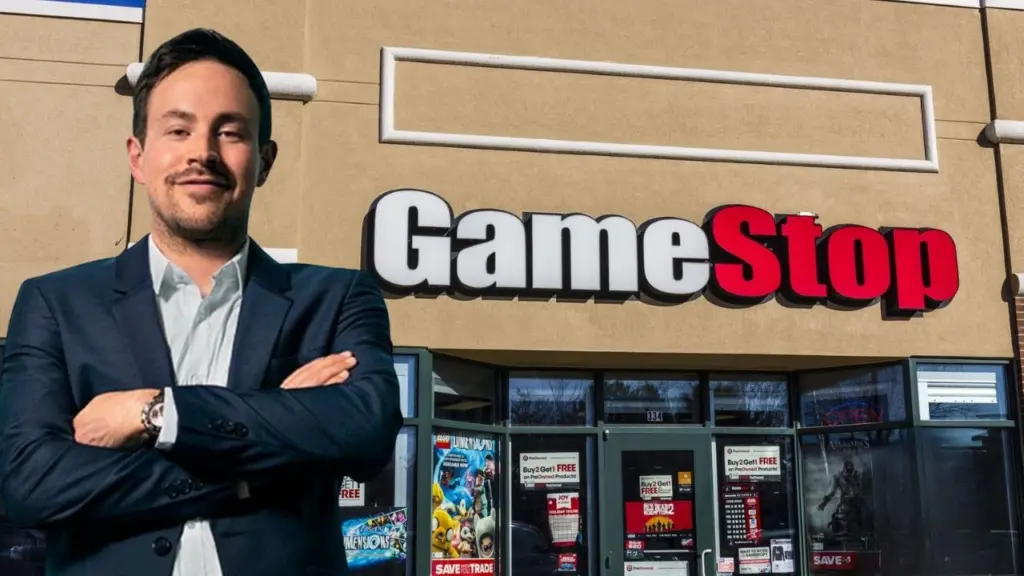
Here is perhaps the most remarkable detail of all: Cohen receives no salary, cash bonus, or time-vesting stock from GameStop. His compensation is entirely tied to the stock price — meaning he only gets rewarded when shareholders profit.
A CEO of a publicly traded company taking zero salary is almost unheard of in corporate America. It is a structure that aligns Cohen’s personal interests completely with the interests of every shareholder who owns even a single share of GME.
GameStop Ownership and Key Stakeholders Table
| Shareholder / Party | Type | Stake | Key Detail |
|---|---|---|---|
| Ryan Cohen | Chairman, CEO & Largest Individual Shareholder | ~16.77% (75.2M shares) | Takes $0 salary; compensation tied entirely to stock performance |
| Retail / Individual Investors | Public Shareholders | ~42.63% of GME | Largest retail ownership base of any major U.S. stock |
| Institutional Investors (combined) | Institutional Shareholders | ~35.07% of GME | Includes Vanguard, BlackRock, and other major funds |
| Insiders (combined) | Company Insiders | ~22.30% of GME | Includes Cohen’s stake and other board/executive holdings |
| Vanguard Group | Institutional Investor | Significant GME position | Largest passive institutional holder of GME |
| BlackRock, Inc. | Institutional Investor | Significant GME position | Second largest institutional holder |
| Keith Gill (Roaring Kitty) | Retail Investor | Publicly undisclosed current stake | Sparked the 2021 short squeeze; returned to social media in 2024 |
The Origin Story: From Babbage’s to GameStop
GameStop traces its roots to Babbage’s, a Dallas, Texas-based software retailer founded in 1984 by former Harvard Business School classmates James McCurry and Gary M. Kusin. The company was named after Charles Babbage and opened its first store in Dallas’s NorthPark Center with the help of Ross Perot, an early investor in the company.
Babbage’s began selling Nintendo games in 1987. By 1991, video games accounted for two-thirds of Babbage’s sales. Babbage’s merged with Software Etc. to create NeoStar Retail Group in 1994.
After NeoStar’s bankruptcy, Barnes & Noble acquired the assets and, in 1999, rebranded the video game division as GameStop. The GameStop brand was officially born — and it grew explosively through the 2000s, becoming a fixture in every shopping mall in America with over 7,000 stores at its peak.
The 2021 Short Squeeze: The Event That Changed Everything
No ownership story of GameStop is complete without discussing the event that made it one of the most famous companies on Earth.
In January 2021, a community of retail investors on Reddit’s WallStreetBets forum noticed that GameStop was one of the most heavily shorted stocks in the market — meaning large hedge funds had bet billions of dollars that the company’s stock would continue to fall. The Reddit community decided to buy aggressively, driving the price up and forcing the hedge funds to cover their short positions by buying shares — which pushed the price even higher.
GameStop’s stock went from under $20 per share to a peak of nearly $483 in a matter of days. Hedge funds lost billions. Robinhood controversially halted trading. Congress held hearings. And the man at the center of it all — a financial analyst named Keith Gill, known online as “Roaring Kitty” — became a legend.
The 2021 short squeeze did not save GameStop’s business model. But it did something equally important: it gave the company a massive cash war chest from equity offerings, bought it time, and eventually attracted Ryan Cohen — the man who would actually try to reimagine what GameStop could become.
The Bitcoin Bet and the Next Big Move
Ryan Cohen has never been content to simply manage a declining retail chain. Since taking over as CEO in 2023, he has been quietly transforming GameStop from a video game retailer into something more like an investment holding company.
In May 2025, GameStop purchased 4,710 bitcoins, worth over $500 million, making GameStop the 14th largest corporate bitcoin holder in the world. The company financed the bitcoin purchase through convertible bonds rather than core capital, while still maintaining a strong cash reserve of over $4 billion.
But then Cohen pivoted again. In January 2026, he told CNBC he was planning something even bigger. GameStop CEO Ryan Cohen said he’s planning a “very, very, very big” acquisition of a publicly traded consumer company that could potentially boost GameStop’s valuation into the hundreds of billions.
Cohen called the new plan “way more compelling than bitcoin” and did not rule out liquidating the firm’s bitcoin holdings to free up cash for the acquisition.
“It’s similar to Berkshire Hathaway, except what Berkshire did in decades we’re attempting to do in a much shorter time in terms of creating that much value,” said Cohen.
Comparing yourself to Warren Buffett is a bold statement. But Cohen has the cash — over $4 billion sitting on the balance sheet — the credibility from building Chewy, and a shareholder base that will follow him almost anywhere. Whether the acquisition actually happens, and what company it targets, remains one of the most watched stories in American business right now.
Related Ownership Profiles
For a fast-growing eyewear company’s ownership story, see who owns Lenskart.
The Store Closure Reality
While Cohen plots his next big move, the core GameStop retail business continues to contract. The need to adapt to changing retail landscapes resulted in significant store closures, including nearly 600 U.S. stores in 2024 and further international restructuring planned for 2025.
As of January 31, 2026, the company operated 2,206 stores — down from over 7,000 at its peak. The shift from physical game discs to digital downloads has been relentless and irreversible. Every year, more games are sold as digital downloads directly to consoles, cutting out the retail middleman entirely.
Cohen has acknowledged this reality and has been deliberately shrinking the retail footprint while building up cash reserves. The strategy is not to fight the digital transition — it is to use the cash generated by the existing stores to fund a completely different future for the company.
Frequently Asked Questions (FAQs)
Q1. Who owns GameStop in 2026?
GameStop (NYSE: GME) is publicly traded, with Ryan Cohen as the largest individual owner at 16.77%, retail investors at 42.63%, and institutional investors at 35.07%.
Q2. Is Ryan Cohen the CEO of GameStop?
Stop was founded in 1984 as Babbage’s by James McCurry and Gary Kusin in Dallas, Texas, and was rebranded as GameStop in 1999.
Q4. Does GameStop still own Bitcoin in 2026?
GameStop purchased 4,710 Bitcoin worth over $500 million in May 2025, making it the 14th largest corporate Bitcoin holder — though Cohen has not ruled out selling it to fund a major acquisition.
Q5. What is Ryan Cohen’s big acquisition plan?
In January 2026, Cohen told CNBC he plans a “very, very, very big” acquisition of a publicly traded consumer company, comparing the strategy to Berkshire Hathaway but at a much faster pace.
Q6. How many GameStop stores are open in 2026?
As of January 31, 2026, GameStop operates 2,206 stores — 1,598 in the U.S., 300 in Australia, and 308 in Europe.
Q7. What happened during the 2021 GameStop short squeeze?
Reddit’s WallStreetBets community bought GME aggressively, forcing hedge funds to cover short positions and sending the stock from under $20 to nearly $483 per share — one of the most dramatic events in Wall Street history.
Q8. What is GameStop’s revenue in 2026?
GameStop’s trailing twelve-month revenue is approximately $3.81 billion, with a current market capitalization of around $10.9 billion.
GameStop (NYSE: GME) is a publicly traded company controlled by its Chairman and CEO Ryan Cohen, who owns approximately 16.77% of the company — the largest single individual stake — while taking zero salary. Retail investors hold the largest single ownership category at 42.63%, making GameStop one of the most retail-owned major stocks in America. Institutional investors hold 35.07%, led by Vanguard and BlackRock.
The company was founded in 1984 as Babbage’s and became GameStop in 1999. It operates 2,206 stores in 4 countries, generates approximately $3.81 billion in trailing revenue, and sits on a $4+ billion cash pile. It bought 4,710 Bitcoin in May 2025 and is now planning what Cohen calls a “very, very, very big” acquisition of a publicly traded consumer company — a move he compares to Berkshire Hathaway’s transformation under Warren Buffett.