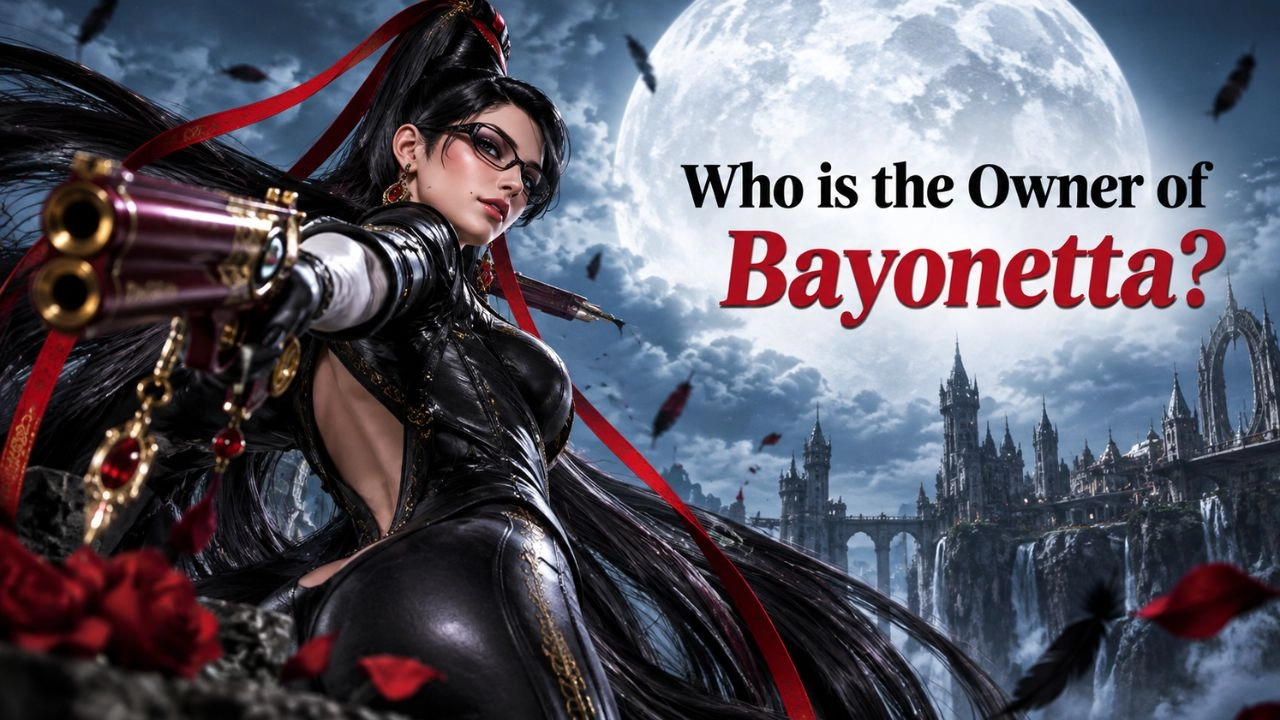
Bayonetta is one of the most critically acclaimed action game franchises in video game history — a series built around a gun-toting, hair-wielding witch who fights angels with supernatural flair.
But who actually owns Bayonetta? The honest answer is one of the most complicated ownership stories in all of gaming — involving three different companies, a split copyright structure, a landmark licensing deal, and a creator who left the studio he helped build. Here is everything you need to know, laid out clearly.
Who Owns Bayonetta in 2026?
The Bayonetta intellectual property — meaning the trademark, the character, the name, and the brand — is owned by Sega. Sega holds the Bayonetta trademark and owns the copyright to all versions of the game that it originally financed, which includes the PlayStation 3 and Xbox 360 versions of the original 2009 game and all non-Nintendo platform releases.
Nintendo, however, owns the copyrights to the Wii U and Nintendo Switch versions of the first Bayonetta, and to Bayonetta 2, Bayonetta 3, and Bayonetta Origins: Cereza and the Lost Demon — all of which Nintendo financed and published.
This means the Bayonetta franchise has a split copyright structure between two of Japan’s most powerful game companies.
PlatinumGames, the studio that creates and develops every Bayonetta game, does not own the IP. It is the developer — the team of artists, designers, and programmers who actually build the games — but the intellectual property rights sit with Sega and Nintendo depending on which version and which game you are talking about.
Ownership and Key Stakeholders Table
| Party | Role | Ownership / Rights | Key Detail |
|---|---|---|---|
| Sega | IP Trademark Owner | Owns the Bayonetta trademark and copyright to all non-Nintendo versions | Financed and published the original 2009 Bayonetta on PS3 and Xbox 360 |
| Nintendo | Copyright Owner (Nintendo versions) | Owns copyrights to Wii U, Switch versions + Bayonetta 2, 3, and Origins | Financed and published all sequels from 2014 onward; exclusive to Nintendo platforms |
| PlatinumGames | Developer | No IP ownership — pure developer role | Created the franchise; built every Bayonetta game; based in Osaka, Japan |
| Hideki Kamiya | Series Creator | No ownership | Created Bayonetta and directed the first game; left PlatinumGames in October 2023 |
| Atsushi Inaba | PlatinumGames President & CEO | No IP ownership | Runs PlatinumGames; produced Bayonetta 2 and oversees the studio |
| Sega Sammy Holdings | Sega’s Parent Company | Indirect owner of Bayonetta trademark | Publicly traded Japanese conglomerate; owns Sega and all its IP |
The Origin Story: How Bayonetta Was Born
Bayonetta was created by Hideki Kamiya — one of the most celebrated game designers in Japanese gaming history, the same man who created Devil May Cry and Ōkami during his years at Capcom.
PlatinumGames was founded on October 1, 2007 as a result of a merger between two smaller studios — Seeds Inc. and Odd Inc. — by a group of veteran designers including Shinji Mikami, Atsushi Inaba, Hideki Kamiya, and Tatsuya Minami. Almost immediately, the newly formed studio signed a four-game publishing contract with Sega. Bayonetta was the third title in that contract.
Sega financed the development of the original game and published it worldwide in October 2009. The game was an instant critical sensation — praised for its fluid combat, outrageous style, and confident personality. Sega owned the resulting IP, including the Bayonetta trademark, as the company that had paid for the game’s creation.
How Nintendo Got Involved — And Why It Matters
After the original game’s success, PlatinumGames wanted to make a sequel. But Sega was not convinced — the first game had sold reasonably well but not spectacularly, and Sega chose not to finance Bayonetta 2. The sequel appeared to be dead.
Nintendo stepped in. It agreed to fund and publish Bayonetta 2, making it an exclusive title for the Wii U — a condition that frustrated many fans who had played the original on PlayStation 3 or Xbox 360.
The deal was straightforward: Nintendo paid for the game, so Nintendo owned the copyright to that version. Sega retained the trademark and all rights to the original game and non-Nintendo platform releases.
Bayonetta 2 launched in September 2014 exclusively on Wii U and later came to Nintendo Switch in 2018. It received even better reviews than the original and is considered one of the finest action games ever made. Nintendo then continued its publishing relationship with PlatinumGames for Bayonetta 3 (released October 28, 2022 exclusively on Nintendo Switch) and Bayonetta Origins: Cereza and the Lost Demon (released March 17, 2023 exclusively on Nintendo Switch).
The Sega Trademark Question: Who Really Controls Bayonetta?
This is the most important legal nuance in the entire Bayonetta ownership story — and it is one that many gaming fans get wrong.
Sega holds the Bayonetta trademark. A trademark is essentially ownership of a brand name. It means Sega controls who can use the name “Bayonetta” commercially.
If any company — including Nintendo — wants to release a game using the Bayonetta name, they need to go through Sega first. Nintendo licenses the Bayonetta name from Sega to publish the sequels. PlatinumGames needs Sega’s permission to use the name in any game it makes.
This is why the ownership structure is described as split. Sega owns the brand. Nintendo owns the specific game files and content it financed. PlatinumGames builds the games but owns none of it. All three parties are essential to the Bayonetta franchise continuing to exist — and if any one of them walked away, the series would face serious complications.
Hideki Kamiya Leaves PlatinumGames — And What It Means
One of the most significant developments in Bayonetta’s recent history has nothing to do with a game release — it is the departure of the series’ creator.
Hideki Kamiya, the man who created Bayonetta and directed the first three games, left PlatinumGames on October 12, 2023. PlatinumGames announced his departure on social media, thanking him for his contributions to the studio from its founding. Kamiya later revealed he had founded a new studio called Clovers and was working with Capcom on a sequel to Ōkami.
Before leaving, Kamiya had confirmed that a Bayonetta 4 was being planned — he casually referenced it in a social media post in November 2022, responding to fan reactions to Bayonetta 3’s ending.
However, with Kamiya now gone from PlatinumGames and no official announcement made, the future of Bayonetta 4 remains uncertain as of 2026. PlatinumGames has not confirmed whether the fourth game is still in active development.
What Is PlatinumGames Today?
PlatinumGames Inc. is a private Japanese video game developer based in Oyodo, Kita-ku, Osaka, Japan. It was founded on October 1, 2007 and employs approximately 250 people as of 2026. The current President and CEO is Atsushi Inaba, one of the studio’s co-founders.
Beyond Bayonetta, PlatinumGames is known for NieR: Automata (developed for Square Enix), Vanquish, The Wonderful 101, and Metal Gear Rising: Revengeance. It remains one of the most respected action game studios in the world despite being a relatively small independent developer with no publicly traded parent company.
Frequently Asked Questions (FAQs)
Q1. Who owns Bayonetta in 2026?
Sega owns the Bayonetta trademark and original game copyright, while Nintendo owns copyrights to the Wii U and Switch versions and all sequels it financed.
Q2. Does PlatinumGames own Bayonetta?
No. PlatinumGames only develops the games — the IP, trademark, and copyrights are split between Sega and Nintendo.
Q3. Who created Bayonetta?
Bayonetta was created by Hideki Kamiya, a veteran game designer who also created Devil May Cry and Ōkami during his time at Capcom.
Q4. Why is Bayonetta exclusive to Nintendo platforms?
Nintendo financed Bayonetta 2 after Sega declined, giving Nintendo the copyright to that version — and all subsequent games Nintendo funded remain Nintendo Switch exclusives.
Q5. Did Hideki Kamiya leave PlatinumGames?
Yes. Hideki Kamiya left PlatinumGames on October 12, 2023, and has since founded a new studio called Clovers, working on an Ōkami sequel with Capcom.
Q6. Is Bayonetta 4 confirmed?
Hideki Kamiya hinted at Bayonetta 4 in November 2022, but as of 2026, PlatinumGames has made no official announcement about the game’s development status.
Q7. Who is the current CEO of PlatinumGames?
Atsushi Inaba, a co-founder of PlatinumGames, serves as President and CEO of the studio as of 2026.
Q8. Does Sega still own the Bayonetta trademark even though Nintendo publishes the sequels?
Yes. Sega retains the Bayonetta trademark — Nintendo licenses the name from Sega to publish the sequels.
Bayonetta is owned by Sega — which holds the trademark and copyright to the original game and all non-Nintendo platform releases — and Nintendo — which holds copyrights to every version it financed, covering Bayonetta 2, Bayonetta 3, Bayonetta Origins, and the Nintendo Switch releases of the original game. PlatinumGames develops the franchise but owns none of its intellectual property.
The series was created by Hideki Kamiya, who left PlatinumGames in October 2023 to found his own studio. A Bayonetta 4 was hinted at before his departure, but as of 2026, no official announcement has been made about its development status.