For over 500 years, Royal Mail has been the backbone of Britain’s communication network. It has delivered love letters, government documents, war-time news, and Amazon packages through every single chapter of British history. But in 2025, something happened that had never happened in those entire five centuries — for the very first time, Royal Mail passed into foreign ownership.
The man behind that historic deal is a little-known Czech billionaire nicknamed the “Czech Sphinx.” And the story of how he came to own one of Britain’s most iconic institutions is one of the most dramatic corporate takeover stories in recent British business history.
What Is Royal Mail?
Royal Mail is the UK’s primary postal service. It handles letters and parcels and also operates Parcelforce Worldwide, focusing specifically on parcel delivery services.
Royal Mail was founded by King Henry VIII in 1516 when he appointed Sir Brian Tuke as “Master of the Posts.” For nearly 500 years, it served as a state-owned institution — first a royal service, then a government monopoly, and eventually a privatized public company. It is woven into the fabric of British daily life in a way that very few brands ever achieve.
Who Owns Royal Mail Right Now in 2026?
The direct answer: Royal Mail is now owned by EP Group, the investment vehicle of Czech billionaire Daniel Křetínský.
EP Group completed its £3.6 billion takeover of International Distribution Services (IDS) — Royal Mail’s parent company — on April 30, 2025, with 80.06% of shareholders voting to accept the offer document.
Following the closure of the deal, IDS formally left the London Stock Exchange on June 2, 2025, as the company moved to private ownership. Daniel Křetínský was named Chairman of both Royal Mail and its parent company IDS.
Royal Mail’s new owner also issued a £1 so-called golden share to the UK Government, as agreed under the deal. The golden share means the firm must keep Royal Mail’s headquarters and tax residency in the UK.
This was a landmark moment in British history. For the first time in over 500 years, Royal Mail had a foreign owner — and the reaction across Britain ranged from cautious acceptance to outright alarm.
Ownership and Key Stakeholders Table
| Owner / Party | Role | Stake / Detail | Status |
|---|---|---|---|
| EP Group (Daniel Křetínský) | Sole Owner | 100% of Royal Mail via IDS | Takeover completed April 30, 2025 |
| Daniel Křetínský | Founder, Chairman & Controlling Owner | Founder and chairman of EP Group | Named Chairman of Royal Mail June 2025 |
| UK Government | Golden Share Holder | £1 golden share | Veto power to keep HQ and tax residency in the UK |
| International Distribution Services (IDS) | Parent Company of Royal Mail | Now fully private | Delisted from London Stock Exchange on June 2, 2025 |
| Communication Workers Union (CWU) | Workers’ Representative | No equity | Negotiated Framework Agreement with EP Group |
| GLS (General Logistics Systems) | Sister Company | Also owned by EP via IDS | International parcel delivery network across Europe |
Who Is Daniel Křetínský — The New Owner of Royal Mail?
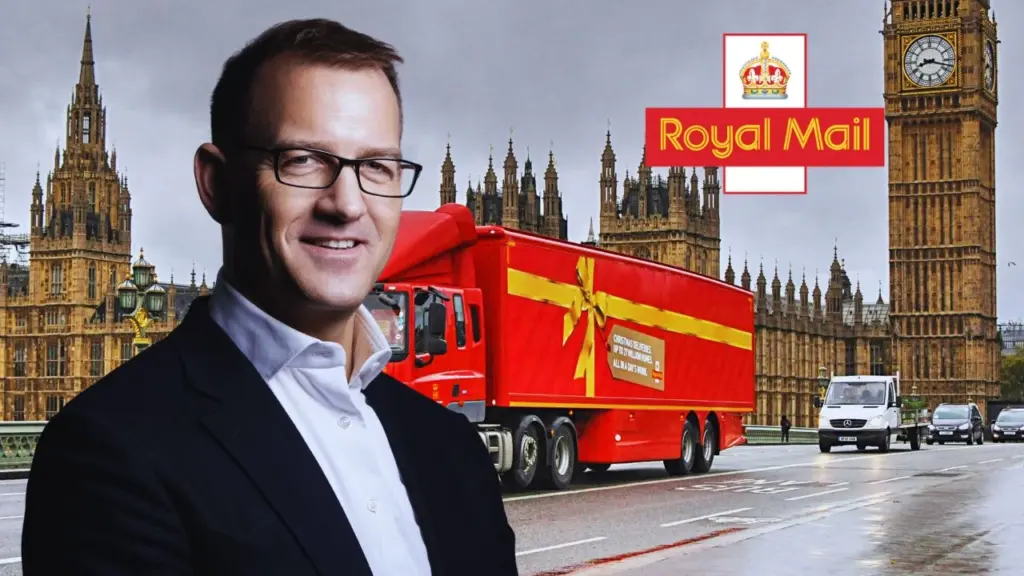
Daniel Křetínský is a 49-year-old Czech billionaire and one of the most powerful yet least-known businessmen in Europe. He earned the nickname “Czech Sphinx” because of his famously low public profile — he rarely gives interviews, almost never appears at public events, and has built a vast business empire almost entirely out of the spotlight.
Křetínský owns a gas transmission business which carries Russian gas to Europe, which has led to speculation that he has links to Vladimir Putin’s government — but prior government investigations have found no connection.
Beyond Royal Mail, Křetínský also owns stakes in supermarket giant Sainsbury’s and West Ham United Football Club. He is not a postal industry specialist — he is a diversified investor who sees long-term value in assets that others have written off. His investment philosophy is built around buying beaten-down, undervalued businesses in sectors he believes have structural importance — and Royal Mail fit that description perfectly.
The Full Timeline: How Royal Mail Changed Hands
1516 — Founded by Royal Decree Royal Mail was founded by King Henry VIII in 1516 when he appointed Sir Brian Tuke as “Master of the Posts.” For nearly five centuries, it served as a crown and then state institution.
2013 — Privatised by the Conservative Government Long state-owned, Royal Mail was privatised by the UK’s Conservative government in 2013 and has struggled financially ever since, with its core letters business ravaged as consumers increasingly communicate online.
2022 — Křetínský Gets Government Clearance to Increase Stake Ministers cleared EP Group to increase its stake above 22% in 2022, after a review on national security grounds.
April 2024 — First Bid Rejected EP Group put forward an all-cash proposal in April 2024 to buy the shares in IDS it did not already own. IDS unanimously rejected it, calling the timing “opportunistic” and saying it “significantly undervalues IDS.”
May 2024 — Improved Offer Accepted IDS accepted a revised offer of 370p per share — a total deal value of £3.6 billion — in May 2024. EP Group already held a 27.6% stake in IDS at the time.
December 2024 — UK Government Approval Britain’s government gave the go-ahead for the £3.6 billion takeover of Royal Mail’s owner, International Distribution Services, by Daniel Křetínský’s EP Group, following a review under the National Security and Investment Act.
April 30, 2025 — Takeover Completed EP Group completed its takeover of IDS on April 30, 2025, with 80.06% of shareholders voting to accept the offer.
June 2, 2025 — Royal Mail Delisted IDS formally left the London Stock Exchange on June 2, 2025, ending its life as a public company. Royal Mail was now fully private and fully foreign-owned for the first time in its history.
What Protections Did the UK Government Secure?
Given Royal Mail’s status as a critical piece of national infrastructure, the UK Government negotiated a series of legally binding commitments from EP Group before approving the takeover.
Commitments include protecting the universal service obligation, maintaining ongoing financial stability of Royal Mail, the maintenance of colleague benefits, and Royal Mail’s broader role in the United Kingdom. EP Group also committed to keep the brand name and headquarters in the UK for the next five years.
The UK Government received a £1 golden share in Royal Mail, granting it veto power to ensure the postal operator’s headquarters and tax residency remain in the UK.
EP Group also committed to no compulsory redundancies for five years as part of the agreement, and pledged to maintain the universal service of six days of deliveries per week with the same pricing across Britain.
Is Royal Mail Back in Profit?
Yes — and this is one of the most important developments since the takeover.
Royal Mail, the UK’s primary postal service, has returned a profit for the first time in three years according to its recent financial report, which is the first report since the company was taken over in April by Daniel Křetínský. The amount, which excludes redundancy costs, is reported to be £12 million in profit compared to the previous £336 million loss.
That turnaround — from a £336 million loss to a £12 million profit — in the very first financial period under Křetínský’s ownership is a significant early signal. It does not erase the challenges ahead, but it suggests the new owner has brought financial discipline and operational focus that was lacking under the previous management.
Related Ownership Profiles
For an unrelated but often-searched ownership question, see who owns GEO Group.
The Universal Service Obligation: The Biggest Challenge Ahead
The single most contentious issue surrounding Royal Mail’s future is the Universal Service Obligation (USO) — the legal requirement to deliver letters to every address in the UK, six days a week, at a uniform price regardless of location.
Křetínský has previously described the USO as a “death grip”, with its requirements the strictest in Europe. The price of a first-class stamp has been ratcheted up by 25% to £1.70 since the takeover bid began.
The tension between maintaining the USO — which is expensive to deliver — and making Royal Mail financially sustainable is the defining challenge of Křetínský’s ownership. How he resolves it will determine what Royal Mail looks like for the next generation of British households.
Frequently Asked Questions (FAQs)
Q1. Who owns Royal Mail in 2026?
Royal Mail is owned by EP Group, the investment company of Czech billionaire Daniel Křetínský, following a £3.6 billion takeover completed on April 30, 2025.
Q2. Is Royal Mail still a British company?
Yes — Royal Mail remains headquartered in the UK and its tax residency stays in the UK, protected by a £1 golden share held by the UK Government.
Q3. When was Royal Mail privatised?
Royal Mail was privatised in 2013 by the UK’s Conservative government, ending centuries of state ownership.
Q4. Who is Daniel Křetínský?
Daniel Křetínský is a Czech billionaire and founder of EP Group, nicknamed the “Czech Sphinx.” He also owns stakes in Sainsbury’s and West Ham United.
Q5. Is Royal Mail making a profit in 2026?
Yes — Royal Mail reported a £12 million profit in its first financial results under EP Group, compared to a £336 million loss the previous year.
Q6. Does the UK Government still own any part of Royal Mail?
The UK Government holds a £1 golden share — not a financial stake, but a veto right to protect Royal Mail’s headquarters, tax residency, and national service obligations.
Q7. When did Royal Mail leave the London Stock Exchange?
Royal Mail’s parent company IDS was formally delisted from the London Stock Exchange on June 2, 2025, making it a fully private company.
Q8. What is the Universal Service Obligation?
The USO is the legal requirement for Royal Mail to deliver letters to every address in the UK, six days a week, at a uniform price — the strictest such obligation in Europe.
Royal Mail is now fully owned by EP Group, the investment vehicle of Czech billionaire Daniel Křetínský, following the completion of a £3.6 billion takeover on April 30, 2025. It was the first time in the postal service’s 500-year history that it had passed into foreign ownership.
Křetínský serves as Chairman of both Royal Mail and its parent company IDS, which was delisted from the London Stock Exchange on June 2, 2025. The UK Government holds a £1 golden share giving it veto power over key decisions. Under new ownership, Royal Mail reported its first profit in three years — £12 million — in its first financial results under EP Group.
The road ahead is not without challenges. The USO, stamp price increases, and the long-term decline in letter volumes all demand bold decisions. But for the first time in years, Royal Mail has an owner with both the capital and the long-term ambition to tackle them.