There is something almost magical about the sound a Royal Enfield makes. That deep, distinctive thump — unhurried and confident — has been turning heads on Indian roads for over 70 years and is now being heard on streets across 65+ countries around the world. But behind that iconic engine note, behind the Bullet, the Classic 350, the Interceptor 650, and the brand-new electric Flying Flea C6, is a carefully structured ownership story that most riders have never had reason to think about.
Who actually owns Royal Enfield? The answer involves an Indian automotive company, a visionary leader who nearly shut the whole brand down before turning it into a global powerhouse, and one of the most remarkable brand revival stories in modern motorcycle history.
What Is Royal Enfield?
Royal Enfield is an Indian motorcycle manufacturer, headquartered and manufactured in Chennai, Tamil Nadu. It is the oldest motorcycle brand in continuous production in the world. The first Royal Enfield motorcycle was built in 1901 by The Enfield Cycle Company of Redditch, Worcestershire, England.
Today, Royal Enfield is the global leader in the middleweight motorcycle segment (250cc–750cc). It operates through more than 2,000 stores across all major cities and towns in India and through nearly 850 stores in more than 60 countries around the globe. In May 2026, Royal Enfield reported 15% sales growth, hitting over 1 lakh units sold in a single month — a new milestone for the brand.
Who Owns Royal Enfield Right Now in 2026?
The direct answer is clear: Royal Enfield is owned by Eicher Motors Limited (EML) — a publicly listed Indian multinational automotive company headquartered in New Delhi.
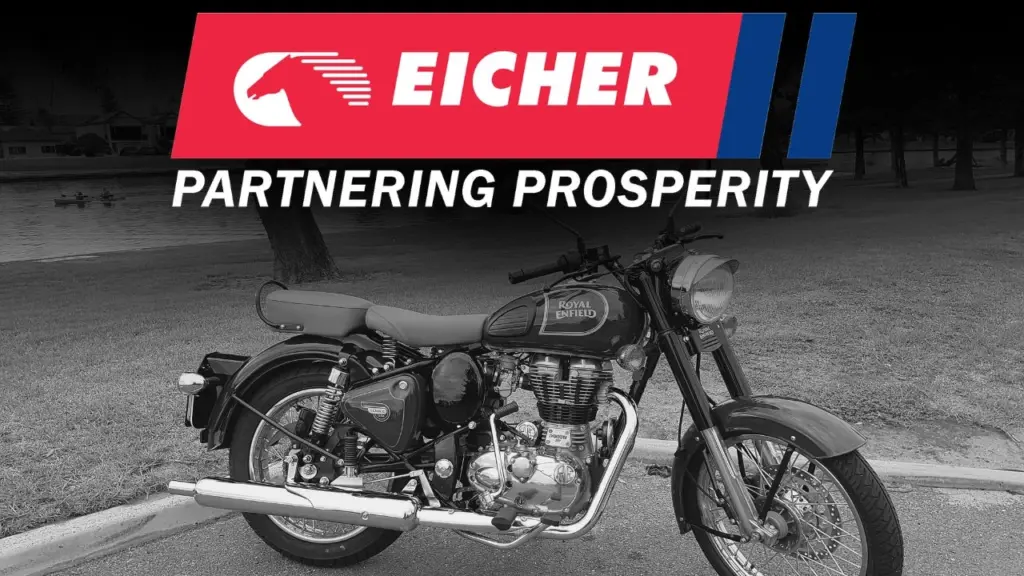
Eicher Motors Limited (EML) (Bloomberg: EIM IN, NSE: EICHERMOT) is the listed parent of Royal Enfield, the global leader in the middleweight motorcycle segment (250cc–750cc).
Eicher Motors is listed on the National Stock Exchange of India (NSE) under the ticker EICHERMOT and on the Bombay Stock Exchange (BSE). Because it is a publicly traded company, ownership of Royal Enfield is ultimately spread across thousands of shareholders — institutional investors, mutual funds, and individual investors — with no single private individual holding majority control.
Ownership and Key Stakeholders Table
| Owner / Shareholder | Type | Stake / Role | Key Detail |
|---|---|---|---|
| Eicher Motors Limited (NSE: EICHERMOT) | Direct Parent Company | 100% ownership of Royal Enfield | Publicly traded; headquartered in New Delhi |
| Siddhartha Lal | Executive Chairman, Eicher Motors | Significant personal stake | Architect of Royal Enfield’s global revival since 2000 |
| B. Govindarajan | MD of Eicher Motors & CEO of Royal Enfield | Executive insider stake | Leads Royal Enfield operations; 34+ years in automotive industry |
| Institutional Investors (Domestic & Foreign) | Largest combined ownership bloc | Majority of Eicher Motors shares | Includes major mutual funds and FIIs |
| Volvo Group | Joint Venture Partner | 45.6% of VECV (not Royal Enfield) | Partners with Eicher in commercial vehicles only; no stake in Royal Enfield |
| Public / Retail Shareholders | Market Investors | Remaining Eicher Motors shares | Anyone can buy EICHERMOT stock on NSE or BSE |
| The Enfield Cycle Company (Historical) | Original British Founder | No current stake | Founded brand in 1901; Indian operations began in 1955 |
| Madras Motors / Enfield India (Historical) | Early Indian Operator | No current stake | Licensed the brand in 1955; became Eicher subsidiary by 1993 |
The Man Who Owns the Vision: Siddhartha Lal
No story about Royal Enfield’s ownership is complete without talking about Siddhartha Lal — the man who saved the brand from near-certain death and turned it into a global icon.
Siddhartha Lal is the Executive Chairman of Eicher Motors Ltd. (EML), the parent company of Royal Enfield. Siddhartha joined Eicher Group in 1999 and has since played an instrumental role in reviving the Royal Enfield brand, steering it to become a global leader in the middleweight motorcycle segment (250cc–750cc).
When Lal took over in the early 2000s, Royal Enfield was selling fewer than 3,000 motorcycles a year and was widely expected to shut down. The bikes were unreliable, the technology was outdated, and the brand felt like a relic. Most business analysts at the time advised Eicher to simply walk away.
Lal made the opposite bet. He stripped away almost everything else Eicher was doing and focused entirely on building Royal Enfield into a premium mid-size motorcycle brand. He improved quality, modernized the engine, cultivated the riding community, and positioned Royal Enfield not as a cheap commuter bike but as a lifestyle and culture statement.
Today, the brand sells over 1 lakh motorcycles per month. That transformation — from near shutdown to global leader — is entirely the result of Lal’s vision and patience over more than 25 years.
The CEO of Royal Enfield is B. Govindarajan, who also serves as Managing Director of Eicher Motors Limited. B. Govindarajan has spent more than two decades at Eicher Motors Ltd and Royal Enfield, and is currently the Managing Director, EML and CEO of Royal Enfield.
The Complete History: From England to India to the World
Royal Enfield’s ownership journey is one of the most fascinating in all of motorcycling history — crossing continents, surviving wars, and outlasting empires.
1901 — Born in England The Enfield Cycle Company of Redditch, Worcestershire builds its first motorcycle with a 239cc engine. The brand motto — “Made Like a Gun, Goes Like a Bullet” — is born.
1932 — The Bullet Arrives Royal Enfield introduces the iconic Bullet, first offered in 250cc, 350cc, and 500cc variants. Its design remains largely unchanged for nearly 90 years — the longest-lived motorcycle design in history.
1955 — India Enters the Picture The Indian Army places an order for 800 units of the 350cc Royal Enfield Bullet. The Enfield Cycle Company partners with Madras Motors to assemble motorcycles in India, forming Enfield India — with a majority Indian stake from the very beginning.
1967–1978 — The British Brand Dies Back in England, the original Enfield Cycle Company sells its motorcycle business to Norton Villiers in 1967 and eventually closes in 1978. The Royal Enfield name survives only in India.
1990 — Eicher Arrives In February 1990, Eicher Goodearth buys a 26% stake in Enfield India Ltd. By 1993, Eicher acquires a majority stake (60% equity) in Royal Enfield India. By 1994, Eicher Motors holds full ownership of the company.
1999 — Siddhartha Lal Takes Charge Lal joins Eicher Group and begins the most important chapter in Royal Enfield’s modern history — a complete brand and product overhaul that will take the company from the edge of bankruptcy to global dominance.
2026 — A New Electric Era Begins Royal Enfield confirmed its first electric motorcycle, the Flying Flea C6, will launch globally in 2026, with Europe as the debut market followed by India. The CEO confirmed the rollout will begin with Flying Flea C6, followed by Flying Flea S6.
Where Are Royal Enfield Motorcycles Made?
Despite its British heritage and global ambitions, every Royal Enfield motorcycle is made in India.
Royal Enfield has two state-of-the-art production facilities located at Oragadam and Vallam Vadagal, near Chennai, Tamil Nadu. Across the world, Royal Enfield has six modern CKD (Completely Knocked Down) assembly facilities in Bangladesh, Nepal, Brazil, Thailand, Argentina, and Colombia.
The company also maintains two world-class technical and design centers — one in Bruntingthorpe, UK, and one in Chennai, India — where new models are engineered and tested before reaching the market.
In May 2026, Royal Enfield announced an investment of ₹2,200 crore in two phases for setting up a new manufacturing facility at Satyavedu in Tirupati district, Andhra Pradesh — its first plant outside Tamil Nadu.
Royal Enfield’s Financial Performance in 2026
The numbers behind Royal Enfield’s current success are staggering — especially for a brand that was almost dead just two decades ago.
Eicher Motors witnessed a growth of 14.1% in its annual income, with revenue reaching a record-breaking level driven by motorcycle sales of over 1,002,893 units worldwide in fiscal year 2024–25. Global sales grew by 29.7% in international markets.
Royal Enfield ranked above Audi and Ferrari in the World’s Strongest Automotive Brands rankings for 2026 — a remarkable achievement for a brand that sells motorcycles starting under ₹2 lakh in India.
In May 2026, the company reported 15% sales growth, crossing 1 lakh units sold in a single month. The company is now actively considering a CKD assembly plant in Mexico to navigate tariff pressures in the North American market.
What Other Businesses Does Eicher Motors Own?
Eicher Motors is not just a motorcycle company. Its other major asset is a powerful commercial vehicle partnership.
VE Commercial Vehicles Limited (VECV) is a joint venture between the Volvo Group and Eicher Motors Limited. In operation since August 2008, the company includes the complete range of Eicher branded trucks and buses, Volvo Buses and exclusive distribution of Volvo Trucks in India, engine manufacturing and exports for Volvo Group, and Eicher Engineering Components. Volvo Group owns 45.6% of VECV, while Eicher Motors holds the remaining 54.4%.
In May 2026, Eicher Motors Limited announced a 50:50 joint venture with Volvo Financial Services (VFS) to provide financing, leasing, and other financial services for Volvo and Eicher-branded commercial vehicles in India.
Frequently Asked Questions (FAQs)
Q1. Who owns Royal Enfield in 2026?
Royal Enfield is owned by Eicher Motors Limited, a publicly listed Indian company trading on the NSE under the ticker EICHERMOT.
Q2. Is Royal Enfield an Indian or British company?
Royal Enfield originated in England in 1901 but is now fully Indian — owned, manufactured, and headquartered in Chennai, Tamil Nadu, under Eicher Motors.
Q3. When did Eicher Motors acquire Royal Enfield?
Eicher first bought a 26% stake in Enfield India in 1990, acquired a majority 60% stake in 1993, and achieved full ownership by 1994.
Q4. Who is the CEO of Royal Enfield in 2026?
B. Govindarajan serves as CEO of Royal Enfield and Managing Director of Eicher Motors Limited, with over 34 years of automotive industry experience.
Q5. Does Volvo own any part of Royal Enfield?
No. Volvo Group owns 45.6% of VECV — the commercial vehicles joint venture — but holds no ownership stake in Royal Enfield whatsoever.
Q6. Where are Royal Enfield motorcycles manufactured?
All Royal Enfield motorcycles are manufactured at two plants near Chennai, Tamil Nadu, with CKD assembly facilities in Brazil, Thailand, Argentina, Colombia, Bangladesh, and Nepal.
Q7. Is Royal Enfield profitable in 2026?
Yes. Eicher Motors recorded its best-ever revenue in FY2024–25, with over 1 million motorcycles sold globally and 14.1% annual revenue growth.
Q8. What is Royal Enfield’s first electric motorcycle?
Royal Enfield’s first electric motorcycle is the Flying Flea C6, confirmed to launch globally in 2026, debuting first in Europe followed by India.
Related Reading
See also our profile of fellow iconic motorcycle brand Harley-Davidson.